 listicle
Are Professional Chemical Peels Worth It for Acne Scars?
Table of Contents
- What Professional Chemical Peels Actually Do for Acne Scars
- Types of Peels and How They Match Different Scar Depths
- Chemical Peels vs Microneedling for Acne Scars: Which Works Better?
- Recovery Time for Professional Chemical Peels: What to Expect
- How Many Chemical Peels for Acne Scars Are Really Needed?
- Cost vs. Results: The Real Value of a Peel Series
- Who Should Skip Professional Chemical Peels
- Making the Call: Is a Peel Series Right for Your Skin?
- Frequently Asked Questions
Last Updated: September 6, 2026
Acne scars are notoriously stubborn, and the sheer number of treatments claiming to erase them makes choosing one feel like a gamble. Are professional chemical peels worth it for acne scarring? The answer depends less on the peel itself and more on matching the right peel depth to your specific scar type, skin tone, and tolerance for downtime. In this guide, we break down the clinical realities, costs, and recovery timelines so you can decide if a peel series is a smart investment or a waste of money.
Chemical peels work by accelerating the skin's natural exfoliation process, triggering controlled shedding of the epidermis and upper dermis. This forces new cell turnover and stimulates collagen production, which gradually improves skin texture and softens pitted skin. However, they are not a one-and-done fix: treating acne scarring effectively requires a series of treatments planned over several months, and clinical efficacy varies dramatically based on scar depth and type.
What Professional Chemical Peels Actually Do for Acne Scars
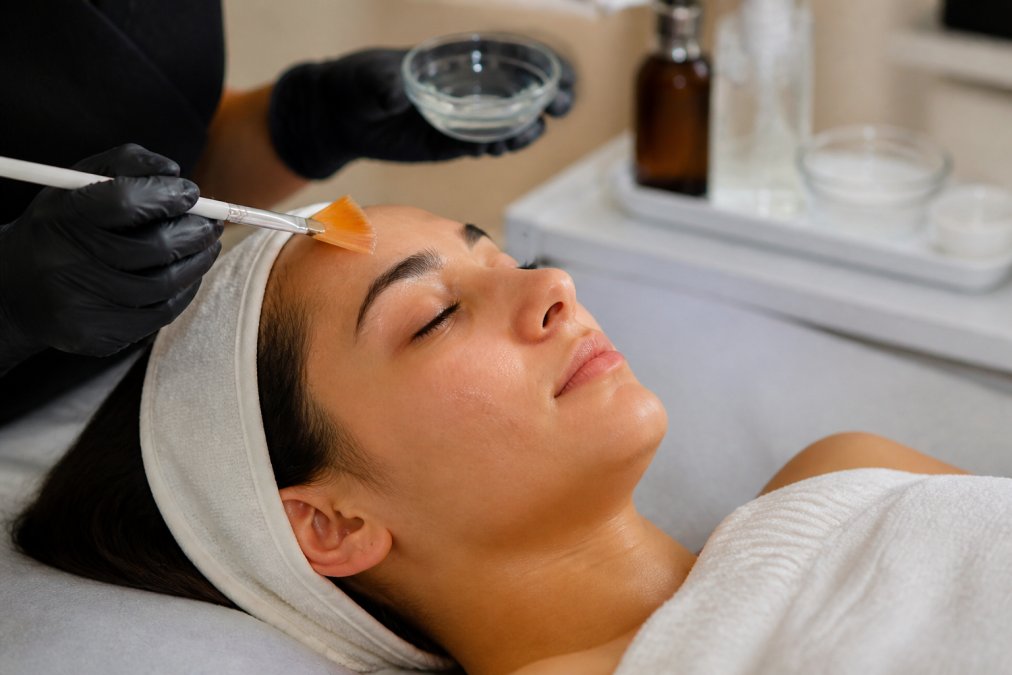
A professional chemical peel applies a chemical exfoliant solution to damaged skin, causing the outermost layers to peel away and reveal fresher, smoother skin beneath. The primary mechanism is controlled injury: the solution removes damaged cells and stimulates the dermis to produce new collagen, which helps fill in shallow depressions over time.
For acne scarring, the most significant improvements appear in atrophic scars, the depressed or pitted scars left behind after inflammatory acne resolves, because the peel smooths the topographical irregularities of the skin surface. Raised or hypertrophic scars respond far less predictably to peeling agents, and other modalities are often more appropriate.
Types of Peels and How They Match Different Scar Depths
Not all chemical peels are created equal. The depth of penetration determines both the intensity of results and the length of downtime, and it must be matched carefully to your scar depth and skin type.
Superficial and Medium-Depth Peels: The Most Common Choices
Superficial peels use mild acids like glycolic acid or salicylic acid to exfoliate only the epidermis. They are gentle, require minimal downtime, and are best suited for very shallow textural irregularities and improving overall skin texture rather than true scar revision.
Chemical Peels vs Microneedling for Acne Scars: Which Works Better?
The debate between chemical peels vs microneedling for acne scars comes down to how each treatment rebuilds skin. Microneedling creates microscopic wounds in the dermis to trigger a strong collagen response, while chemical peels dissolve the bonds between dead skin cells to encourage exfoliation and resurfacing.
| Treatment | Primary Mechanism | Best For | Typical Downtime | Sessions Needed |
|---|---|---|---|---|
| Chemical Peels | Chemical exfoliation and resurfacing | Shallow scars, hyperpigmentation, texture | 2-7 days | 3-6 |
| Microneedling | Physical collagen induction | Moderate to deep atrophic scars | 1-3 days | 3-4 |
Recovery Time for Professional Chemical Peels: What to Expect
Recovery time for professional chemical peels varies directly with peel depth, and underestimating this is a common mistake. A superficial peel may cause mild flaking for one to two days, with most people returning to normal activities immediately. Medium-depth peels involve visible peeling and erythema, or redness, for roughly three to seven days, during which the skin barrier is compromised and highly sensitive (peer-reviewed research).
You must avoid picking at peeling skin, as this can introduce bacteria and lead to new scarring. Sun exposure is strictly limited during healing because fresh skin is vulnerable to post-inflammatory hyperpigmentation, a particular concern for anyone with a darker Fitzpatrick skin type. A broad-spectrum sunscreen of SPF 30 or higher becomes non-negotiable for weeks after each session (the American Academy of Dermatology).
How Many Chemical Peels for Acne Scars Are Really Needed?
A single peel will not remodel scar tissue, and anyone promising dramatic results in one session is overselling the treatment. Most protocols require a series of three to six chemical peels for acne scars, spaced four to six weeks apart, to allow the skin to rebuild collagen between sessions (peer-reviewed research).
Shallow textural changes may show improvement after two to three superficial peels. Moderate atrophic scars typically need four to six medium-depth peels before the cumulative collagen production visibly lifts the scar floor. Assessment at the halfway point is essential, as your provider may adjust acid strength or switch to a different modality if progress stalls.
Cost vs. Results: The Real Value of a Peel Series
Professional chemical peels are a significant financial commitment, and the true cost is the full series, not a single session. Pricing varies widely by geographic region, provider expertise, and peel strength, so request a detailed quote during a consultation rather than relying on advertised single-session prices.
To determine if a peel series is 'worth it' for your specific situation, compare it against the alternatives on a per-session and per-result basis. Here is a realistic breakdown of the financial landscape for acne scar treatments in the United States.
The Real Cost of a Peel Series
A single medium-depth chemical peel (e.g., 20-30% TCA or high-strength glycolic acid) typically ranges from $150 to $300 per session in a medical spa or dermatologist's office. However, the total investment is the full series. For moderate atrophic scarring, a standard protocol of four to six sessions spaced a month apart will cost between $600 and $1,800. This figure does not include the mandatory medical-grade skincare products (e.g., a gentle cleanser, a barrier-repair moisturizer, and a broad-spectrum sunscreen) that your provider will require you to use before and after each peel, adding roughly $100 to $200 to your upfront costs.
Cost-Benefit Analysis vs. Other Modalities
When evaluating cost versus results, consider the alternative. The table below outlines the typical price range and expected outcomes for common in-office procedures for acne scarring. This comparison helps you see where a peel series falls on the value spectrum.
| Treatment | Typical Cost Per Session (U.S.) | Typical Sessions Needed | Total Cost Range | Primary Outcome |
|---|---|---|---|---|
| Professional Chemical Peel (Medium-Depth) | $150 - $300 | 4 - 6 | $600 - $1,800 | Smoother texture, softened shallow scars, improved tone |
| Microneedling | $250 - $500 | 3 - 4 | $750 - $2,000 | Collagen induction for moderate atrophic scars |
| Fractional CO2 Laser Resurfacing | $1,000 - $2,500 | 1 - 3 | $1,000 - $7,500+ | Significant resurfacing for deep scars, longer downtime |
| Subcision | $500 - $1,500 | 1 - 3 | $500 - $4,500 | Physically releases tethering of deep 'rolling' scars |
Note: These are average U.S. market prices and can vary significantly based on your location and provider. Always get a written quote.
The ROI on Your Investment
The value calculation also depends on your maintenance commitment. Results are not permanent; ongoing maintenance peels every few months help sustain collagen production and prevent the skin from reverting to its former texture. This means the true 'cost of ownership' includes a maintenance budget of roughly $300 to $600 per year.
If your scars are deep 'ice pick' or 'rolling' types, a peel series alone may not deliver the ROI you expect. In that case, a consultation with a dermatologist to discuss a combination approach (e.g., subcision for tethering, followed by peels for texture) might be a more effective allocation of your budget, even if the upfront cost is higher.
Who Should Skip Professional Chemical Peels
Chemical peels are not suitable for everyone, and identifying yourself as a poor candidate saves both money and potential harm. Anyone with active acne infections, open lesions, or a compromised skin barrier should postpone treatment until the skin is healthy. Those with a history of poor wound healing or keloid formation face a heightened risk of complications.
The Fitzpatrick Skin Type Factor: A Critical Safety Check
Skin tone considerations are critical and frequently underdiscussed in consumer articles. The Fitzpatrick scale classifies skin based on its reaction to sun exposure, ranging from Type I (very fair, always burns) to Type VI (deeply pigmented, rarely burns). This scale is the primary risk-assessment tool for chemical peel complications, specifically Post-Inflammatory Hyperpigmentation (PIH).
Individuals with Fitzpatrick skin types IV, V, and VI have more active melanocytes (pigment-producing cells). Any inflammatory event, including a chemical peel, can trigger these cells to overproduce melanin, leading to dark patches that can last for months. This does not rule out treatment, but it demands a conservative approach.
A Conservative Protocol for Darker Skin Tones
If you have a darker skin tone, a responsible provider will not start with a standard medium-depth peel. Instead, they will follow a protocol designed to minimize inflammation and pre-condition the skin:
- Pre-Treatment Priming (4-6 Weeks): Your provider will likely prescribe a regimen containing hydroquinone 4% or a tyrosinase inhibitor (like kojic acid or azelaic acid) combined with a retinoid. This suppresses melanin activity before the peel and thickens the stratum corneum for a more even peel.
- Starting with Superficial Peels: The first one or two sessions will use a very light acid, like mandelic acid or a low concentration of glycolic acid, to assess your skin's inflammatory response.
- Avoiding Certain Acids: Trichloroacetic acid (TCA) at higher concentrations is a known high-risk trigger for PIH in darker skin. Many practitioners avoid TCA for Fitzpatrick types V and VI, opting instead for repeated superficial peels or specific formulations like Jessner's solution, which are less likely to cause post-inflammatory pigment.
- Aggressive Post-Peel Care: Strict sun avoidance and the use of a physical (mineral) sunscreen with zinc oxide or titanium dioxide is non-negotiable. Your provider may also start a low-dose corticosteroid cream for a few days post-peel to quell any early signs of inflammation.
Other Absolute and Relative Contraindications
Beyond skin tone, you should skip professional chemical peels if you:
- Are Pregnant or Nursing: Many peel acids, particularly salicylic acid, are contraindicated during pregnancy due to the risk of systemic absorption.
- Have an Active Viral or Bacterial Infection: Cold sores (herpes simplex) can spread rapidly across a freshly peeled surface. If you have a history of cold sores, your provider should prescribe an antiviral prophylaxis (like Valtrex) to be taken starting the day before the peel.
- Have Used Isotretinoin (Accutane) Recently: A history of oral isotretinoin use within the last six months significantly impairs the skin's healing capacity and increases the risk of scarring from a peel.
- Have a History of Keloid Scarring: As mentioned, the controlled injury of a peel can trigger the formation of new keloids in predisposed individuals.
If you fall into any of these categories, a chemical peel is not a 'worth it' risk. A consultation with a board-certified dermatologist is essential to explore safer, alternative strategies for your specific skin health profile.
Making the Call: Is a Peel Series Right for Your Skin?
Deciding if a peel series is right for your skin requires an honest assessment of your scar type, your tolerance for downtime, and your budget for a multi-session commitment. If you have shallow atrophic scars, manageable downtime, and realistic expectations about gradual improvement, a professional peel series can deliver meaningful, cumulative results.
The most important step is a thorough in-person consultation where a licensed professional evaluates your skin, reviews your medical history, and designs a treatment plan tailored to your specific concerns. At Liz Almanzar Esthetics, our rejuvenating facial treatments are customized to your skin's unique needs, and we prioritize a professional, welcoming environment where your concerns are heard before any treatment begins.
Frequently Asked Questions
Can professional chemical peels remove acne scars completely?
No treatment removes acne scars completely. Professional chemical peels can significantly reduce the appearance of shallow atrophic scars by exfoliating damaged skin layers and stimulating collagen production. Deep ice-pick scars often need additional treatments like microneedling or professional resurfacing. Most patients see meaningful improvement, not perfection. A consultation with a licensed professional can help you understand realistic outcomes for your specific scar type and depth.
How many chemical peel sessions are typical for acne scarring?
Most providers recommend a series of 3 to 6 treatments spaced about 4 weeks apart for visible improvement in acne scars. Superficial peels yield gradual results, so multiple sessions are usually necessary to build enough collagen to soften pitted skin. Your provider will assess your scar depth and skin type before recommending a specific treatment plan. Consistency matters more than a single aggressive peel.
What is the actual recovery time for a professional chemical peel?
Recovery time depends on peel depth. A superficial peel causes mild flaking for 1 to 3 days. Medium-depth peels typically involve 5 to 7 days of noticeable peeling and redness before skin looks normal. Deep peels can require 2 weeks or more of downtime. Your skin will also stay sun sensitive for several weeks afterward, so daily broad-spectrum sunscreen is essential.
Are professional peels or microneedling better for atrophic acne scars?
Both treatments remodel scar tissue, but they work differently. Chemical peels exfoliate the epidermis and upper dermis to smooth texture, while microneedling creates controlled micro-injuries that trigger deeper collagen production. For shallow atrophic scars, peels can be very effective. For deeper pitted scars, microneedling often produces stronger results. Many providers combine both treatments for optimal outcomes.
Do dermatologists recommend professional chemical peels for acne scars?
Yes, dermatologists routinely recommend professional-grade chemical peels for certain types of acne scarring, especially shallow atrophic scars and post-inflammatory hyperpigmentation. They are less effective alone for deep ice-pick scars. A dermatologist or licensed esthetician will evaluate your skin to determine whether a superficial, medium-depth, or deep peel fits your scar type and skin tone.
Acne scarring is frustrating, and finding a treatment that actually delivers requires patience, honest expectations, and professional guidance. A chemical peel series can be a worthwhile investment for the right candidate, but it demands a commitment to multiple sessions and diligent aftercare. Get started with Liz Almanzar Esthetics and schedule a consultation to explore whether a personalized facial treatment plan can help you achieve the smoother, clearer skin you are looking for.