 ultimate-guide
Benefits of Regular Professional Facials: A 2026 Guide
Table of Contents
- What a Professional Facial Actually Does for Your Skin
- Benefits of Regular Professional Facials for Aging Skin
- How Often to Get a Facial for Anti-Aging Results
- Best Facial Treatments for Glowing Skin
- Professional Facial vs At-Home Skincare: What the Comparison Misses
- Contraindications and the Maintenance Roadmap: What Most Guides Skip
- Frequently Asked Questions
Last Updated: September 23, 2026
What a Professional Facial Actually Does for Your Skin
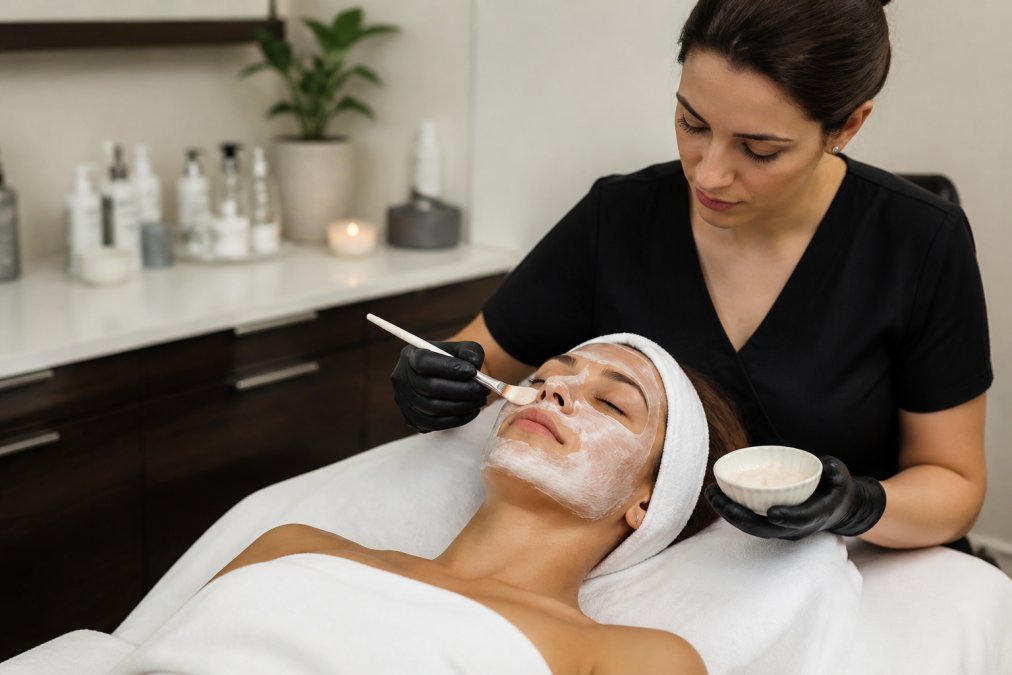
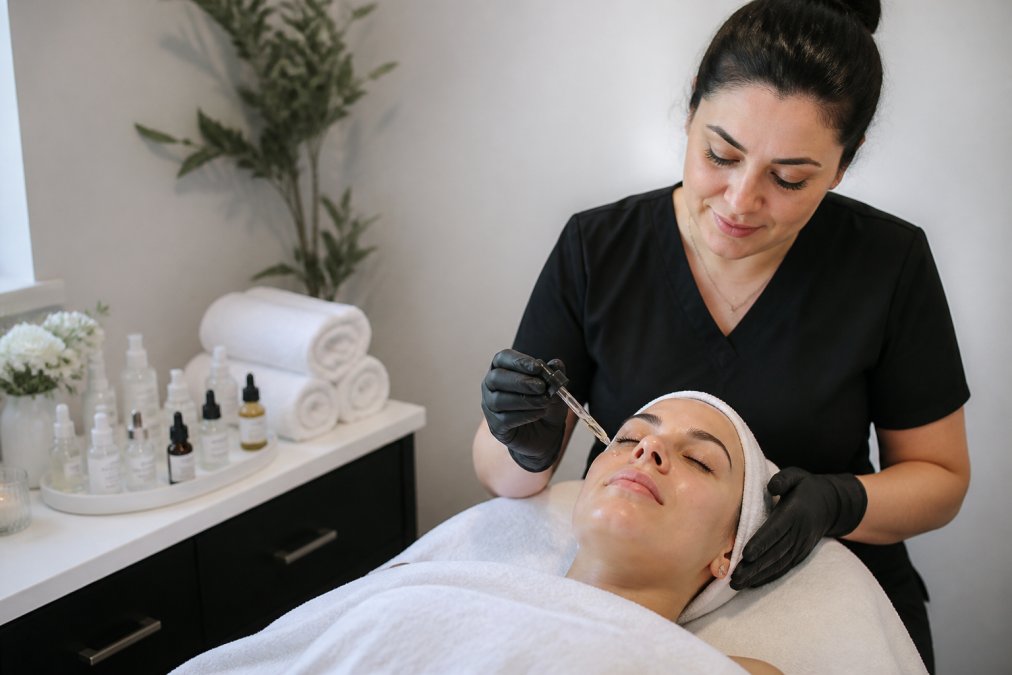
A professional facial is a multi-step skin treatment performed by a licensed esthetician that cleanses, exfoliates, extracts, and infuses the skin with targeted ingredients, and its real value shows up in cellular turnover and barrier repair rather than in the hour of relaxation.
Beyond Cleansing: Cellular Turnover and Skin Barrier Function
Cellular turnover is the skin's natural process of shedding dead cells and replacing them with fresh ones, and it slows noticeably with age. A facial accelerates that process through controlled exfoliation, then rebuilds what it removed. That second half is where most at-home routines fall short.
Professional treatments support skin barrier function by pairing exfoliation with serum infusion, so the skin is not left stripped and reactive. A common mistake is treating exfoliation as the goal. It is only the setup.
According to the American Academy of Dermatology's guidance on exfoliation, how you exfoliate matters more than how often.
Benefits of Regular Professional Facials for Aging Skin
The main benefits of regular professional facials for aging skin are improved skin elasticity, softer fine lines and wrinkles, and more even skin texture over time. Consistency is what produces those results, not a single appointment.
Collagen Production, Skin Elasticity, and Fine Lines and Wrinkles
Collagen production declines with age, and no cream restores it on its own. Treatments such as microcurrent and radiofrequency stimulate the underlying tissue, while chemical exfoliation encourages epidermal renewal at the surface.
How Often to Get a Facial for Anti-Aging Results
Most people see the best anti-aging results with a facial every four to six weeks, matching the skin's natural renewal cycle. But frequency is not a fixed number, it is the output of a year-round plan.
Why Four to Six Weeks Is the Baseline
Cellular turnover, the process by which skin sheds dead cells and replaces them, slows with age. In younger skin, that cycle runs roughly every 28 days. In mature skin, it can stretch to 40 days or more. A facial every four to six weeks aligns professional exfoliation and infusion with that cycle, so each treatment builds on the last rather than starting from scratch.
Treatment frequency should scale with your goals and your skin's tolerance, not a fixed calendar. A client recovering from a medium-depth peel needs a different cadence than a client maintaining results from a series completed months ago.
| Goal | Suggested Frequency | Typical Focus |
|---|---|---|
| Preventative skincare | Every 6-8 weeks | Hydration, gentle exfoliation |
| Fine lines and wrinkles | Every 4-6 weeks | Collagen stimulation, serum infusion |
| Hyperpigmentation and age spots | Every 4 weeks | Brightening, cellular turnover |
| Post-procedure recovery | As advised by your provider | Barrier repair, deep hydration |
The Year-Round Maintenance Roadmap
Think in phases rather than single appointments. Think in phases rather than single appointments.
When to Adjust the Cadence
A roadmap is a starting point, not a rule. Adjust frequency when:
- Your skin is reacting, redness, stinging, or increased sensitivity means back off, not push through.
- You have a major event, a series of two or three treatments in the weeks before can sharpen results, but not if it means stacking aggressive treatments too close together.
- You start a new prescription, retinoids, blood thinners, or photosensitizing medications change what treatments are safe and how often they can be done.
- Your provider recommends a change, an esthetician who sees your skin every few weeks will notice shifts you will not.
The psychological benefit of a structured plan is real and often overlooked. A scheduled hour of care can give clients a sense of control over how they age.
Best Facial Treatments for Glowing Skin
The best facial treatments for glowing skin are microcurrent, LED light therapy, and chemical peels, but the treatment name matters far less than what it is paired with.
Microcurrent, LED Light Therapy, and Chemical Peels
Microcurrent uses low-level electrical currents to stimulate facial muscles, often described as a non-surgical facelift. It works on skin firmness and contour rather than surface texture. Because it does not disrupt the barrier, it pairs well with peptide and growth-factor serums applied immediately after, the microcurrent creates a temporary window where those larger molecules absorb more readily.
LED light therapy uses specific wavelengths to calm inflammation and support collagen production. Red and near-infrared wavelengths are the ones most often used for fine lines; blue wavelengths target acne-causing bacteria. It is gentle enough for most skin types and stacks safely with almost any other treatment in the same session.
Chemical peels remove damaged outer layers to reveal fresher skin, improving texture and hyperpigmentation. Depth varies, superficial peels use alpha-hydroxy or beta-hydroxy acids, while medium-depth peels reach further into the dermis. A qualified esthetician should match the peel to your skin, and the post-peel window is where ingredient choice becomes critical.
U.S. Food and Drug Administration information on light-based devices notes that device-based treatments carry risks that should be discussed with a professional beforehand.
Ingredient Synergy: What to Pair With What
- After microcurrent: peptides, growth factors, and hyaluronic acid. These support the collagen-signaling the treatment just triggered. Avoid strong acids in the same session, they compete with the treatment's mechanism rather than complement it.
- After LED: antioxidants such as vitamin C and niacinamide. LED reduces inflammation; antioxidants lock in that calm state and protect against the oxidative stress that drives fine lines.
- After a chemical peel: barrier-repair ingredients only, ceramides, panthenol, squalane, and occlusives. Do not layer retinoids, vitamin C, or additional exfoliating acids on freshly peeled skin.
- Retinoids and professional treatments: prescription retinoids and aggressive peels or lasers should not be stacked in the same 5-7 day window. Most practitioners recommend pausing retinoids for several days before and after a resurfacing treatment.
Matching the Treatment to Your Skin Type
A treatment that transforms one client's skin can irritate another's.
- Dry or dehydrated skin: hydration-first treatments, hydrating masks, hyaluronic acid infusion, gentle enzyme exfoliation. Skip aggressive peels.
- Oily or acne-prone skin: salicylic acid peels, extractions, and blue-light LED. These target congestion without over-stripping.
- Sensitive or reactive skin: LED, gentle enzyme exfoliation, and barrier-repair masks. Avoid medium-depth peels and high-energy devices.
- Mature skin with laxity: microcurrent, radiofrequency, and peptide infusion. These address firmness rather than just surface texture.
- Hyperpigmentation-prone skin: brightening peels with lactic or mandelic acid, plus vitamin C infusion. Avoid heat-heavy treatments that can trigger pigment rebound.
A licensed esthetician should confirm your skin type and adjust the plan in the treatment room.
Professional Facial vs At-Home Skincare: What the Comparison Misses
A professional facial and a good at-home routine are not competitors. At-home skincare maintains results between visits; professional treatments can offer benefits that home products may not.
The comparison usually ignores two things: extraction and assessment. A licensed esthetician can safely extract congestion and adjust treatment in real time. No serum does that.
Contraindications and the Maintenance Roadmap: What Most Guides Skip
Certain medical conditions and medications make some facial treatments unsuitable, and a good provider screens for them before your first appointment.
Tell your esthetician about pregnancy, active cold sores, recent cosmetic procedures, autoimmune conditions, and any prescription retinoids or blood thinners. Some treatments, including certain peels and radiofrequency, are not appropriate in those cases.
Frequently Asked Questions
How often should you get a professional facial for optimal results?
Most estheticians recommend a professional facial every four to six weeks, which matches the skin's natural renewal cycle. For anti-aging goals, consistent monthly sessions support collagen production and skin elasticity over time. If you are addressing specific concerns like hyperpigmentation or acne, your esthetician may suggest a closer initial schedule before spacing visits out. A consultation at Liz Almanzar Esthetics can help determine the right cadence for your skin.
What are the primary skin health benefits of regular professional facials?
Regular professional facials support cellular turnover, deep hydration, and skin barrier function. They help address fine lines and wrinkles, uneven skin texture, and age spots through customized exfoliation and serum infusion. Over time, consistent treatments can improve skin firmness and overall skin vitality. Unlike at-home routines, professional facials use clinical-grade products and techniques tailored to your skin's current condition, which is why results tend to build with each session.
Can professional facials help with long-term anti-aging?
Professional facials can support long-term anti-aging by stimulating collagen production and improving skin elasticity through treatments like microcurrent, LED light therapy, and radiofrequency. These approaches work on the dermal layers to support skin firmness and reduce the appearance of fine lines. Results build gradually, so a consistent schedule matters more than any single session. Pairing professional treatments with a preventative skincare routine at home gives the best foundation for lasting results.
What should I look for when choosing a professional esthetician?
Look for a licensed esthetician who asks about your skin history, medications, and lifestyle before recommending treatments. A good esthetician will explain contraindications, customize each session to your skin's needs, and never pressure you into services you do not need. Ask about their experience with your specific concerns, whether that is aging skin, acne, or sensitivity. Before-and-after photos and client reviews from people with similar skin can also help you feel confident in your choice.
Aging skin responds to consistency, not to any single appointment, and the hardest part is building a routine you actually keep. Liz Almanzar Esthetics offers personalized facials, precise waxing, and lash extensions in a welcoming, professional environment, with treatments tailored to your specific skin concerns. Our team focuses on quality care and results you can see. Get started with Liz Almanzar Esthetics and build a skincare routine that works for your skin.