 listicle
Best Facial for Acne Prone Skin: 7 Treatments That Work
Table of Contents
- Why Standard Facials Fail Acne Prone Skin
- Key Ingredients That Make a Facial Work for Acne
- The 7 Best Facial Treatments for Acne Prone Skin
- Professional Acne Extraction Benefits You Should Know
- How Often to Get a Facial for Acne That's Actually Effective
- Acne Facial Aftercare Tips to Protect Your Results
- Safety First: When Acne Needs a Dermatologist
- Conclusion: Choosing the Right Facial for Your Skin
- Frequently Asked Questions
Last Updated: September 7, 2026
If you have acne prone skin, you know the frustration: you book a facial expecting clear skin and instead walk out with more breakouts, redness, or irritation. The problem isn't facials themselves, it's that most standard spa facials are designed for maintenance and relaxation, not for treating active congestion and inflammation. This guide breaks down effective facial treatments for acne-prone skin, explains which ingredients and techniques can make a difference, and helps you understand how to build a treatment plan that targets breakouts without compromising your skin barrier.
The gap between a relaxing facial and a therapeutic acne treatment comes down to intent. A standard facial focuses on hydration, glow, and relaxation; an acne facial focuses on decongestion, bacterial control, and inflammation management. That distinction changes everything, from products to techniques. Below, we walk through various treatments that can be effective for acne-prone skin, how often they might be recommended, and aftercare tips that can help protect your results.
Why Standard Facials Fail Acne Prone Skin
Most traditional facials rely on heavy massage, rich moisturizers, and gentle cleansing. For acne prone skin, those elements can backfire: prolonged massage over active breakouts spreads bacteria and increases inflammation, while heavy creams and oils can clog pores and trigger new comedones days later.
The other issue is extraction technique. Many general estheticians perform extractions without proper preparation, pushing debris deeper or causing trauma that leads to post-inflammatory hyperpigmentation. This is why a facial that feels lovely during treatment can result in a breakout flare a week later. Acne prone skin needs a different protocol: one that prioritizes decongestion, antibacterial action, and barrier support over relaxation.
Key Ingredients That Make a Facial Work for Acne
The efficacy of any acne facial hinges on its active ingredients. Three categories matter most: chemical exfoliants, antibacterial agents, and anti-inflammatory compounds. Chemical exfoliation dissolves the bonds between dead skin cells so they shed properly instead of trapping sebum beneath the surface, directly addressing the congestion that fuels breakouts.
Salicylic acid deserves special attention because it's oil-soluble, penetrating through sebum into the pore lining to treat blackheads and whiteheads (peer-reviewed research). Benzoyl peroxide works primarily as an antibacterial agent, reducing the bacterial growth that drives inflamed acne. Professional treatments combine these with calming ingredients to prevent irritation.
Salicylic Acid vs. Benzoyl Peroxide in Professional Treatments
In a professional setting, salicylic acid is the workhorse for comedonal acne, exfoliating from within the pore and normalizing the shedding process. Benzoyl peroxide is reserved for inflammatory acne, the red, tender bumps that indicate bacterial involvement. Many medical-grade facials layer both: salicylic acid for deep pore refinement, benzoyl peroxide for surface bacterial control.
The key difference from over-the-counter use often involves concentration and buffering. Professionals may apply higher concentrations with controlled contact time and proper neutralization, followed by soothing ingredients to support the skin barrier. This approach can often lead to more noticeable results than weeks of at-home products.
The 7 Best Facial Treatments for Acne Prone Skin
The best facial for acne prone skin isn't a single treatment, it depends on your acne type, sensitivity, and whether you're managing active breakouts or maintaining clear skin. These seven professional treatments represent the most effective options available, each targeting a different aspect of acne development.
1. Decongesting Facial with Professional Extractions
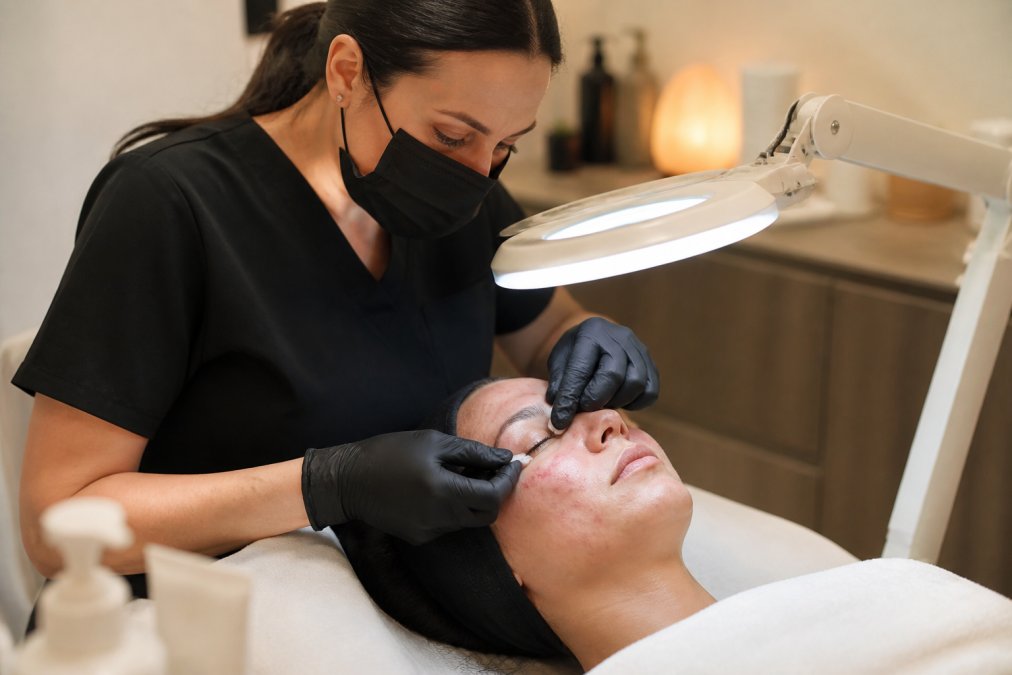
This is the foundational treatment for acne prone skin. The protocol begins with a deep cleanse and chemical exfoliation to soften the skin and loosen impacted pores. Steam or warm towels help dilate the follicles. Only then does the esthetician perform extractions, using sterile tools and proper technique to remove comedones without trauma.
Professional acne extraction benefits go beyond what you can achieve at home. A skilled esthetician can distinguish between a pore ready to clear and one that needs another treatment first, forcing an unprepared comedo causes inflammation and can leave a mark. Done correctly, extractions provide immediate improvement in skin texture and reduce future breakouts by removing the material that feeds them.
2. Chemical Peels for Acne Prone Skin
Chemical peels for acne-prone skin use professional-strength acids to accelerate cellular turnover and decongest pores. Salicylic acid peels are the most common choice because they penetrate oil-rich follicles and have mild anti-inflammatory properties; glycolic acid peels address superficial texture and help fade post-inflammatory hyperpigmentation.
A series of peels, typically spaced two to four weeks apart, produces the most noticeable results, with each treatment building on the previous one. Some peeling or flaking is normal in the days after treatment, so your provider should discuss downtime expectations before you book.
3. LED Light Therapy Facial
LED light therapy uses specific wavelengths to target acne at the cellular level. Blue light targets the bacteria responsible for inflammatory acne, while red light reduces inflammation and supports skin rejuvenation (the American Academy of Dermatology). Many acne facials now incorporate both, alternating wavelengths to address bacterial load and tissue repair simultaneously.
The appeal of LED therapy is its gentleness: it suits sensitive skin that reacts poorly to stronger chemical treatments and has no downtime. Results accumulate over multiple sessions, making it an excellent maintenance treatment between deeper exfoliating facials.
4. Detoxifying Clay Mask Facial
Clay masks have been used for congested skin for centuries. Certain clays, particularly kaolin and bentonite, absorb excess sebum and draw impurities from the pore. In a professional facial, the clay is selected based on your skin's oil production and sensitivity, then applied with techniques that prevent over-drying.
This treatment excels for oily, congested skin that isn't highly inflamed. The detoxifying effect prevents future comedones by keeping pores clear and regulating sebum production, and it pairs well with LED therapy or gentle extractions.
5. Enzyme Peel Facial
Enzyme peels offer a gentler alternative to acid peels for acne prone skin that's also sensitive. Enzymatic exfoliation uses fruit-derived enzymes, such as papaya or pineapple, to dissolve the protein bonds holding dead skin cells together, smoothing texture and decongesting pores without the stinging acids can cause.
Enzyme peels are particularly valuable for acne compromised skin where the barrier is already stressed by topical medications or over-exfoliation, providing needed exfoliation while supporting the skin's natural healing process. Expect a brighter, smoother complexion with minimal downtime.
6. Hydrating Facial for Acne Compromised Skin
It sounds counterintuitive, but acne prone skin often needs more hydration, not less. Many acne treatments strip the skin barrier, triggering compensatory oil production that worsens congestion. A hydrating facial uses non-comedogenic ingredients to restore moisture without clogging pores.
This treatment is ideal between more aggressive acne facials or for skin that's red, flaky, and irritated from acne medications. Ingredients like hyaluronic acid and ceramides rebuild the skin barrier, reducing sensitivity. For skin that can't tolerate strong exfoliants, this is often the most effective starting point.
7. Medical-Grade Customized Acne Facial
A highly effective option for moderate to severe acne can be a medical-grade customized acne facial, performed by a provider who combines professional-strength products with a treatment plan tailored to your specific acne type. It typically includes a detailed skin analysis, professional-grade chemical exfoliation, targeted extractions, LED therapy, and recommendations for home care to support results between visits.
This approach bridges the gap between professional treatments and dermatological care. The esthetician works with your skin's current state rather than applying a rigid protocol, adjusting strengths and techniques based on how your skin responds during treatment.
Professional Acne Extraction Benefits You Should Know
Professional acne extraction benefits extend beyond immediate visual improvement. When performed correctly, extractions remove the contents of comedones unlikely to resolve on their own, preventing the pore from rupturing beneath the skin, the cause of deep, painful cysts that take weeks to heal and often leave hyperpigmentation.
The key is preparation and aftercare. Professional extractions follow chemical exfoliation that softens follicle contents, making removal less traumatic. The esthetician uses sterile tools and even pressure to avoid damaging surrounding tissue, then follows with soothing masks and LED therapy to reduce inflammation. This comprehensive approach is why professional extractions outperform aggressive at-home attempts.
How Often to Get a Facial for Acne That's Actually Effective
How often to get a facial for acne depends on your skin's condition and the treatment type. For active acne, a facial every three to four weeks aligns with your skin's natural cell turnover cycle, allowing time to heal while maintaining momentum (PubMed). Monthly appointments also match the typical timeline for new breakouts to surface, so your provider can address them before they become entrenched.
Maintenance facials can be spaced further apart, typically every six to eight weeks, once your skin is consistently clear, shifting the goal from active treatment to breakout prevention and texture refinement. Your provider should adjust the protocol based on seasonal changes, stress, and hormonal fluctuations. Consistency matters more than intensity; a regular, moderate plan outperforms occasional aggressive sessions.
Acne Facial Aftercare Tips to Protect Your Results
Acne facial aftercare tips matter as much as the treatment itself. The days immediately following a facial determine whether your skin heals smoothly or reacts with new breakouts. For the first 24 to 48 hours, avoid touching your face, skip strenuous exercise that causes sweating, and use only the gentle cleanser and moisturizer your provider recommends.
Sun protection becomes non-negotiable after any exfoliating facial. Freshly exfoliated skin is more vulnerable to UV damage, which can trigger post-inflammatory hyperpigmentation that takes months to fade. Apply a broad-spectrum sunscreen daily, even indoors. Avoid picking new breakouts during healing, and keep your follow-up appointment to address them properly.
Safety First: When Acne Needs a Dermatologist
Professional facials are highly effective for mild to moderate acne, but they have limits. Severe acne, deep, painful nodules or cysts, requires medical treatment that estheticians cannot provide. If your breakouts are leaving permanent scars, spreading rapidly, or not responding to professional treatments, it's time to see a dermatologist.
Similarly, acne that appears suddenly in adulthood, especially with other symptoms, warrants medical evaluation. A dermatologist can prescribe topical or oral medications that address underlying causes, including hormonal factors. Many clients benefit from combining dermatological care with professional facials, using the facial to manage congestion and texture while medication addresses the root cause. A qualified esthetician will recognize when your acne exceeds their scope and refer you appropriately.
| Acne Severity | Best Treatment Approach | Provider | Typical Frequency |
|---|---|---|---|
| Mild (blackheads, occasional pimples) | Decongesting facial, chemical peels | Esthetician | Monthly |
| Moderate (frequent inflamed breakouts) | Medical-grade customized facial, LED therapy | Esthetician | Every 3-4 weeks |
| Severe (cysts, nodules, scarring) | Dermatological treatment, facials as adjunct | Dermatologist + Esthetician | As directed by dermatologist |
Conclusion: Choosing the Right Facial for Your Skin
Finding the best facial for acne prone skin is less about a single miracle treatment and more about finding a provider who understands your skin's specific pattern of congestion, inflammation, and sensitivity. The right approach combines professional treatments with a home care routine that supports your skin barrier between visits. It also acknowledges the psychological weight of acne; clear skin affects how you show up in the world, and investing in it is an act of self-care, not vanity.
At Liz Almanzar Esthetics, we build customized treatment plans around your skin's current needs, whether that means starting with a gentle hydrating facial to support your barrier or moving into a professional protocol for persistent breakouts. Our approach pairs professional-grade products with careful technique in an environment designed to make you feel at ease. If you're seeking a customized acne treatment, we invite you to book a consultation to explore options for your skin.
Frequently Asked Questions
Which facial is best for acne prone skin?
A decongesting facial with professional extractions is the most effective starting point for acne prone skin. Your esthetician will tailor the treatment to your skin's needs, combining salicylic acid or enzyme exfoliation with manual extraction of comedones. Many clients also benefit from adding LED light therapy or a light chemical peel. The best approach depends on whether your acne is primarily blackheads and whiteheads, inflamed papules, or hormonal cystic breakouts. A professional skin analysis helps determine which combination will clear congestion without damaging your skin barrier.
How often should you get a facial if you have acne prone skin?
Most acne prone skin benefits from a professional facial every 3 to 4 weeks. This timeline matches your skin's cell turnover cycle, allowing enough time for extractions to heal and active breakouts to resolve between visits. Some clients with persistent congestion may need monthly treatments for 3 to 6 months to see significant improvement, then can stretch to every 6 to 8 weeks for maintenance. Your esthetician should adjust this schedule based on how your skin responds. Over-treating with facials too frequently can irritate skin and worsen breakouts.
Are professional extractions safe for active acne?
Professional extractions are safe when performed by a licensed esthetician who knows how to distinguish extractable comedones from deep, inflamed acne. Attempting to squeeze cystic or nodular acne at home can push bacteria deeper and cause scarring. A professional uses sterile tools and proper technique to gently clear blackheads and whiteheads without damaging surrounding tissue. For highly inflamed acne, your esthetician may skip extractions in those areas and focus on calming treatments instead. This is why a customized treatment plan matters more than a one-size-fits-all facial.
What ingredients should I look for in an acne fighting facial?
Look for facials that incorporate salicylic acid, a beta hydroxy acid that penetrates oil to clear pores, and benzoyl peroxide, which targets the bacteria that cause breakouts. Other proven ingredients include glycolic acid for exfoliation, niacinamide to calm inflammation, and sulfur to absorb excess oil. Your esthetician may also recommend LED blue light therapy, which has been shown to kill acne-causing bacteria. Avoid facials that rely heavily on heavy oils, fragrances, or rich creams that can clog pores. Ask your esthetician which combination addresses your specific acne type.
Can facials help with acne scarring and hyperpigmentation?
Yes, certain facial treatments can help improve the appearance of post-inflammatory hyperpigmentation and shallow acne scars. Chemical peels containing glycolic acid or salicylic acid can accelerate cell turnover, which may help fade dark marks over multiple sessions. Enzymatic peels offer a gentler option for sensitive skin. Professional treatments, such as LED red light therapy, may help soften shallow rolling scars over time. Deep ice-pick scars typically require dermatologist procedures like microneedling or laser resurfacing. An esthetician can discuss a realistic timeline for visible improvement based on your skin's response.