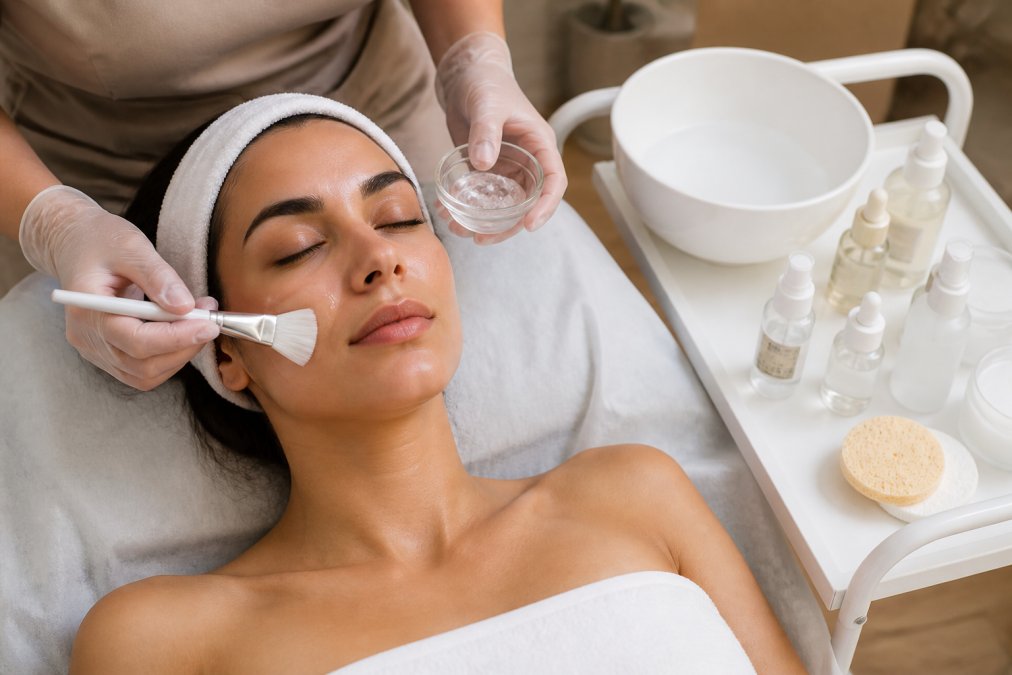
 listicle
Best Facial Treatments for Glowing Skin (2026)
Table of Contents
- What Makes a Facial Treatment Effective for Glowing Skin
- The Best Facial Treatments for Glowing Skin, Ranked by Concern
- 1. Chemical Peels, Best for Hyperpigmentation and Uneven Tone
- 2. Microneedling, Best for Acne Scarring and Skin Laxity
- 3. HydraFacial, Best for Dryness and Clogged Pores
- 4. LED Light Therapy, Best for Inflammation and Collagen Support
- 5. Laser Resurfacing, Best for Fine Lines and Skin Texture
- 6. Customized Clinical Facials, Best for Ongoing Maintenance
- Chemical Peels vs HydraFacials: Which One Is Right for You
- Benefits of Professional Facials Over At-Home Alternatives
- How Often to Get a Facial for Glowing Skin
- Post-Treatment Maintenance: Protecting Your Results
- Contraindications and Safety: When to Pause Before Booking
- How to Choose the Right Facial Treatment for Your Skin Type
- Frequently Asked Questions
Last Updated: September 2, 2026
The best facial treatments for glowing skin are not one-size-fits-all. At Liz Almanzar Esthetics, we see clients who've bounced between providers without a clear plan, trying treatment after treatment with inconsistent results. The difference between a radiant complexion and temporary fixes comes down to matching the right treatment to the right skin concern.
Below, we rank the top professional facial treatments by what they solve, explain how they work at the dermal level, and give you a framework for choosing. We also cover post-treatment maintenance, contraindications, and whether professional results are worth it compared to at-home alternatives.
Quick Picks:
- Best for hyperpigmentation: Chemical peels
- Best for acne scarring and skin laxity: Microneedling
- Best for dryness and clogged pores: HydraFacial
- Best for inflammation and collagen support: LED light therapy
- Best for fine lines and skin texture: Laser resurfacing
- Best for ongoing maintenance: Customized clinical facials
What Makes a Facial Treatment Effective for Glowing Skin
A facial treatment is effective for glowing skin when it addresses cellular turnover, hydration, and skin barrier integrity. Glowing skin results from light reflecting evenly off a smooth, well-hydrated epidermis, which happens when dead cells are cleared, collagen production is supported, and moisture is retained.
The most effective treatments work below the surface, trigger the skin's natural repair mechanisms through controlled exfoliation, mechanical stimulation, or photorejuvenation, and are customized to individual skin type rather than applied generically. According to American Academy of Dermatology guidance on skin care, the most effective professional treatments match the modality to the specific skin concern. Radiance is a byproduct of skin health, not a standalone goal.
The Best Facial Treatments for Glowing Skin, Ranked by Concern
The six treatments below represent the strongest options available at the professional level.
1. Chemical Peels, Best for Hyperpigmentation and Uneven Tone
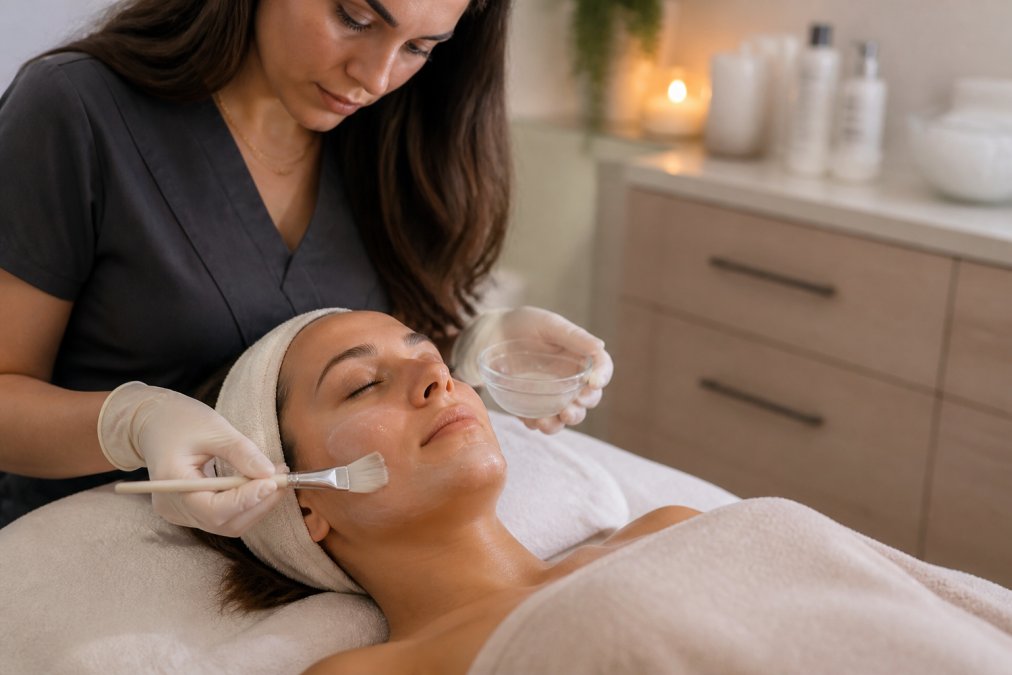
Chemical peels are the most direct intervention for hyperpigmentation, sun discoloration, and uneven skin tone. A clinical-grade chemical solution, typically an alpha hydroxy acid, beta hydroxy acid, or trichloroacetic acid, is applied to induce controlled exfoliation. As outer layers shed, fresh skin cells with more even pigmentation surface.
Superficial peels address the outermost layer with minimal downtime (one to three days of mild flaking). Medium-depth peels reach the upper dermis, producing more significant rejuvenation but requiring five to seven days of recovery. For post-acne discoloration, sun spots, or dull tone, a series of superficial peels spaced two to four weeks apart produces the most consistent results. Chemical peels are not ideal for active inflammatory acne or compromised skin barriers.
2. Microneedling, Best for Acne Scarring and Skin Laxity
Microneedling uses fine needles to create controlled micro-injuries in the dermis, triggering collagen and elastin synthesis. Over a series of sessions, the dermis remodels, visibly reducing acne scarring, improving skin laxity, and refining texture. Results build gradually over four to six weeks after each session as new collagen fibers organize. Most clients need three to six sessions for meaningful improvement in deeper acne scarring.
3. HydraFacial, Best for Dryness and Clogged Pores
The HydraFacial combines mechanical exfoliation, suction-based pore extraction, and serum infusion in a single session, addressing dryness, congestion, and dullness without downtime. A vortex-tip device simultaneously removes dead cells and debris while infusing hydrating actives, typically hyaluronic acid, antioxidants, and peptides, directly into the epidermis.
Clients with dry, dehydrated skin or consistently clogged pores see immediate improvement in radiance and texture after a single session. This is the most appropriate option for sensitive skin types who cannot tolerate the controlled injury of microneedling or chemical exposure of a peel. HydraFacials excel for maintenance and immediate radiance but are not a substitute for treatments working at the dermal level.
4. LED Light Therapy, Best for Inflammation and Collagen Support
LED light therapy uses specific wavelengths of light to interact with skin cells without heat or physical contact. Red light wavelengths penetrate the dermis and stimulate fibroblast activity, supporting collagen production. Blue light wavelengths target acne-causing bacteria at the skin surface. Because there is no downtime or barrier disruption, LED therapy works as a stand-alone treatment for active inflammation or as an add-on to amplify other treatments.
5. Laser Resurfacing, Best for Fine Lines and Skin Texture
Laser resurfacing delivers focused light energy to remove outer epidermal layers and stimulate collagen remodeling in the dermis. It is highly effective for fine lines, rough texture, and surface discoloration unresponsive to chemical peels. Fractional laser devices create microscopic treatment zones across the skin, leaving surrounding tissue intact to accelerate healing. Non-ablative lasers heat the dermis without removing surface tissue, producing gradual results with less downtime.
Laser resurfacing should only be performed by a licensed professional with specific device training. Skin tone matters significantly: certain wavelengths carry higher risk of post-inflammatory hyperpigmentation in deeper skin tones. According to guidance on laser skin treatments from the American Society for Dermatologic Surgery, patient selection and pre-treatment assessment are most important for safe, effective outcomes.
6. Customized Clinical Facials, Best for Ongoing Maintenance
A customized clinical facial is designed around the client's current skin condition at each visit. A skilled esthetician assesses the skin before every session and adjusts the combination of cleansing, exfoliation, extractions, masking, and product application accordingly. Over time, regular customized facials support cellular turnover, maintain pore refinement, and allow the esthetician to monitor changes and adjust approach before problems escalate.
Chemical Peels vs HydraFacials: Which One Is Right for You
Chemical peels vs HydraFacials is the most common comparison question. The answer depends entirely on your primary skin concern and tolerance for downtime.
Chemical peels induce controlled exfoliation through a chemical reaction at the epidermal and upper dermal layers. They are the stronger intervention for hyperpigmentation, sun damage, and uneven tone but require recovery time and are not appropriate for sensitive or compromised skin.
HydraFacials mechanically remove surface debris while infusing hydrating serums. They deliver immediate radiance with no downtime and suit all skin types including sensitive.
| Factor | Chemical Peel | HydraFacial |
|---|---|---|
| Primary concern | Hyperpigmentation, uneven tone | Dryness, clogged pores |
| Downtime | 1-7 days (depth-dependent) | None |
| Skin type suitability | Normal to oily, prepared skin | All skin types including sensitive |
| Results timeline | 1-2 weeks post-treatment | Immediate |
| Session frequency | Every 2-4 weeks (series) | Monthly maintenance |
| Skin barrier disruption | Yes | Minimal |
If your primary concern is pigmentation or texture and your skin is resilient, a peel series outperforms a HydraFacial series over three months. If you need results without downtime or have reactive skin, the HydraFacial is the smarter starting point.
Benefits of Professional Facials Over At-Home Alternatives
Professional facials deliver results at-home skincare cannot replicate. Professional estheticians work with clinical-grade formulations, professional devices, and treatment depths unavailable in over-the-counter products. At-home exfoliants are formulated at concentrations minimizing risk for unsupervised use, while professional chemical peels use significantly higher concentrations that penetrate deeper and produce more meaningful cellular turnover.
A trained esthetician also identifies early signs of skin concerns, changes in texture, new discoloration, and compromised barrier function that most people miss. At-home alternatives are essential for maintaining professional results between sessions but cannot fully replace professional treatment.
How Often to Get a Facial for Glowing Skin
How often to get a facial depends on your skin concern, treatment type, and where you are in your treatment plan.
- Targeted treatment series (chemical peels, microneedling): every 2-4 weeks until complete, then transition to maintenance
- HydraFacial or customized clinical facial for maintenance: once a month aligns with the skin's natural 28-40 day cellular turnover cycle
- LED light therapy: can be done weekly during active treatment phases
- Laser resurfacing: typically every 4-6 weeks for fractional non-ablative treatments
The 28-day rule is useful for maintenance clients. More is not always better, over-treating, particularly with exfoliating modalities, can disrupt the skin barrier and worsen the concerns you're addressing.
Post-Treatment Maintenance: Protecting Your Results
Post-treatment care determines how well professional treatment changes translate into lasting results. Professional treatments work by creating controlled skin change, whether removing dead cells, stimulating collagen, or infusing actives.
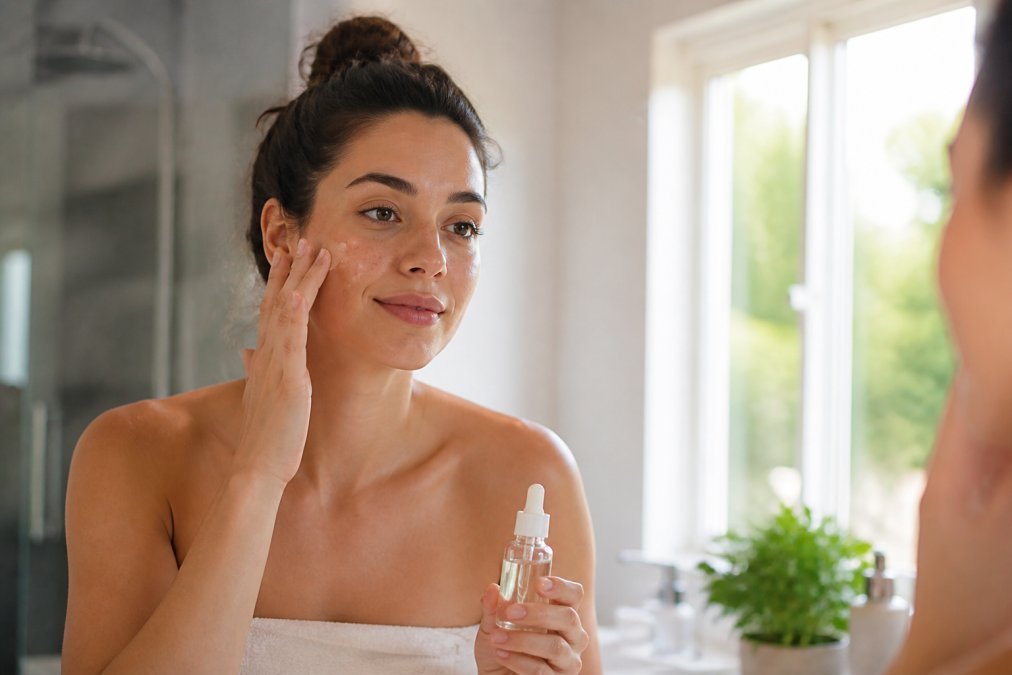
The non-negotiables after most professional facial treatments:
- Apply broad-spectrum SPF 30 or higher every morning. Freshly treated skin is significantly more vulnerable to UV-induced hyperpigmentation.
- Avoid active exfoliants, retinoids, AHAs, BHAs for at least 5-7 days post-treatment, or as directed by your esthetician.
- Keep the skin hydrated with a simple, fragrance-free moisturizer.
- Avoid heat exposure (saunas, hot yoga, steam rooms) for 48 hours post-treatment.
- Do not pick or manually remove flaking skin after a peel or resurfacing treatment.
The Skin Cancer Foundation's guidance on post-procedure sun protection identifies sun exposure as the primary reason professional treatment results fade prematurely. SPF is not optional. Long-term maintenance matters as much as the treatment itself.
Contraindications and Safety: When to Pause Before Booking
Not every skin condition is ready for professional facial treatment. Booking without disclosing relevant health information is a common mistake.
General contraindications across most professional facial treatments:
- Active cold sores or herpes simplex outbreaks: Many treatments can trigger an outbreak or spread the virus.
- Isotretinoin (Accutane) use: Most recommend waiting at least six months after completing isotretinoin before chemical peels, laser, or microneedling.
- Pregnancy: Many formulations and laser treatments are not recommended during pregnancy. Consult a healthcare provider before booking.
- Recent sun exposure or sunburn: Treating recently sun-exposed skin increases hyperpigmentation risk.
- Autoimmune conditions or immunosuppressant medications: These can impair healing after controlled-injury treatments.
- Active skin infections or inflammatory conditions: Eczema flares, psoriasis, and active rosacea may worsen with exfoliating or resurfacing treatments.
A thorough consultation before any professional treatment is essential for safety and effectiveness.
How to Choose the Right Facial Treatment for Your Skin Type
Choosing the right facial treatment starts with identifying your primary concern, not your skin type category. Skin type matters for treatment selection but is secondary to what you're actually addressing.
| Primary Concern | Recommended Treatment | Avoid |
|---|---|---|
| Hyperpigmentation, sun damage | Chemical peel series | Laser on deep skin tones without consultation |
| Acne scarring, skin laxity | Microneedling | During active breakouts |
| Dryness, clogged pores | HydraFacial | If barrier is already compromised |
| Inflammatory acne, redness | LED light therapy | Aggressive exfoliation |
| Fine lines, rough texture | Laser resurfacing | Without downtime planning |
| Ongoing radiance, maintenance | Customized clinical facial | Over-treating, monthly is enough |
Sensitive skin types should start with the most non-invasive option appropriate to their concern. The most important step is a proper consultation with a licensed esthetician who will assess your skin in person, ask about your health history, and recommend a sequence rather than a single treatment.
For clients in the Mystic area looking for personalized guidance on the best facial treatments for glowing skin, Liz Almanzar Esthetics offers customized facial services tailored to your specific skin concerns in a professional, welcoming environment. The right treatment plan starts with understanding your skin, not just your goals.
Finding the best facial treatments for glowing skin is straightforward once you match the treatment to the concern. The challenge most people face is navigating that decision without professional guidance, which leads to mismatched treatments and inconsistent results. Liz Almanzar Esthetics specializes in rejuvenating facial treatments customized to your skin's actual needs. Book a consultation to get a treatment plan built around your skin, not a generic protocol.
Frequently Asked Questions
Which facial treatment is most effective for achieving glowing skin?
There is no single best treatment because effectiveness depends on your specific skin concerns. Chemical peels address hyperpigmentation and uneven tone through controlled exfoliation of the epidermis. HydraFacials deliver hydration and serum infusion for dull, dry skin. Microneedling stimulates collagen production to improve texture and acne scarring. A consultation with a licensed esthetician helps identify which treatment aligns with your skin type and goals.
How often should you get a professional facial for best results?
Most estheticians recommend a professional facial every four to six weeks, which aligns with the skin's natural cellular turnover cycle. If you're targeting a specific concern like acne scarring or discoloration, a series of treatments spaced closer together may be recommended initially. Once your skin reaches a maintenance phase, spacing appointments out to every six to eight weeks is common. Your esthetician will adjust the schedule based on how your skin responds.
What is the difference between a standard facial and a medical-grade treatment?
A standard facial typically focuses on cleansing, exfoliation, and surface-level hydration using professional-grade products. Medical-grade treatments, such as deeper chemical peels, laser resurfacing, or microneedling, work at the dermal layers and require more training and sometimes physician oversight. Medical-grade options generally produce more significant results for concerns like skin laxity, deep acne scarring, or severe discoloration, but they also carry more downtime and require careful aftercare.
Are there facial treatments that help with skin texture and dullness?
Yes. Mechanical exfoliation treatments, chemical peels, and microneedling are all effective for improving skin texture and restoring radiance. HydraFacials combine exfoliation with serum infusion to address dullness caused by dehydration. LED light therapy supports cellular turnover and reduces inflammation that can make skin appear flat. Consistent professional treatments combined with a solid post-treatment home routine produce the most noticeable improvement in overall skin tone and texture.
How long do the results of a professional glowing skin facial typically last?
Results vary by treatment type. A hydration-focused facial may keep skin looking refreshed for two to four weeks. Chemical peels and microneedling can produce visible improvements in skin tone and texture that last several months, especially when done in a series. Laser resurfacing results can last a year or longer with proper sun protection and maintenance. Ongoing factors like sun exposure, skincare habits, and lifestyle all affect how long results are sustained.