 blog
blog
Best Facials for Acne Scars 2026: Pro Treatment Guide
Table of Contents
- What Kind of Facial Actually Works on Acne Scars?
- Microneedling for Acne Scars: Collagen Induction Therapy
- Chemical Peels for Acne Scarring: TCA CROSS and Beyond
- Fractional Laser Resurfacing: Ablative vs Non-Ablative
- Acne Scar Treatment Recovery Time and Downtime
- How to Choose an Esthetician for Acne Scars
- At-Home Maintenance and Realistic Expectations
- Frequently Asked Questions
Last Updated: September 15, 2026
What Kind of Facial Actually Works on Acne Scars?
Not every facial marketed for scarring can change it. The best facials for acne scars 2026 are clinical treatments that remodel skin below the surface: microneedling, chemical peels, and fractional laser resurfacing. Standard spa facials clean and hydrate, but they rarely touch scar tissue. The right treatment depends on your scar type, not on what's trending.
Acne scars form when inflammation damages the dermis and collagen rebuilds in a disorganized pattern (pubmed.ncbi.nlm.nih.gov). A surface-level cleanse cannot reorganize that tissue. What does work is controlled injury that triggers new collagen, a process called dermal remodeling.
Identifying Your Scar Type: Boxcar, Rolling, and Icepick
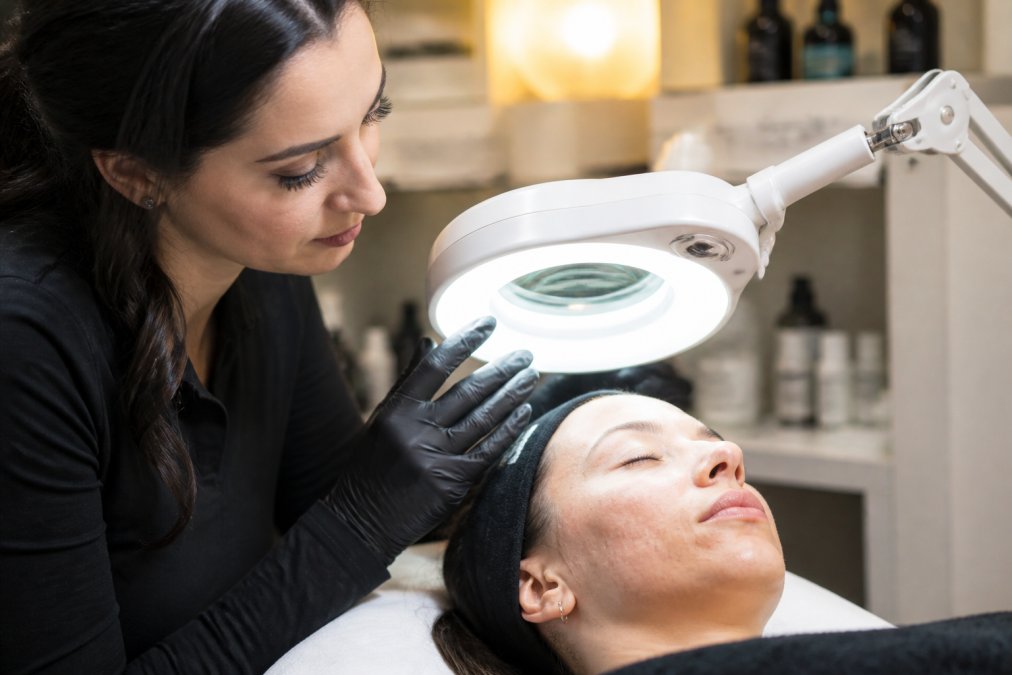
Scar type decides treatment, so start here. Boxcar scars are round or oval depressions with sharp, defined edges. Rolling scars create a wavy texture from fibrous bands pulling skin downward. Icepick scars are narrow, deep punctures. Many people have a mix of all three, and each responds differently to treatment.
How Professional Treatments Differ From Standard Facials
A standard facial focuses on the epidermis: cleansing, exfoliation, hydration. A clinical scar treatment works in the dermis, where collagen lives. That difference explains why a relaxing monthly facial can improve skin texture and glow without flattening a single indented scar.
Microneedling for Acne Scars: Collagen Induction Therapy
Microneedling for acne scars is a collagen induction therapy that uses fine needles to create controlled micro-injuries in the dermis. The skin's repair response builds fresh collagen, gradually softening depressed scars over a series of sessions. It suits most skin tones because it does not remove pigment-bearing surface layers.
RF Microneedling and Platelet-Rich Plasma
Radiofrequency microneedling adds heat energy at controlled depths, tightening tissue and boosting collagen beyond what needles alone achieve. Platelet-rich plasma, drawn from your own blood, is sometimes applied during or after needling to support healing. Both options target texture and scar depth rather than just surface tone.
Chemical Peels for Acne Scarring: TCA CROSS and Beyond
Chemical peels for acne scarring are not one treatment. They are a depth ladder, and where a peel lands on that ladder decides whether it touches scar tissue at all. Most spa peels work in the epidermis. Scar remodeling requires reaching the papillary or reticular dermis, which is why the same word, "peel", describes two very different procedures.
The Peel Depth Ladder
| Depth | Typical Agents | What It Reaches | Scar Impact |
|---|---|---|---|
| Superficial | Glycolic (20-30%), lactic, mandelic, low-strength salicylic | Epidermis only | Tone and texture; no change to indented depth |
| Medium | TCA 10-30%, Jessner's plus TCA, higher-strength glycolic | Papillary dermis | Softens shallow boxcar and rolling edges; improves post-inflammatory hyperpigmentation |
| Deep | TCA 35%+ (full-face use is uncommon), phenol formulas | Reticular dermis | Meaningful remodeling of deeper scars; significant recovery and risk |
A light glycolic series can brighten skin and fade the brown marks left behind by old breakouts, but it will not lift a depressed scar. That distinction is the single most common source of disappointment in peel-based scar plans.
How TCA CROSS Actually Works
TCA CROSS stands for chemical reconstruction of skin scars (pubmed.ncbi.nlm.nih.gov). Instead of painting acid across the face, the provider uses a wooden applicator or fine tip to place a high-concentration trichloroacetic acid, commonly in the 50-100% range, directly into the base of an individual icepick or narrow boxcar scar. The acid creates a controlled focal wound at the scar floor, and the healing response builds new collagen that pushes the depression upward.
Key mechanics worth understanding before you book:
- It is focal, not full-face. Each scar is treated individually, which is why a session can take 30-60 minutes for a modest number of scars and why pricing is often per-scar or per-area rather than per-facial.
- It is best for icepick and narrow boxcar scars. Rolling scars, which are tethered by fibrous bands rather than volume loss, respond poorly to CROSS alone and usually need subcision first.
- Frosting is expected. The treated spot turns white ("frosts") immediately, then forms a small scab that sloughs over roughly 5-10 days. Spot downtime is real even though the rest of the face is untouched.
- It is typically repeated. Most practitioners plan 2-4 sessions spaced 4-8 weeks apart, because each pass adds a layer of collagen rather than resolving the scar in one visit.
- It pairs well. CROSS for the icepick scars plus a resurfacing modality for overall texture is a common combination, since no single treatment addresses a mixed scar pattern.
Pigment Risk and Skin Tone
This is where generic peel guides fall short. Medium and deep peels carry a meaningful risk of post-inflammatory hyperpigmentation (PIH), and that risk rises with Fitzpatrick type IV, V, and VI (pubmed.ncbi.nlm.nih.gov). A provider working with deeper skin tones will typically:
- Favor superficial or carefully titrated medium peels over aggressive deep peels as a first step
- Prime the skin for 2-4 weeks beforehand with a tyrosinase-inhibiting agent such as hydroquinone, azelaic acid, or tranexamic acid, depending on what the provider judges appropriate
- Test a small area before treating the full face
- Build in a strict sun-protection protocol, since UV exposure during healing is the fastest route to a dark mark that outlasts the scar itself
If a provider offers the same peel protocol to every client regardless of skin tone, that is a signal to keep looking.
Where Peels Fit in a Scar Plan
Peels are rarely a standalone fix for indented scarring. Their strongest roles are (1) TCA CROSS for isolated icepick and narrow boxcar scars, (2) medium-depth peels to soften shallow texture and even out tone, and (3) pre-treatment priming to reduce PIH risk before a laser or microneedling series. Used that way, they earn their place. Used as a monthly "scar facial," they mostly deliver glow.
Fractional Laser Resurfacing: Ablative vs Non-Ablative
Fractional laser resurfacing uses columns of light energy to remove damaged tissue and trigger tissue regeneration. The key decision is ablative vs non-ablative. Ablative lasers remove the outer skin layer for stronger results and longer recovery. Non-ablative lasers heat tissue beneath intact skin, with milder outcomes and less downtime.
| Treatment | Best For | Typical Downtime | Sessions (Typical) |
|---|---|---|---|
| Microneedling | Rolling scars, texture | 1-3 days | 3-6 |
| RF microneedling | Rolling and boxcar scars | 2-4 days | 3-4 |
| TCA CROSS | Icepick, boxcar scars | 5-7 days (spot) | 2-4 |
| Non-ablative laser | Mild scarring, tone | 3-5 days | 3-5 |
| Ablative laser | Deep scarring | 1-2 weeks | 1-3 |
Acne Scar Treatment Recovery Time and Downtime
Acne scar treatment recovery time depends on intensity, depth, and your skin's healing speed. Expect redness, called erythema, and mild swelling after most collagen-stimulating treatments. Microneedling typically settles within a few days. Deeper peels and ablative lasers can take one to two weeks before makeup sits comfortably.
How to Choose an Esthetician for Acne Scars
How to choose an esthetician for acne scars comes down to training, scar-specific experience, and honesty about limits.
Skin Tone, Fitzpatrick Scale, and Safety Considerations
At-Home Maintenance and Realistic Expectations
The Maintenance Routine That Protects Your Investment
A Realistic Results Timeline
The Part Nobody Talks About
Professional treatments create the change; at-home care and honest expectations protect it. Budget for maintenance the same way you budget for the series itself.
Frequently Asked Questions
What kind of facial is best for acne scars?
The best option depends on your scar type. Microneedling for acne scars and RF microneedling work well for rolling and boxcar scars by stimulating collagen. Chemical peels with TCA CROSS target icepick scars. Fractional laser resurfacing addresses overall texture and pigmentation. A consultation with a qualified esthetician or dermatologist will help match the treatment to your specific scars, skin tone, and budget.
How many sessions are typically required to see results for acne scarring?
Most professional treatments require a series of sessions rather than a single appointment. Microneedling and chemical peels often need three to six sessions spaced four to six weeks apart. Fractional laser resurfacing may need two to four sessions. Results build gradually as collagen remodels over three to six months. Your esthetician will outline a treatment plan based on scar depth and your skin's response.
Are there specific facial ingredients to look for when treating acne scars?
For at-home support between professional treatments, look for ingredients that support collagen and barrier repair: retinoids, vitamin C, hyaluronic acid, and niacinamide. Sun protection is non-negotiable because UV exposure worsens post-inflammatory hyperpigmentation. Avoid harsh scrubs that irritate scar tissue. An esthetician can recommend a maintenance protocol that complements your in-office treatments without causing irritation.
Can professional facials effectively reduce the appearance of acne scars?
Professional facials that use clinical modalities like microneedling, chemical peels, or laser can visibly improve acne scars by promoting dermal remodeling and new collagen. Standard spa facials mainly cleanse and hydrate, which helps overall skin health but won't significantly change scar texture. The key is choosing a treatment plan that targets scar depth and tissue regeneration, and committing to the recommended number of sessions.
Choosing the right path through microneedling, peels, and laser resurfacing takes an honest assessment of your scar type and skin tone. Liz Almanzar Esthetics offers personalized facial treatments and a welcoming, professional environment built around your specific skin concerns, not a one-size-fits-all menu. Our team specializes in rejuvenating facials tailored to individual needs. Get started with Liz Almanzar Esthetics and build a treatment plan that actually targets your scarring.