 blog
blog
Cost of Lash Extensions 2026: Full Pricing Breakdown
Table of Contents
- How Much Do Lash Extensions Cost in 2026?
- What Drives Lash Extension Cost Up or Down?
- How Long Do Lash Extensions Last?
- Lash Extension Aftercare Tips That Protect Your Investment
- Professional vs Budget Lash Extensions: What's the Real Difference?
- Hidden Costs and Red Flags in Low-Cost Lash Services
- Total Annual Cost: Budgeting for Lash Extensions in 2026
- Conclusion
- Frequently Asked Questions
Last Updated: September 14, 2026
How Much Do Lash Extensions Cost in 2026?
The cost of lash extensions 2026 depends on the style you choose, your artist's experience, and where you live. A first full set runs higher than a refill, and the gap between a classic set and a mega volume set can be substantial. At Liz Almanzar Esthetics, we believe the total commitment matters more than the first appointment.
Most people focus on the initial full set price and ignore the maintenance schedule that follows. That's the mistake that turns a manageable beauty expense into a budget surprise.
Full Set Pricing by Lash Type
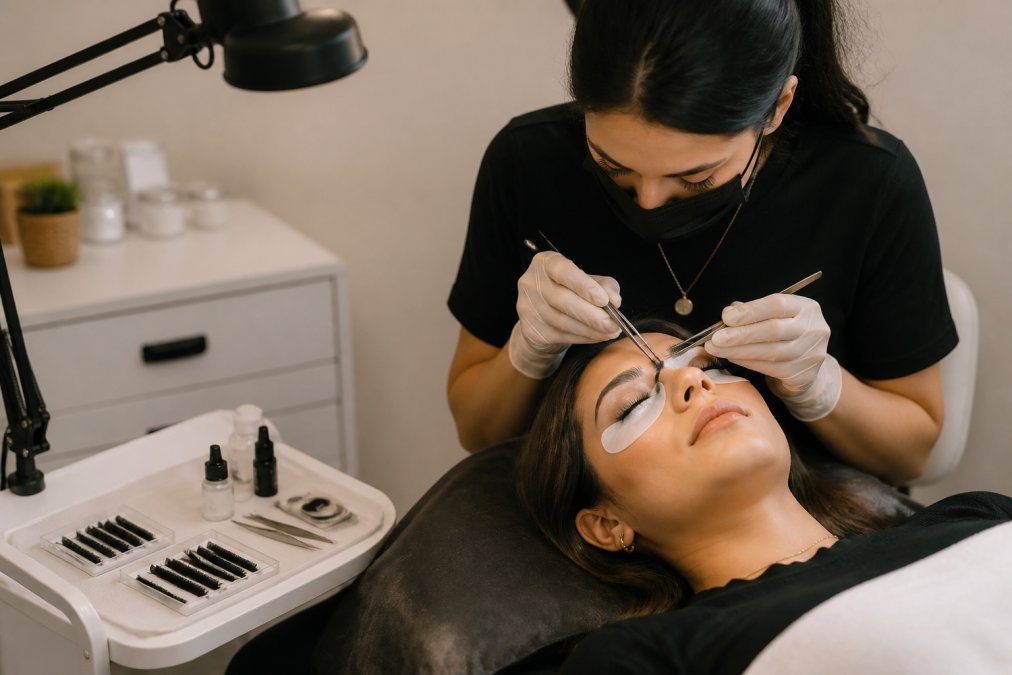
Full set pricing scales with the number of synthetic fibers applied per natural lash. Classic lashes use a 1:1 ratio, hybrid lashes blend classic and volume techniques, volume lashes use 2-6 lightweight extensions per lash, and mega volume pushes beyond that. Each step up requires more time, more product, and a more skilled artist, so costs climb accordingly.
Refills and Maintenance Pricing
Refills cost less than a full set because your artist only replaces grown-out extensions. Most clients book a fill-in every two to three weeks; skip that schedule and you'll need a full set again, which costs more than a refill cycle.
What Drives Lash Extension Cost Up or Down?
Pricing isn't arbitrary. Understanding what drives it helps you judge whether a quote is reasonable or a warning sign.
Artist Experience and Certification
A lash artist with professional certification and years of practice charges more than a beginner. That premium reflects training in sanitation standards, lash mapping, and safe isolation techniques that protect your natural lashes. U.S. Food and Drug Administration guidance on cosmetic safety outlines why proper application matters for eye-area products.
Lash Mapping, Curl Type, and Diameter
Custom lash mapping for your eye shape, plus curl type and diameter, affects both the look and the price. A mapped set takes longer to design and apply than a uniform one-size approach.
| Lash Type | Extensions Per Natural Lash | Application Time | Maintenance Frequency |
|---|---|---|---|
| Classic | 1 | Shorter | Every 2-3 weeks |
| Hybrid | 2-3 blended | Moderate | Every 2-3 weeks |
| Volume | 2-6 | Longer | Every 2-3 weeks |
| Mega Volume | 6+ | Longest | Every 2-3 weeks |
How Long Do Lash Extensions Last?
Lash extensions last as long as your natural lash shed cycle allows, typically four to six weeks, with noticeable thinning by week three. No set is permanent. Retention depends on adhesive quality, aftercare, and how gently you treat your lashes.
Lash Extension Aftercare Tips That Protect Your Investment
Aftercare separates a set that lasts three weeks from one that lasts one. Keep lashes dry for 24 hours, avoid oil-based products near the eyes, brush daily, and book regular fills. A gentle lash bath with a lash-safe cleanser removes buildup without weakening the adhesive bond.
Professional vs Budget Lash Extensions: What's the Real Difference?
Professional and budget lash extensions differ most in artist training, adhesive quality, and sanitation. Budget providers often cut application time, leading to poor isolation and natural lash damage. Professionals isolate each natural lash, use quality adhesive, and follow sanitation standards that protect lash health.
The savings from a cheap full set rarely survive the repair costs. U.S. Occupational Safety and Health Administration guidance on workplace sanitation explains why clean tools and safe practices matter in any service setting.
Hidden Costs and Red Flags in Low-Cost Lash Services
The advertised price is rarely the final price, and the cheapest quote is often the most expensive decision. Knowing where hidden costs live protects both your wallet and your natural lashes.
The Hidden Costs That Show Up After You Book
- Removal fees. If you dislike the set or need a corrective service elsewhere, removal is a separate charge, often priced higher than a refill because it is slow, delicate work.
- Corrective full sets. A poorly isolated set usually cannot be refilled, it must be removed and rebuilt, so you pay full-set pricing twice in a short window.
- Adhesive and lash "upgrades." Some providers advertise a low base price, then upsell premium adhesive, specialty curls, colored fibers, or "volume" upgrades at checkout. Ask what's included before you sit down.
- Patch test and consultation fees. A reputable provider may charge a small consultation or patch-test fee, a feature, not a red flag, since it screens for adhesive sensitivity before application.
- Aftercare products. Lash-safe cleanser, a lash brush, and a silk pillowcase belong in your budget, not in a surprise line item.
- Repair visits between refills. Shedding, rubbing, or one bad night's sleep can require a touch-up before your scheduled fill. Some studios charge; some fold it into the refill.
Why "Too Cheap" Is a Safety Signal, Not a Bargain
A price far below your local market usually means something was cut, most often the things you cannot see:
- Rushed application. Proper isolation, separating one natural lash from its neighbors before bonding, is the most time-consuming part of the service. When a provider shortens the appointment to lower the price, isolation gets skipped, causing natural lash damage and traction alopecia over time.
- Adhesive quality and freshness. Cyanoacrylate-based adhesives have a short shelf life once opened and are sensitive to humidity and temperature. Stretching old adhesive to save money yields weaker bonds, more fumes, and worse retention, which you pay for in extra refills.
- Sanitation shortcuts. Reused or improperly sterilized tweezers, unwashed lash trays, and skipped hand hygiene are the pathways for eye-area infections. The FDA's cosmetic safety guidance and OSHA's workplace sanitation standards both exist because contaminated tools and products cause real harm, see U.S. Food and Drug Administration guidance on cosmetic safety and U.S. Occupational Safety and Health Administration guidance on workplace sanitation.
- No patch test. A patch test screens for adhesive allergy before a full set is applied. A provider who skips it is either untrained or unconcerned about your reaction.
A Quick Red-Flag Checklist
Walk away, or at least ask harder questions, if any of these are true:
- No visible certification, license, or training documentation.
- No patch test offered before a first full set.
- Tools are reused without visible sterilization between clients.
- The appointment is booked far shorter than a comparable full set elsewhere.
- The provider cannot explain which adhesive they use or how often they replace it.
- The price is dramatically below every other quote in your area with no stated reason.
How to Compare Quotes Fairly
When you collect quotes, ask each provider the same five questions: What's included in the full-set price? Is removal included or extra? How often do you recommend refills? Do you charge for touch-ups between refills? What adhesive do you use, and do you patch test? Comparing answers side by side turns a confusing price spread into a clear value comparison, and usually reveals that the "cheap" option isn't cheap once add-ons are counted.
Total Annual Cost: Budgeting for Lash Extensions in 2026
Most articles stop at the full-set price. The number that matters for the cost of lash extensions 2026 is your total cost of ownership, the full set, every refill, aftercare products, and the occasional corrective visit, added up over twelve months. That figure tells you whether lash extensions fit your budget.
The Total Cost of Ownership Formula
Annual cost = (refill price × refills per year) + full set price + aftercare + corrective buffer
Each input is a real line item, not a guess:
- Refills per year. A two-week schedule is about 26 refills. A three-week schedule is about 17. A four-week schedule is about 13, but retention at four weeks is usually poor, so most clients land between 17 and 26.
- Full set price. One-time, unless you let a set grow out and need to start over.
- Aftercare. Lash-safe cleanser, a lash brush, and a silk pillowcase are recurring or one-time costs that belong in the budget.
- Corrective buffer. A realistic allowance for a removal, a rebuild, or an unexpected touch-up.
Worked Example: Two Refill Schedules, One Year
Assume a mid-range full set and a mid-range refill in a typical metro market. The exact dollar figures vary by city and artist, but the structure is what matters:
| Line Item | Every 2 Weeks | Every 3 Weeks |
|---|---|---|
| Refills per year | ~26 | ~17 |
| Refill cost (mid-range) | $X each | $X each |
| Annual refill spend | 26 × $X | 17 × $X |
| Initial full set | $Y | $Y |
| Aftercare (cleanser, brush, pillowcase) | $Z | $Z |
| Corrective buffer | $B | $B |
| Total annual cost | 26X + Y + Z + B | 17X + Y + Z + B |
Plug in your local quotes and the gap between the two schedules is usually several hundred dollars a year, which is why refill frequency, not the full-set price, is the biggest lever on your annual spend. Clients who refill on schedule spend less per year than those who let sets grow out and repeatedly pay for full sets.
Regional Price Index: Why Your Zip Code Moves the Number
Lash pricing tracks local cost of living, rent, and labor. A full set in a high-cost coastal metro can run substantially higher than in a smaller market, and refill pricing scales with it. Before building a budget, collect three to five quotes from providers within a reasonable drive, the spread tells you more than any national average. If you relocate, re-benchmark, because the same set can cost meaningfully more or less in a new market.
Can You Pay With HSA or FSA Funds?
In general, lash extensions are considered cosmetic and are not eligible for HSA or FSA reimbursement under IRS rules for medical expenses. Narrow exceptions exist when a licensed medical provider documents a medical need, such as lash loss tied to a diagnosed condition or treatment, but routine cosmetic sets do not qualify. If unsure, ask your plan administrator or a tax professional before you spend; a receipt alone does not make it reimbursable.
Insurance and Liability If Something Goes Wrong
If a service causes an eye injury, allergic reaction, or natural lash damage, your recourse depends on the provider's licensing and insurance. A licensed, insured studio carries liability coverage, one reason its pricing is higher than a kitchen-table provider. Before booking, ask whether the provider is licensed in your state and insured. If a botched service leads to a medical issue, see an eye doctor first, then document everything, photos, receipts, and the provider's response, since that record is what any claim rests on.
A Simple Budgeting Framework
- Get three to five local quotes for a full set and a refill.
- Pick your realistic refill schedule (two, three, or four weeks).
- Multiply refill price by refills per year.
- Add the full set, aftercare, and a corrective buffer.
- Compare that annual number to what you currently spend on mascara, lash serum, and lash-lift services.
Conclusion
Lash extensions are a recurring beauty service investment, and understanding the true annual cost helps you decide whether they fit your routine. At Liz Almanzar Esthetics, we offer lash extensions, rejuvenating facials, and precise waxing in a welcoming, professional environment, with personalized consultations tailored to your needs. Get started with Liz Almanzar Esthetics and simplify your daily makeup routine.
Frequently Asked Questions
How much should a full set of lash extensions cost?
A full set of lash extensions cost varies by type and artist. Classic sets generally cost less than hybrid or volume sets, which require more time and skill. Mega volume sets are the most expensive. Pricing also depends on your region, the artist's certification, and the studio's overhead. Request a consultation to get an exact quote for your lash mapping and desired look.
How often do I need to budget for lash extension fills?
Most clients need fill-in sessions every two to three weeks to maintain a full look. Your natural lash shed cycle means you lose a few lashes daily, so refills keep gaps from forming. Budgeting for two refills per month is realistic. If you follow lash extension aftercare tips like avoiding oil-based products and keeping up with lash baths, you may stretch appointments slightly longer.
What are the potential risks of choosing low-cost lash services?
Discount lash services often cut corners on adhesive quality, sanitation standards, and application time. Poorly applied extensions can damage natural lashes, cause irritation, or lead to infections. A skilled lash artist uses proper isolation and lash mapping to protect lash health. If a price seems unusually low, ask about the technician's certification and hygiene practices before booking.
Are lash extensions worth the cost compared to mascara?
Lash extensions cost more upfront than a tube of mascara, but they eliminate daily application time and smudging. For people who want a low-maintenance routine, extensions can simplify mornings significantly. The trade-off is ongoing refill costs and aftercare commitment. If you prefer a set-and-forget beauty routine, the investment may be worth it.