 ultimate-guide
How Long Do Lash Extensions Last? A 2026 Guide
Table of Contents
- How Long Do Lash Extensions Last on Average?
- The Natural Lash Cycle and Why It Drives Lash Shed
- Lash Extension Retention Factors That Shorten or Extend Wear
- Lash Extension Aftercare Tips That Protect Your Retention Rate
- How Often Do You Need Lash Fills to Keep the Look
- Troubleshooting Premature Fallout: Why Lash Extensions Last Less Than Expected
- Signs of Poor Application and How to Protect Your Lash Health
- Frequently Asked Questions
Last Updated: September 1, 2026
How Long Do Lash Extensions Last on Average?
Lash extensions last between two and four weeks before a fill-in appointment is needed. The timeline is partly biological and partly behavioral, understanding both is key to maximizing your investment. (Source: American Academy of Ophthalmology's guidance on eyelash health)
Classic, Hybrid, and Volume Sets: Lifespan Comparison
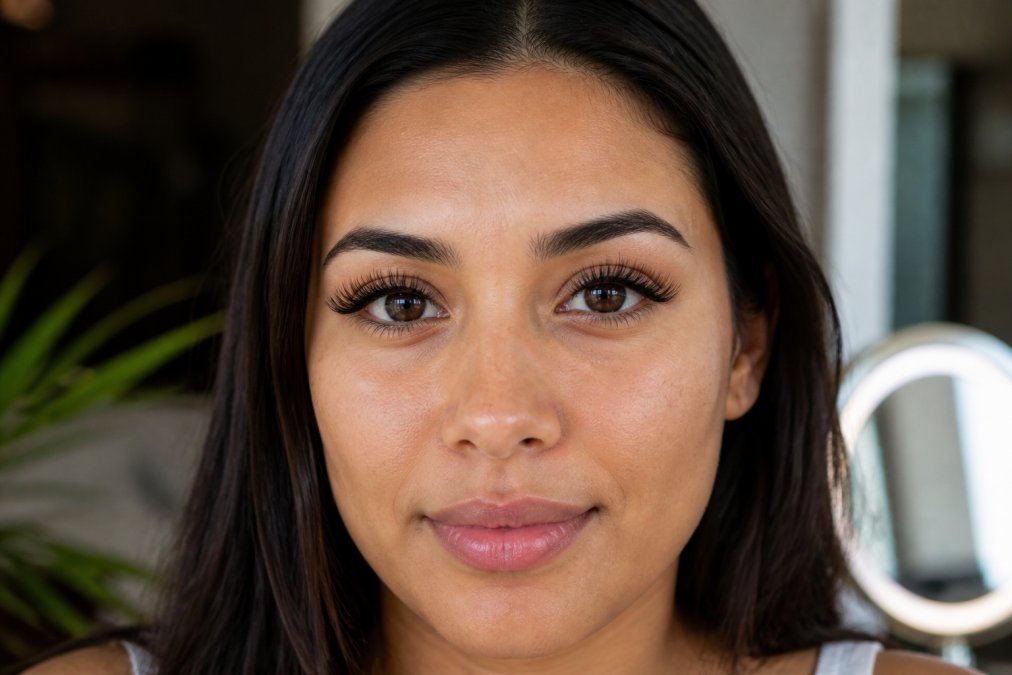
The style of set you choose affects how the shed looks, not necessarily how long individual extensions stay bonded. Classic lashes apply one synthetic fiber per natural lash, so fallout is immediately visible. Volume sets use multiple ultra-fine fibers fanned onto each lash, maintaining fullness even as some extensions shed. Hybrid sets fall in between.
| Set Type | Fibers per Natural Lash | Visible Fullness After 2 Weeks | Best For |
|---|---|---|---|
| Classic | 1 | Noticeably thinner | Natural, defined look |
| Hybrid | 1-3 mix | Moderate retention of fullness | Texture and dimension |
| Volume | 2-6 fan | Stays fuller longer visually | Maximum density |
Classic sets look sparse fastest due to lack of redundancy. Volume sets maintain their appearance longer between fills, which is why many clients seeking low-maintenance results choose them. The adhesive bond on any style follows the same rules.
The Natural Lash Cycle and Why It Drives Lash Shed
Every lash extension falls off because the natural lash it is bonded to eventually sheds. This is biology, not a flaw in application.
The natural lash cycle has three phases: the anagen phase (active growth, 30-45 days), the catagen phase (transitional), and the telogen phase (resting, up to 100 days before shedding). Each lash on your lid is at a different point in this cycle, which is why extensions shed gradually rather than all at once. Most people have between 90 and 150 natural lashes per eye, with a portion always in the telogen phase and shedding within weeks.
What surprises many first-time clients is that the lash shed they notice after getting extensions is not caused by the extensions themselves, they are simply more aware of their lashes. As the American Academy of Ophthalmology's guidance on eyelash health notes, natural lash shedding is continuous. If you lose several extensions in the first 48 hours, those lashes were likely already in the telogen phase. Gradual, even shedding over two to three weeks indicates proper application and adhesive bonding.
Lash Extension Retention Factors That Shorten or Extend Wear
The biggest mistake clients make is assuming retention is entirely the technician's responsibility. Application technique matters enormously, but so does aftercare.
Adhesive Bond and Application Technique
Lash adhesive cures through polymerization, where cyanoacrylate reacts with moisture to form a solid bond. Bond strength depends on proper isolation of each natural lash, appropriate adhesive amount, and room curing conditions. Excess glue creates a bulky bond prone to stress and can cause natural lashes to stick together, accelerating fallout. Proper isolation, separating each natural lash before extension placement, is the single most important technical factor in retention.
Poor application technique causes lash damage when extensions are applied to multiple natural lashes at once, pulling unevenly and causing premature shedding.
Seasonal Changes and Humidity Levels
Humidity affects how quickly lash adhesive cures and bond stability. High humidity accelerates polymerization but can make adhesive brittle, reducing security. Low winter humidity slows cure time, leaving bonds slightly weaker. Skilled technicians adjust adhesive selection and application speed based on ambient humidity.
Ingredient Sensitivity and Glue Types
Standard lash adhesives contain cyanoacrylate as the primary bonding agent. Clients experiencing redness, itching, or swelling may react to this ingredient or secondary components like carbon black. Sensitive or clear adhesive formulations exist for clients with known reactions, though they have slightly lower retention. The FDA's guidance on cosmetic ingredient safety recommends a patch test for clients with sensitivities before full application. A reaction to adhesive differs from poor application, communicate any past irritation before your appointment so your technician can select the appropriate formula.
Lash Extension Aftercare Tips That Protect Your Retention Rate
Aftercare determines how long lash extensions last through the full two-to-four-week cycle. The first 24 to 48 hours are critical as adhesive completes its cure. Avoid getting lashes wet, using steam, or applying products near the eye area during this window.
Daily Lash Bath and Eyelid Hygiene
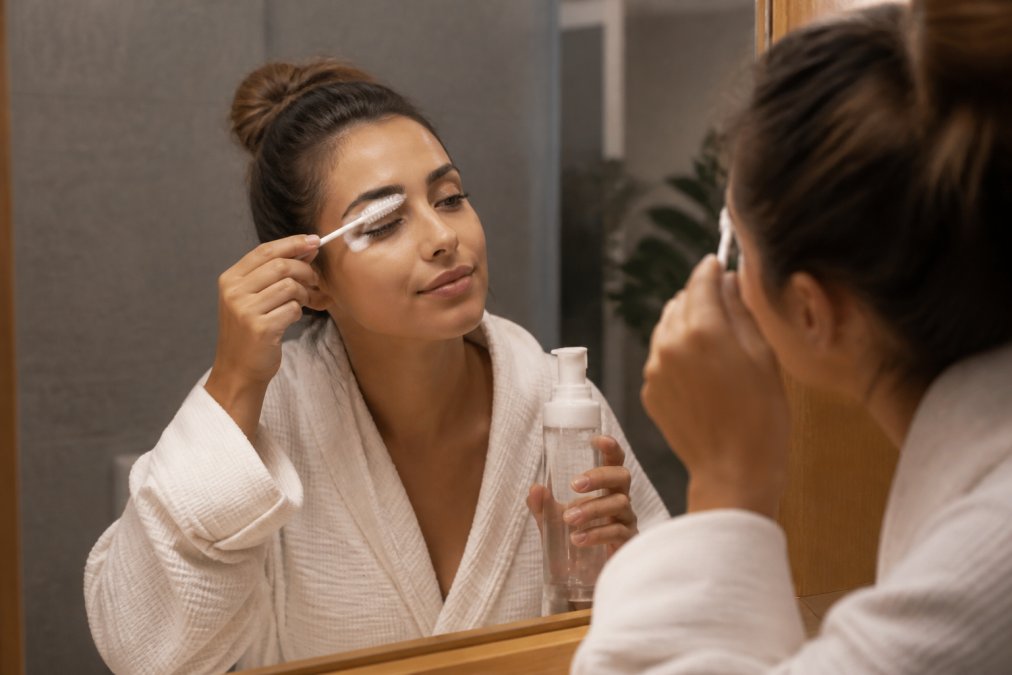
A daily lash bath is essential for lash health. Oil, dead skin cells, and product residue accumulate at the lash line and degrade the adhesive bond. Clients who skip lash baths see retention rates drop significantly.
The process:
- Apply oil-free lash extension cleanser to a soft lash spoolie or brush
- Work gently along the lash line and through extensions, moving downward
- Rinse with cool water, avoiding direct pressure on lashes
- Pat dry with a lint-free towel and brush through with a clean spoolie
This takes about two minutes. Clients who do this daily consistently report better retention.
Products and Habits to Avoid
Oil-based cleansers and makeup removers degrade the adhesive bond. Even small amounts accumulate over time. Waterproof mascara is another significant problem, it requires oil-based remover, creating a cycle that degrades the bond quickly.
Other habits that shorten lash extension lifespan: (Source: Occupational Safety and Health Administration (OSHA) guidelines)
- Rubbing or touching eyes frequently
- Sleeping face-down without a silk pillowcase
- Using steam rooms or saunas regularly
- Applying sunscreen close to the lash line without checking for oils
How Often Do You Need Lash Fills to Keep the Look
Most clients need a lash fill every two to three weeks to maintain fullness. By the two-week mark, natural shedding has typically removed enough extensions that the set looks noticeably sparse. By four weeks, most clients have lost enough that a full set makes more economic sense than a fill.
Fill vs. Full Set: The Economic Breakdown
A fill addresses gaps left by shed extensions. A full set starts from scratch, bonding extensions to all available natural lashes. Fills are faster and less expensive, making consistent scheduling more cost-effective.
The economics break down when clients wait too long. If more than 50% of extensions have shed, many technicians recommend a full set because there are not enough remaining extensions to blend new ones into.
| Time Since Last Appointment | Typical Recommendation | Reason |
|---|---|---|
| 2 weeks | Fill | Minimal shedding, easy to blend |
| 3 weeks | Fill | Moderate shedding, still workable |
| 4 weeks | Fill or full set | Depends on retention and style |
| 5+ weeks | Full set | Too sparse to fill effectively |
For pricing specific to your situation, contact Liz Almanzar Esthetics directly. Every client's retention and fill needs differ.
Troubleshooting Premature Fallout: Why Lash Extensions Last Less Than Expected
Premature fallout, losing significant extensions within the first week, has a traceable cause.
The most common culprits:
Adhesive exposure too soon. Getting lashes wet within 24 hours, using steam, or sweating heavily before full cure weakens the initial bond.
Oil contamination before application. Residual oil or product on natural lashes prevents proper adhesive bonding.
Lash isolation errors. Extensions applied to multiple natural lashes shed prematurely when those lashes move through their cycle at different rates.
Adhesive mismatch. Using adhesive that cures too quickly or slowly for ambient humidity creates a weaker bond.
If you experience consistent premature fallout across appointments, discuss it openly with your technician. A good lash technician will troubleshoot rather than simply rebook you.
Signs of Poor Application and How to Protect Your Lash Health
Poor application does not always look obviously wrong at first. Some signs only become apparent as the set ages.
Stickiness or clumping. Natural lashes bonded together rather than isolated individually feel stiff and may pull when you blink, a clear sign of poor lash mapping and isolation.
Discomfort or tightness at the lash line. Extensions placed too close to the eyelid or with excess adhesive cause irritation and pressure on the follicle. Healthy extensions feel weightless.
Rapid, uneven shedding. Losing extensions in patches rather than gradually suggests inconsistent application.
Natural lash damage. If your natural lashes appear shorter, thinner, or broken after removal, extensions were too heavy, applied to unsuitable lashes, or removed incorrectly.
Protecting your lash health starts with choosing a qualified technician who performs proper lash mapping, uses appropriate lash diameter and curl, and isolates each lash individually. The American Academy of Dermatology's guidance on eyelash extension safety recommends consulting a dermatologist if you experience persistent irritation, swelling, or lash loss, as these can indicate allergic reaction or underlying skin conditions requiring attention before future appointments.
If something feels wrong after your appointment, contact your technician immediately. Most application-related issues are easier to address early.
Frequently Asked Questions
How long do lash extensions last before a fill?
Most clients need a fill every two to three weeks. Because each extension is bonded to a single natural lash, it sheds as that lash completes its growth cycle. By the two-week mark, enough natural lashes have shed that gaps become noticeable. Clients who follow a consistent aftercare routine and avoid oil-based products often stretch closer to three weeks between appointments without losing the full look.
What factors affect the retention of lash extensions?
Lash extension retention depends on the adhesive bond quality, your lash technician's application technique, your natural lash cycle, and daily habits. Oil-based cleansers and makeup removers break down the adhesive fastest. High humidity levels can affect polymerization during application. Lifestyle habits like sleeping face-down, rubbing your eyes, or using waterproof mascara on extensions also accelerate premature fallout.
Are lash extensions damaging to your natural lashes?
Properly applied lash extensions should not damage natural lashes. The key is correct lash mapping, using an appropriate lash diameter and weight for your natural lash, and clean isolation during application. Damage typically occurs when extensions are too heavy, applied to multiple lashes at once, or removed by pulling rather than by a professional. Regular fills and good eyelid hygiene support ongoing lash health.
Do natural lashes get thinner after wearing extensions long-term?
Natural lashes do not thin from extensions themselves when the application is done correctly. Thinning is usually caused by repeated improper removal, extensions that are too heavy for the natural lash, or poor eyelid hygiene that leads to buildup around the follicle. Taking occasional breaks between full sets and maintaining a consistent aftercare routine helps preserve your natural lash cycle and density over time.
Are lash extensions worth the cost compared to mascara?
For many clients, the convenience outweighs the ongoing cost. Lash extensions eliminate daily mascara application and the time spent on eye makeup. The real comparison is total time and product spending over several months versus the cost of fills. Clients who value a low-maintenance beauty routine and consistently wear eye makeup tend to find extensions cost-effective. Consult your lash technician about fill frequency to estimate your actual annual spend.
Can I wear mascara on lash extensions?
Standard mascara is not recommended on lash extensions. Most formulas contain oils or waxes that weaken the adhesive bond and cause premature lash shed. Waterproof mascara is particularly problematic because removing it requires an oil-based cleanser that further breaks down the adhesive. If you want more volume between fills, a lash spoolie and extension-safe, water-based products are the safest options to use.
Lash extensions are one of the most effective ways to simplify your daily routine, but they require the right technician and the right aftercare to deliver consistent results. At Liz Almanzar Esthetics, lash extension services are designed around protecting your natural lash health while delivering the full, defined look that makes the treatment worth maintaining. Book a consultation to discuss your lash goals and find the fill schedule that works for your lifestyle.