 how-to
How to Choose Lash Extension Style: 2026 Guide
Table of Contents
- How to Choose Lash Extension Style: Start With Your Eye Shape
- Best Lash Style for Almond Eyes and Other Shapes
- Cat-Eye, Doll-Eye, Squirrel: Popular Lash Styles Explained
- Curl Types and Diameter: The Technical Side of Lash Mapping
- Classic vs Volume Lash Extensions: Which Is Right for You?
- How Long Do Lash Extensions Last and How Lifestyle Affects Your Choice
- Consultation and Aftercare: Protecting Your Natural Lash Health
- Frequently Asked Questions
Last Updated: September 23, 2026
How to Choose Lash Extension Style: Start With Your Eye Shape
Choosing the right lash extension style starts with your natural eye shape. Choosing the right lash extension style opens your eyes and balances your features, while the wrong one can drag them down or overwhelm them. Below, we'll walk you through each eye shape so you know exactly what to ask for.
Almond Eyes
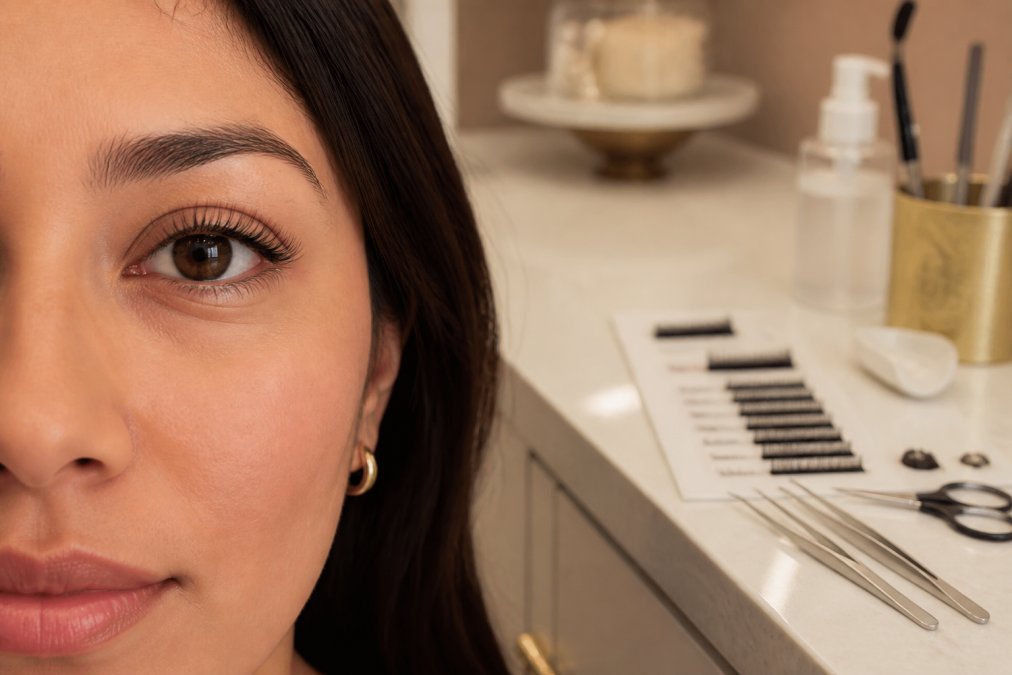
Almond eyes suit almost any lash extension style, and most artists treat this shape as the easiest to work with. You can go soft and natural or full and dramatic; a cat-eye or doll-eye both work well.
Hooded Eyelids
Hooded eyelids need lift, not weight. Heavy lashes can make the lid look heavier. A curl with more lift and a shorter length near the inner corner helps open the eye. Lash mapping matters most for this shape.
Downturned Eyes
Downturned eyes benefit from a cat-eye map that draws the eye upward at the outer corner. Longer lengths toward the outer corner create a wide-awake look; keep the inner corner short.
Best Lash Style for Almond Eyes and Other Shapes
The best lash style for almond eyes is a cat-eye or soft doll-eye, since almond eyes already have natural balance. For hooded lids, choose a lifted curl with shorter inner lashes; for downturned eyes, a cat-eye map lifts the outer corner. Matching the style to your shape is the core of how to choose lash extension style. Here is a quick reference:
| Eye Shape | Best Style | What It Does |
|---|---|---|
| Almond | Cat-eye or doll-eye | Adds balance |
| Hooded | Lifted curl, short inner | Opens the eye |
| Downturned | Cat-eye map | Lifts outer corner |
| Round | Squirrel or doll-eye | Adds length |
| Monolid | Open-eye map | Adds width |
Cat-Eye, Doll-Eye, Squirrel: Popular Lash Styles Explained
Every popular lash style changes where the eye draws attention. Cat-eye, doll-eye, and squirrel come up most in consultations.
- Cat-eye: Longest at the outer corner. Creates a lifted, angled look.
- Doll-eye: Longest in the center. Makes eyes look rounder and wider.
- Squirrel: Longest past the outer corner. Soft, sweeping effect.
- Natural/open-eye: Even length throughout. Subtle and clean.
Curl Types and Diameter: The Technical Side of Lash Mapping
Curl type and diameter decide how your lashes look and feel, and lash mapping is the plan your artist draws to place each lash. Here is the plain-English version.
Curl Types: What Each One Actually Does
Curl is measured on a letter scale that describes how much the extension curves back toward the lid, not how long it is.
- J curl: The straightest option. It mimics a natural lash that grows out with only a slight bend. Best for clients who already have a natural upward curve and want a mascara-free look.
- B curl: A gentle step up from J. Adds a soft lift without looking done.
- C curl: The most requested curl. It opens the eye and reads as a classic, polished set. Works on most eye shapes.
- CC curl: Sits between C and D. A good middle ground for clients who want lift but find D too dramatic.
- D curl: A strong, dramatic lift. Popular for hooded lids and for clients who want the eye to look wide open.
- L curl and L+ curl: A flat base that kicks up at the tip. The flat base sits against the natural lash and the tip lifts, which makes L curls a common choice for monolid and downturned eyes where a C or D curl can look like it is pointing down.
- M curl: A crisscross, multi-directional curl that adds texture. Often used in volume sets for a wispy finish.
Diameter: The Weight Decision
Diameter is the thickness of each synthetic fiber, measured in millimeters, and it is the biggest factor in how heavy a set feels on your natural lashes.
- 0.03-0.05 mm: Very fine. Used to build volume fans. Light enough that several can sit on one natural lash.
- 0.07-0.10 mm: The volume and hybrid range. Soft, full, and still lightweight.
- 0.12-0.15 mm: Classic range. One extension per natural lash. Reads as a clean, natural set.
- 0.18-0.20 mm: Heavy classic. Adds visible darkness at the lash line but puts more stress on the natural lash.
How Mapping Ties Curl and Diameter Together
- Which curl goes where (often a softer curl at the inner corner, a stronger curl at the outer)
- Which length goes where (short inner, longest at the peak point)
- Which diameter goes where (finer at the inner corner, slightly thicker at the outer)
- Which style the map produces (cat-eye, doll-eye, squirrel, open-eye)
Your natural lash health sets the limit: an extension that is too heavy can cause damage over time. That is why a good artist checks your lash density before choosing a diameter, and why the same style can be safe on one client and too heavy on another.
Classic vs Volume Lash Extensions: Which Is Right for You?
Classic lashes apply one extension to one natural lash; volume lashes apply a fan of several thin lashes to one natural lash for a fuller, denser look. Classic suits clients who want a natural finish, volume suits those who want density without heavy single lashes, and hybrid mixes both for a textured look.
- Classic: Natural, lighter, lower maintenance feel
- Volume: Fuller, softer fans, more density
- Mega volume: Maximum fullness, most dramatic
How Long Do Lash Extensions Last and How Lifestyle Affects Your Choice
Most guides tell you to pick a style based on eye shape and stop there. That advice breaks down the moment you get in a pool, put on a contact lens, or fall asleep on your face. Your daily routine matters just as much, so here is how to choose a style that survives your actual life.
How Long Extensions Last
Lash extensions typically last four to six weeks with proper care, but that is an average, not a promise. The real timeline depends on your natural lash cycle, every lash sheds on its own schedule, roughly every 60 to 90 days, plus your care routine. Most clients book a fill every two to three weeks to keep the set looking full.
Match Your Style to Your Routine
Gym-goers and heavy sweaters. Sweat itself does not dissolve lash adhesive, but the oil and salt that come with it can weaken the bond. A lighter classic or hybrid set in a C curl holds up better than a heavy mega volume set because less weight pulls on each natural lash. Rinse with cool water after a workout and blot the lash line dry, do not rub.
A Quick Lifestyle-to-Style Cheat Sheet
| Your Routine | Style That Holds Up | Why |
|---|---|---|
| Gym 4+ times a week | Classic or hybrid, C curl, 0.12-0.15 mm | Less weight, less shedding |
| Swim regularly | Classic, C curl, shorter length | Less surface area for water and chlorine |
| Contact lens wearer | Classic or light hybrid, B or C curl | Keeps lashes out of the lens zone |
| Side sleeper | Light classic, any curl | Sheds more evenly between fills |
| Oily lids | Light classic, finer diameter | Less adhesive load on the bond |
| Sensitive eyes | Patch test first, then light classic | Less weight, less adhesive contact |
| Mature lashes | Classic or light hybrid, C or CC curl | Softer on thinning natural lashes |
Matching the style to your daily routine keeps your lashes looking full between fills, and it is the part of the decision most clients never bring up.
Consultation and Aftercare: Protecting Your Natural Lash Health
A consultation protects your natural lash health and your results. A patch test and short health history matter, especially if you have sensitive skin or past reactions to adhesives.
During the consultation, your artist should:
- Check your natural lash density and length
- Review your eye shape and lifestyle
- Show curl and diameter samples
- Agree on a lash map before starting
- Explain aftercare clearly
Frequently Asked Questions
Are C or D lashes better?
Neither is universally better; the right curl depends on your natural lash direction and desired look. C curl gives a natural lift, while D curl provides a more dramatic, open-eye effect. Your lash artist will assess your lashes and recommend the curl that balances with your eye shape. For a customized recommendation, book a consultation.
What is the most popular eyelash extension style in 2026?
In 2026, natural-looking styles like the 'wet look' and 'angel' sets remain popular, along with classic and hybrid lashes. Many clients prefer styles that enhance their natural lashes without looking overly dramatic. The best style for you depends on your eye shape, lifestyle, and maintenance preferences. A lash artist can help you choose a style that fits your daily routine.
How do I determine my eye shape for lash extensions?
Look in a mirror and observe the overall shape: almond eyes are balanced, hooded eyes have a fold that covers the lid, and downturned eyes slope downward at the outer corners. Knowing your eye shape helps your lash artist create a customized mapping that lifts and opens your eyes. During your consultation, your artist will confirm your eye shape and suggest appropriate styles.
How long do lash extensions last?
Lash extensions typically last 4 to 6 weeks, with natural shedding causing some lashes to fall out sooner. To maintain fullness, most clients schedule touch-ups every 2 to 3 weeks. Proper aftercare, like avoiding oil-based products and gentle cleansing, can help extend retention. Your lifestyle and natural lash cycle also affect how long your set lasts.