 how-to
How to Identify Bad Lash Application: 7 Warning Signs
Table of Contents
- How to Identify Bad Lash Application: Warning Signs to Know
- What Healthy Lash Extensions Should Feel Like
- Signs of Allergic Reaction to Lash Glue You Should Never Ignore
- How Long Do Lash Extensions Last and What Premature Shedding Tells You
- Lash Extension Aftercare Tips That Protect Your Investment
- Lash Style vs. Lifestyle: Matching Extensions to Your Daily Routine
- What to Do If You Suspect Bad Lash Application
- Frequently Asked Questions
Last Updated: September 23, 2026
How to Identify Bad Lash Application: Warning Signs to Know
Bad lash application is any extension work that causes pain, pulls at your natural lashes, or leaves them clumped, glued together, or shedding far too fast. Below, we'll walk you through the warning signs that matter, how to tell irritation from a true allergy, and what to do if your set was done wrong.
Why Proper Lash Application Matters for Natural Lash Health
Lash extensions attach to individual natural lashes with adhesive. When applied well, the weight is balanced and your natural lash grows and sheds on its own cycle. When applied poorly, the glue bonds several lashes together. That extra weight pulls on the follicle.
A few things separate safe application from risky application:
- One extension bonded to one natural lash
- A clean, separated lash line with no stickies
- Adhesive that cures fully before you open your eyes
- A patch test or consultation before the first full set
What Healthy Lash Extensions Should Feel Like
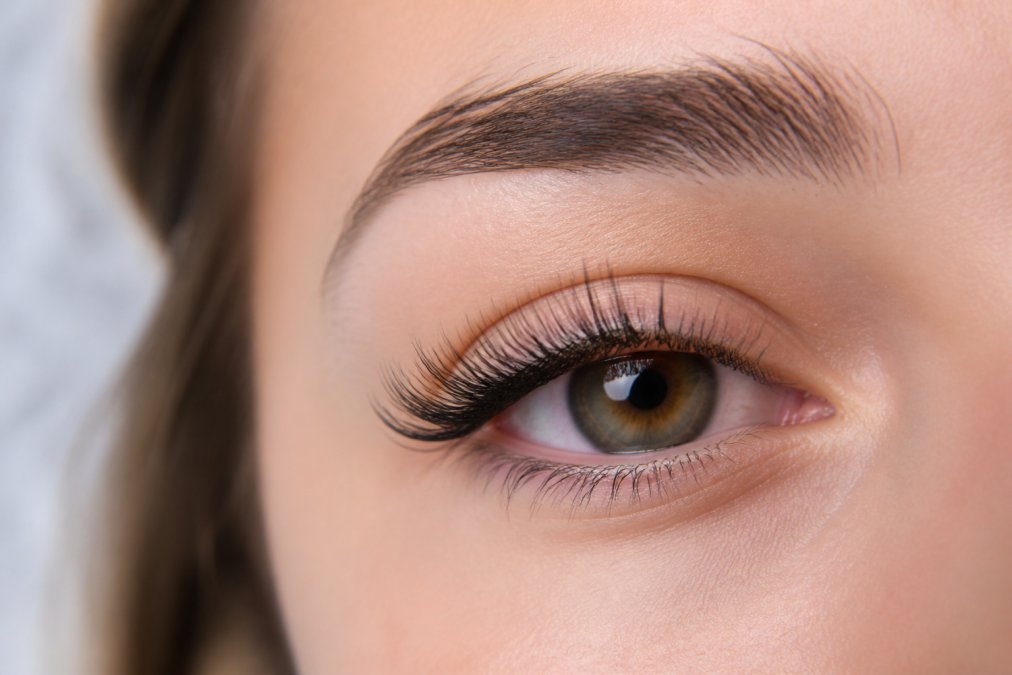
Healthy lash extensions should feel weightless and comfortable, with each lash moving freely on its own. You should be able to blink, rub your eyes gently, and wash your face without tugging or pinching.
Comfort, Weight, and Natural Movement
Run a finger lightly along your lash line. It should feel smooth, not bumpy or crusty. Look in a mirror with good light. You should see individual lashes fanning out, not thick clumps.
Signs your set is healthy:
- No redness or swelling at the lash line
- Lashes fan out and separate cleanly
- No sharp poking sensation in the inner or outer corner
- You forget you're wearing them
Signs of Allergic Reaction to Lash Glue You Should Never Ignore
The most common signs of allergic reaction to lash glue are redness, itching, swelling, and a burning sensation along the lash line. These symptoms often show up 12 to 48 hours after application and can get worse with each exposure.
Watch for:
- Redness or a rash on the eyelid
- Itching that doesn't settle
- Swelling of the lid or around the eye
- A burning or stinging feeling
- Watery or irritated eyes
Irritation vs. True Allergy: How to Tell the Difference
Irritation is usually mechanical or chemical and shows up quickly. A true allergy is an immune response and often appears after repeated exposure. The tricky part is that they can look similar at first.
| Feature | Irritation | True Allergy |
|---|---|---|
| Timing | During or right after application | 12-48 hours later |
| Main symptom | Stinging, redness | Itching, swelling |
| Gets worse each time | Not always | Usually yes |
| Response to removal | Settles fast | May need treatment |
How Long Do Lash Extensions Last and What Premature Shedding Tells You
Normal shedding looks like this:
- A few single extensions per day, each with a tiny natural lash attached at the base
- Gradual thinning spread evenly across the lash line
- The set still looks full at the two-week mark, just slightly lighter
- Shed lashes have a clean, small bead of adhesive at the tip
Bad-application shedding looks like this:
- Whole sections or fans releasing at once
- Multiple natural lashes stuck together in one clump
- Bare patches next to still-full areas
- Shed lashes with a large, blobby adhesive base, or two or three natural lashes fused to one extension
- Heavy loss in the first 48 to 72 hours
The most common causes of premature shedding:
- Adhesive that didn't cure properly. Humidity and temperature affect how cyanoacrylate adhesives set. An artist working outside the adhesive's recommended humidity range gets a weak bond.
- Extensions applied too heavy for your natural lash. A natural lash can only carry so much weight. Overloaded lashes bend, twist, and shed early.
- Poor isolation. When two natural lashes are glued together, they can't shed independently, so they fall as a group and take healthy lashes with them.
- Aftercare that weakened the bond. Oil-based products, steam, and rubbing break down adhesive over time.
- A lash that was already damaged. If your natural lashes were weak before the set, no application technique will hold them.
One more thing worth knowing: shedding is not the only sign of a bad set. A set can hold perfectly and still be wrong if the weight is too heavy for your natural lashes. Watch for natural lashes that look thinner, shorter, or more brittle at the base over time, that is traction damage accumulating even when nothing is falling out yet.
Lash Extension Aftercare Tips That Protect Your Investment
Good aftercare tips for lash extensions come down to keeping them clean and dry at the right times. The first 48 hours matter most, because the adhesive is still fully curing.
First 48 Hours and Beyond: What to Avoid
For the first two days:
- Keep lashes completely dry
- Skip steam, saunas, and hot yoga
- Don't swim or soak in a bath
- Avoid oil-based products near the eyes
After 48 hours:
- Clean lashes gently with a lash-safe cleanser
- Brush them with a clean spoolie
- Avoid waterproof mascara and oil-based makeup removers
- Sleep on your back or use a silk pillowcase
Following these steps helps your set hold and protects your natural lashes at the same time.
Lash Style vs. Lifestyle: Matching Extensions to Your Daily Routine
The right lash style depends as much on your daily routine as on your eye shape. A style that suits a desk job may not survive daily workouts or swimming. Most guides stop at aesthetics, here we'll walk through how your actual habits, sensitivities, and even your age should shape the set you choose.
Why Lifestyle Changes the Math
Every extension adds weight to a natural lash. The heavier and longer the extension, the more stress the follicle carries, and the faster the bond breaks down under friction, moisture, and heat. Lifestyle factors don't just affect how a set looks, they change how long it lasts and how much strain your natural lashes absorb. That's why the same style can be perfect for one person and damaging for another.
Matching the Set to How You Spend Your Days
- Active or sweaty: Sweat and heat soften adhesive and increase friction against the pillow and your hands. Lighter volume and shorter lengths hold up better because there's less weight to pull loose. If you train most days, expect to need fills slightly sooner than someone with a sedentary routine.
- Frequent swimmer: Chlorine and prolonged water exposure break down adhesive faster than almost anything else. Ask your artist about adhesive options formulated for moisture exposure, and expect shedding to accelerate. Many swimmers schedule fills on a tighter cycle to compensate.
- Contact lens wearer: Longer lengths and stronger curls can brush the lens or catch on insertion and removal. Shorter lengths with a gentler curl keep the lash line clear of your fingers and the lens. Always insert and remove lenses before touching your lashes, and never with product on your hands.
- Glasses wearer: Longer lengths can brush the lenses, smudge them, and bend out of shape. Going shorter keeps the set intact and your vision clear.
- Makeup wearer: Classic or hybrid sets are easier to keep clean because there's less surface area for product to cling to. Volume sets trap mascara and remover, which shortens their life.
- Side sleeper: Pressure against one side of the face crushes and twists extensions on that side. A silk pillowcase reduces friction, and rotating your sleeping position spreads the wear more evenly.
The Sensitivity and Allergy Angle Most Guides Skip
If your eyes are reactive, the style matters less than the materials. Heavier extensions and stronger adhesives are more likely to trigger irritation. If you've had redness, itching, or swelling with a previous set, ask for a patch test before your next appointment and discuss lower-weight options. Sensitive eyes often do better with shorter, lighter sets and a gentler adhesive, even if that means a more natural look than you originally wanted.
Aging and Lash Styles
As we age, the eyelid skin loses elasticity and the lid can become hooded or droop. That changes how a curl reads on the eye. A strong curl that looked dramatic at 25 can disappear under a hooded lid at 45, while a gentler curl lifts the lash line and opens the eye. Older lashes also tend to be finer and more fragile, so lighter weights and shorter lengths protect the natural lash better than heavy volume.
Bring This to Your Consultation
Your lash artist should map the set to your eye shape too. Almond eyes, hooded eyelids, and downturned eyes each suit different curl types and lengths. Before your first set, tell your artist three things: how often you sweat or swim, whether you wear contacts or glasses, and whether your eyes have ever reacted to a product. A quick consultation and lash mapping session before your first set prevents most style mismatches.
What to Do If You Suspect Bad Lash Application
If you suspect bad lash application, stop touching the area and book a professional removal or assessment. Don't try to fix it yourself.
Here's the order that works best:
- Stop picking or pulling. You'll lose natural lashes.
- Note your symptoms. Redness, swelling, clumps, or fast shedding.
- Contact a licensed lash artist. Ask for a removal and a fresh assessment.
- See a doctor if you have swelling, pain, or vision changes.
- Do a patch test before your next set. This flags sensitivities early.
- Choose an artist who does a full consultation. Lash mapping and a patch test should be standard.
Frequently Asked Questions
What are the signs of poorly applied eyelash extensions?
Signs include lashes that feel heavy or painful, visible clumps of glue at the base, extensions stuck to each other or to your skin, and unnatural angles where lashes point in different directions. You may also notice redness along the lash line, premature shedding within days, or a stiff, crusty texture. Healthy extensions should feel light, move naturally, and stay separated. If you notice any of these issues, contact a qualified lash artist for an assessment before the problem worsens.
Can bad lash application cause permanent damage to natural lashes?
Improper application can weaken or damage natural lashes, but permanent damage is uncommon when the issue is addressed early. Problems arise when extensions are too heavy, glued directly to the skin, or when multiple natural lashes are bonded together, which pulls on the follicle. This can cause breakage or temporary thinning. A qualified lash artist can safely remove problematic extensions and give your natural lashes time to recover. Always seek professional removal rather than picking at them yourself.
How do I know if my lash technician is using too much glue?
Excessive glue shows up as hard, crusty bumps at the base of your lashes, visible black clumps, or a stiff feeling when you blink. Your lashes may feel glued together rather than individually placed. You might also notice a strong chemical smell during application or irritation that persists afterward. Proper application uses a minimal amount of adhesive so each extension bonds cleanly to a single natural lash. If your lash line feels rough or bumpy, that is a red flag.
What should I do if I suspect my lash extensions were applied incorrectly?
Stop touching or rubbing your eyes, and avoid picking at the extensions. Contact the lash artist who applied them or a different qualified professional for an assessment. They can determine whether removal is needed and recommend aftercare. If you experience swelling, severe redness, or signs of an allergic reaction, see a healthcare provider. Do not attempt to remove extensions yourself, as this can damage your natural lashes. A professional removal is the safest option.
Bad lash application is easy to spot once you know the signs, but hard to undo without help. If your current set feels heavy, itchy, or is shedding in clumps, don't wait it out. At Liz Almanzar Esthetics, we offer careful lash extension services built around your natural lash health, along with a full consultation and lash mapping before every set. Get started with Liz Almanzar Esthetics and enjoy lashes that feel as good as they look.