 how-to
How to Plan a Professional Facial Timeline for Wedding
Table of Contents
- Why Your Bridal Skin Deserves a 12-Month Facial Timeline
- Month-by-Month Facial Timeline: From 12 Months to 1 Week Out
- Professional Skin Analysis for Brides: The First Step Most People Skip
- Best Facial Treatments for Glowing Skin at Each Timeline Stage
- When to Stop Getting Facials Before Wedding: The Safe Cutoff
- Budget-Friendly Hybrid Plan: DIY Maintenance Between Professional Treatments
- Skin Type-Specific Adjustments to Your Facial Timeline
- Post-Facial Recovery Protocols and Makeup Trial Integration
- Frequently Asked Questions
Last Updated: September 12, 2026
Why Your Bridal Skin Deserves a 12-Month Facial Timeline
A wedding date fixes a deadline that skin cannot negotiate with. That is why a facial timeline matters: it is a scheduled plan for professional treatments, spaced so skin peaks on the wedding day rather than mid-reaction. This guide walks through a full 12-month schedule, including when to stop getting facials before wedding week arrives.
Skin cells turn over on a roughly four-week cycle, which is the single most useful fact in bridal skincare. One facial cannot change a complexion; a sequence of correctly spaced facials can. The 12-month facial timeline exists because results compound and mistakes also compound, and the second kind cannot be undone in the final month.
Month-by-Month Facial Timeline: From 12 Months to 1 Week Out
The facial timeline below is the backbone of bridal skincare planning. Each phase has a job, and the phases are ordered so that the most aggressive work happens while there is still time to recover. The single organizing rule: the closer the wedding, the less the skin should be asked to change.
| Phase | Timing | Focus | Typical Frequency |
|---|---|---|---|
| Baseline and reset | Months 12-9 | Skin analysis, gentle cleanouts | Every 4-6 weeks |
| Active treatment | Months 8-5 | Extractions, peels, texture work | Every 4 weeks |
| Refinement and glow | Months 4-2 | Hydration, light exfoliation | Every 4-6 weeks |
| Maintenance only | Final month | Calm, hydrate, protect | One final facial |
Months 12-9: Baseline and Reset
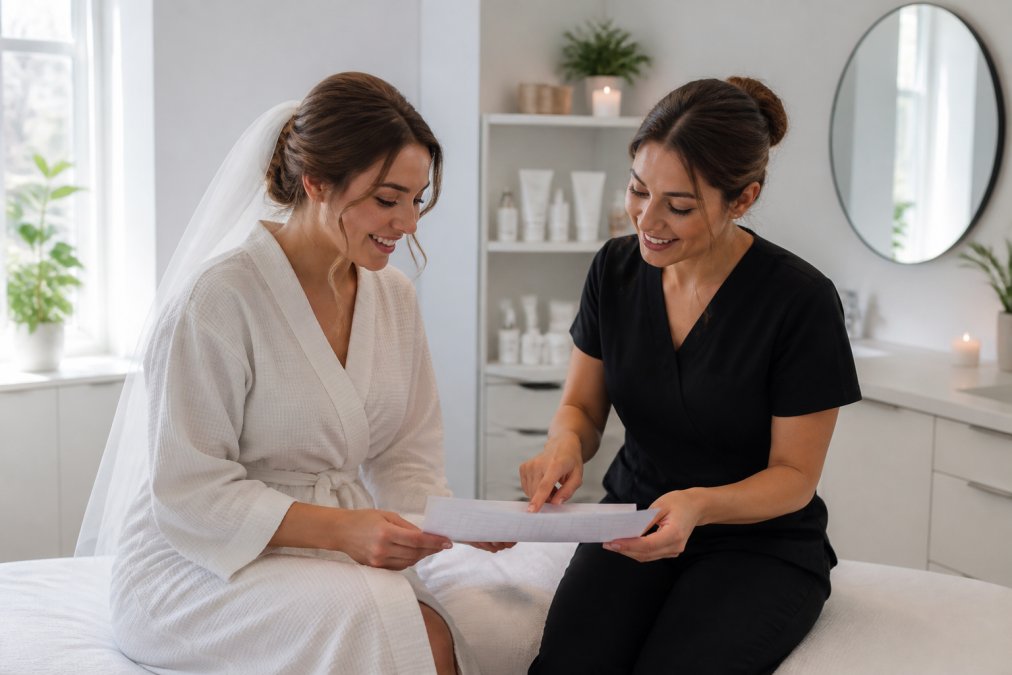
Start with professional skin analysis, not a treatment menu. An esthetician maps your skin type, barrier condition, and any active acne before choosing anything stronger than a gentle cleanse and hydrate facial. This phase is also when you establish a home routine you can actually keep for a year: a gentle cleanser, a moisturizer suited to your skin type, and broad-spectrum sunscreen every morning. If you have never used a retinoid, this is the window to start one, because retinoids typically require 12 weeks of consistent use before results stabilize and irritation subsides (the American Academy of Dermatology). Starting now means the adjustment period happens off-camera.
Months 8-5: Active Treatment Phase
This is when chemical peels, extractions, and texture-focused work belong. A common mistake is rushing this phase: if a peel causes inflammation at month two, there is no runway left to correct it. Space stronger treatments at least four weeks apart and let each one fully settle before the next.
Downtime varies by treatment, and the schedule should respect it:
- Light glycolic or lactic acid peels: mild flaking for 2-4 days.
- Medium-depth peels (TCA-based): redness and peeling for 5-7 days, with full settling over 2-3 weeks.
- Extractions: redness for 24-48 hours; occasional minor scabbing for 2-3 days.
- Dermaplaning: no true downtime, but skin is more photosensitive for several days.
- Microneedling: redness for 2-3 days, with collagen remodeling continuing for weeks afterward.
Because collagen remodeling from microneedling and deeper peels continues for weeks, the visible payoff from this phase often shows up in months 5-3, not immediately. That lag is exactly why the aggressive work belongs here and not later.
Months 4-2: Refinement and Glow
Frequency holds steady, intensity drops. Hydration facials, gentle exfoliation, and vitamin C support brightness without provoking sensitivity. This is also when most brides notice the bridal glow people actually comment on.
Vitamin C is worth understanding rather than just buying: it is an antioxidant that supports collagen synthesis and can help even out tone, but it is also a common irritant when the concentration is too high or the formula is unstable (peer-reviewed research). If you have never used one, introduce it in month 4, not month 2. Hydrating ingredients like hyaluronic acid and glycerin draw water into the upper layers of skin and give the plump, light-reflecting look that reads well in photographs. This phase is about surface quality, not structural change.
Final Month: Maintenance Only
No new treatments, no new products. One calm, hydrating facial about two to three weeks out, then nothing but your established routine. The final month is for protecting the skin barrier, not improving it.
A practical week-by-week view of the last four weeks:
- 4 weeks out: last opportunity for a gentle, non-active facial.
- 3 weeks out: final hydrating facial; no extractions, no peels, no dermaplaning.
- 2 weeks out: no professional treatments at all; maintain home routine.
- 1 week out: cleanse, moisturize, sunscreen, sleep. Nothing new.
Professional Skin Analysis for Brides: The First Step Most People Skip
Professional skin analysis for brides is a structured assessment of skin type, barrier health, sensitivity, and current product use, performed before any treatment is scheduled. Skipping it is the most common reason a facial timeline fails.
What most guides miss is that two brides with identical concerns can need opposite plans. Acne-prone skin and dry, reactive skin both benefit from extractions, but on completely different schedules. A patch test on a small area before any new active ingredient is not optional; it is how you avoid discovering a reaction three weeks before the ceremony.
Best Facial Treatments for Glowing Skin at Each Timeline Stage
The best facial treatments for glowing skin change as the wedding approaches. Early months tolerate chemical peels and deeper exfoliation; later months call for hydration, gentle massage, and barrier support.
- Months 12-9: gentle cleansing facials, hydration, product review
- Months 8-5: chemical peels, extractions, dermaplaning where appropriate
- Months 4-2: vitamin C, light exfoliation, hydrating masks
- Final month: calming, hydrating facials only
When to Stop Getting Facials Before Wedding: The Safe Cutoff
Stop getting facials about two to three weeks before the wedding (the American Academy of Dermatology). That window allows any redness, dryness, or minor breakout from a treatment to fully resolve before photographs and makeup.
Extractions and chemical peels should stop earlier, ideally four weeks out, because both can leave skin temporarily inflamed. Dermaplaning follows the same rule: it is a form of exfoliation, and exfoliating too close to the date can leave skin reactive under makeup. If you are unsure whether a treatment counts as "safe" this late, ask before booking, not after.
Budget-Friendly Hybrid Plan: DIY Maintenance Between Professional Treatments
A hybrid plan keeps professional treatments at the frequency your skin needs while covering the weeks between appointments with simple home care. This is the approach most brides actually stick to.
- Professional facial every 4-6 weeks instead of every 2
- At-home routine limited to cleanser, moisturizer, and SPF
- One active ingredient at a time, introduced slowly
- No new products in the final six weeks
Skin Type-Specific Adjustments to Your Facial Timeline
Skin type changes the schedule more than any other factor. Oily and acne-prone skin often tolerates monthly extractions and benefits from consistent acne management; dry and sensitive skin needs longer gaps and gentler formulas.
| Skin Type | Treatment Frequency | Key Adjustment |
|---|---|---|
| Oily, acne-prone | Every 4 weeks | Extractions, breakout prevention |
| Dry, dehydrated | Every 5-6 weeks | Hydration, barrier repair |
| Sensitive, reactive | Every 6 weeks | Patch test everything |
| Combination | Every 4-5 weeks | Zone-specific treatment |
Post-Facial Recovery Protocols and Makeup Trial Integration
Most bridal guides stop at "book your facials early." They skip what happens in the 72 hours after a treatment and how that window interacts with the rest of your beauty calendar. Those two details are where timelines actually succeed or fail.
The First 72 Hours After a Facial
What you do immediately after a professional treatment determines how quickly skin settles and how much of the benefit you keep.
- First 24 hours: no makeup if possible, no exfoliation, no retinoids, no direct sun. Cleanse with lukewarm water and a gentle cleanser, then moisturize.
- Days 2-3: reintroduce sunscreen diligently, keep moisturizing, and avoid active ingredients like acids, benzoyl peroxide, or retinoids unless your esthetician cleared them.
- Days 4-7: resume your normal routine one product at a time, not all at once. If something stings, stop it and wait.
This matters because the skin barrier is temporarily more permeable after exfoliating or extraction-based treatments. Layering strong actives too soon is the most common cause of post-facial irritation, and irritation that lingers past a week can push back your next scheduled appointment.
What to Do If You Have a Reaction
Reactions are uncommon but not rare, and having a plan removes the panic. A typical pattern looks like this:
- Mild redness or warmth: normal for 24-48 hours after many treatments. Cool compresses and a bland moisturizer usually resolve it.
- Dry, flaky patches: often a sign of a compromised barrier. Pause all actives and use a ceramide-rich moisturizer until skin feels normal.
- Breakout flare: can happen after extractions or a new product. Do not pick. Spot-treat gently and give it 5-7 days.
- Persistent itching, swelling, or hives: stop all products and contact your esthetician or a physician. Do not try to "wait it out" if symptoms are worsening.
Coordinating Facials With Your Makeup Trial
This is the step almost no guide covers, and it is the one that protects your final look. A makeup trial done on freshly treated skin tells you nothing useful, because skin behaves differently when it is calm and settled than when it is mid-recovery.
A workable sequence:
- Schedule the makeup trial at least two weeks after your most recent facial, never the day after.
- If you can, do the trial during the "refinement and glow" phase (months 4-2), when your skin is closest to its wedding-day condition.
- Bring notes from your esthetician about your skin type and any sensitivities, so the makeup artist can choose products that will not trigger a reaction on the day.
- After the trial, note how the makeup wore over 6-8 hours. That feedback is more useful than how it looked in the chair.
Building the Full Beauty Checklist Around the Facial Timeline
Your facial schedule does not exist in isolation. It has to line up with hair trials, dress fittings, and any other appointment that puts your face in front of a camera or a mirror. A simple rule: never stack two skin-stressing events in the same week. If you have a makeup trial on a Saturday, do not book a peel the Thursday before. Space the calendar so each milestone gets a calm, recovered complexion, and the wedding day becomes the one appointment where nothing is being tested for the first time.
Frequently Asked Questions
How many months before a wedding should I start getting facials?
Start 12 months out if you have active acne, hyperpigmentation, or texture concerns. For general glow maintenance, 6 months is a solid window. The first visit should include a professional skin analysis so your esthetician can map a realistic facial timeline around your wedding date. Early planning allows time for chemical peels, extractions, and retinoid adjustments without risking a reaction close to the big day.
Can I get a facial one week before my wedding?
Yes, but only a gentle, hydrating facial. Avoid extractions, chemical peels, dermaplaning, or any new active ingredients within 7-10 days of the wedding. A calming treatment focused on hydration and barrier support helps your skin look radiant without downtime or risk of inflammation. If you've never had that specific treatment before, skip it. The week before is not the time for experimentation.
What kind of facials are best for bridal skin prep?
The best facial treatments for glowing skin depend on your skin type and timeline. Early on, chemical peels and extractions address acne and texture. Mid-timeline, hydrating facials with vitamin C and hyaluronic acid build radiance. Closer to the wedding, gentle enzyme treatments and LED therapy maintain the glow without downtime. Your esthetician should tailor each session to what your skin needs at that stage.
What should I avoid doing to my skin before the wedding day?
Avoid trying new products or treatments within 2 weeks of the wedding. Skip retinoids, strong exfoliants, and dermaplaning for at least 7-10 days before. Don't schedule extractions or chemical peels in the final month. Also avoid picking at breakouts, over-exfoliating, and skipping SPF. Stick to your established skincare regimen and let your skin stay calm and hydrated.
Planning a facial timeline around a wedding means balancing treatment intensity against a date you cannot move, and that balance is easier with a professional guiding it. Liz Almanzar Esthetics offers personalized facials, precise waxing, and lash extensions in a welcoming, professional environment, with every treatment tailored to your specific skin. Get started with Liz Almanzar Esthetics and build a plan that has your skin ready well before the big day.