 how-to
Lash Extension Aftercare Tips for Beginners
Table of Contents
- The First 24 Hours: Your Critical Lash Extension Aftercare Window
- How to Clean Eyelash Extensions Without Damaging Them
- Best Oil-Free Cleanser for Lash Extensions: What to Look For
- How Long Do Lash Extensions Last? Setting Realistic Expectations
- Sleeping Habits That Protect Your Lashes
- Moisture, Steam, and Humidity: What to Avoid
- Brushing, Grooming, and Troubleshooting Common Issues
- What to Do If Your Lashes Are Sticking Together
- What to Do If Lashes Are Shedding Faster Than Expected
- What to Do If One Lash Is Twisted or Pointing the Wrong Way
- What to Do If You Feel Itching, Redness, or Swelling
- What to Do If a Lash Falls Onto Your Cheek
- When to Call Your Technician vs. Handle It Yourself
- Seasonal Aftercare Adjustments and Travel Tips
- Frequently Asked Questions
Last Updated: September 17, 2026
The First 24 Hours: Your Critical Lash Extension Aftercare Window
The first 24 hours of lash extension aftercare decide how well your lashes hold. According to American Academy of Ophthalmology guidance on eye hygiene, keeping the eye area clean and undisturbed protects both the natural lash and the eyelid margin. This guide from Liz Almanzar Esthetics covers exactly what beginners need to do, and skip, during that window.
Why Keeping Lashes Dry Matters
Water interferes with lash glue curing. If the bond hasn't set, lashes can shift or shed early. Avoid showers that direct steam at your face, skip the sauna, and keep your hands away from your eyes for a full day.
What to Avoid on Day One
- Water on the lash line, including splashes from washing your face
- Steam from cooking, hot showers, or a kettle
- Mascara, eyeliner, and any eye makeup
- Rubbing, tugging, or sleeping face-down
- Curling irons or mechanical lash curlers
How to Clean Eyelash Extensions Without Damaging Them
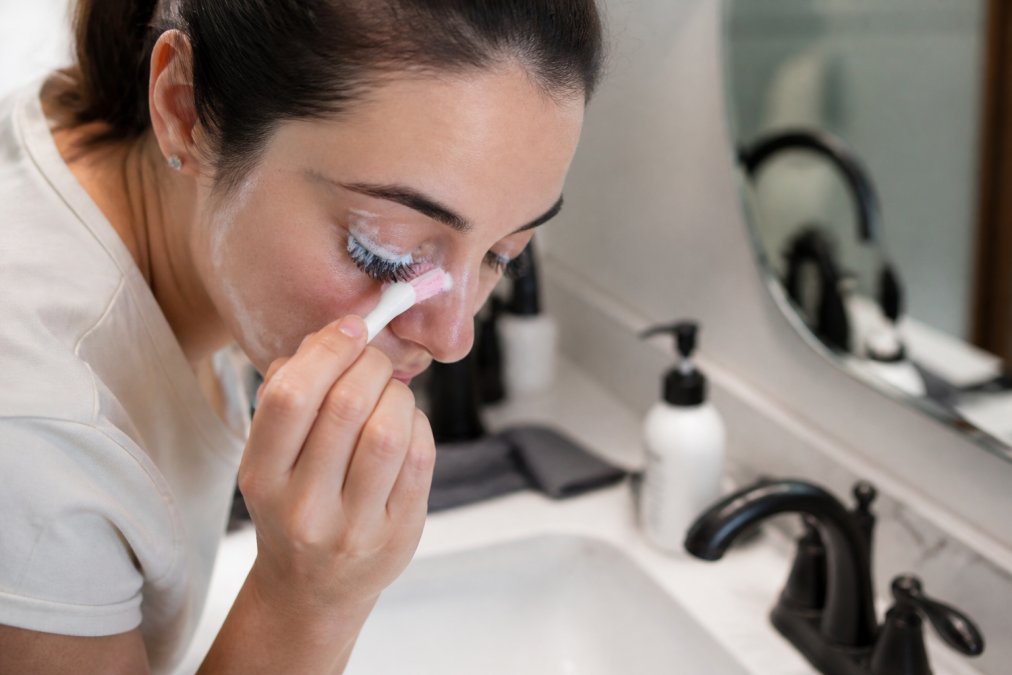
Cleaning is not optional. Debris buildup along the eyelid margin can lead to irritation and, in some cases, blepharitis, an inflammation of the eyelid. A daily lash bath keeps the lash follicles healthy and actually improves retention.
Your Daily Cleansing Routine
- Wet a soft spoolie brush or cleansing brush with lukewarm water.
- Apply a small amount of oil-free cleanser.
- Close one eye and gently sweep the brush downward along the lash line.
- Rinse with lukewarm water, keeping your eyes closed.
- Pat dry with a lint-free cloth, working downward.
- Brush lashes into place with a clean spoolie.
Makeup Removal Best Practices
Use an oil-free makeup remover formulated for lash extensions. Soak a cotton pad, press it against the closed lid for a few seconds, and wipe downward. Never scrub side to side. Waterproof mascara is off-limits entirely because removing it requires friction and solvents that break down lash adhesive.
Best Oil-Free Cleanser for Lash Extensions: What to Look For
The best oil-free cleanser for lash extensions is a gentle, pH-balanced foaming formula with no oils, no alcohol, and no glycols. Oils and solvents degrade cyanoacrylate-based lash adhesive, which is why they shorten the life of your set. But "oil-free" on a front label is not the same as lash-safe, so beginners need to read the ingredient list, not the marketing claim.
How Lash Adhesive Actually Fails
Lash adhesive is a cyanoacrylate that cures into a flexible polymer bond. That bond is broken down by three things: oils and lipids, solvents, and sustained moisture. When you apply a cream, cleanser, or makeup remover that contains any of these, the bond softens at the base of the extension and the lash releases early.
Safe vs. Unsafe Ingredients to Scan For
Use this as a shopping checklist. If a product lists an ingredient in the left column, put it back.
| Ingredient to Avoid | Also Listed As | Why It Matters |
|---|---|---|
| Mineral oil, coconut oil, jojoba oil | Paraffinum liquidum, Cocos nucifera oil | Lipids break down the adhesive bond |
| Alcohol | Alcohol denat., Ethanol, SD alcohol | Dries out natural lashes and the eyelid margin |
| Glycols and heavy solvents | Propylene glycol, PEG compounds, acetone | Weakens retention over time |
| Silicones | Dimethicone, Cyclopentasiloxane | Can leave a residue that traps debris at the lash line |
| Fragrance and essential oils | Parfum, Lavender oil, Citrus oils | Common irritants near the eye; oils also degrade adhesive |
| Waterproof or long-wear polymers | , | Require solvent removers that break the bond |
Reading a Label in 30 Seconds
- Flip the bottle and scan the first five ingredients, that is where the concentration is highest.
- Search the list for any word ending in "-oil," "-cone," or "-glycol."
- Look for the words "oil-free," "fragrance-free," and "ophthalmologist-tested" together, not just one.
- If the label markets itself as a makeup remover, check whether it is water-based or oil-based. Water-based only.
What to Buy vs. What to Skip
A dedicated lash shampoo or a fragrance-free foaming facial cleanser works well. Drugstore gentle foaming washes are often fine as long as they pass the label scan above. Skip micellar waters that list oils, balm cleansers, cleansing oils, and any two-phase makeup remover, those are formulated to dissolve long-wear makeup, and they will dissolve your adhesive along with it.
How Long Do Lash Extensions Last? Setting Realistic Expectations
Most sets last three to five weeks before a refill is needed, depending on your natural lash cycle and how well you follow aftercare. Your natural lashes shed on a cycle, so some loss is normal and expected.
Understanding the Natural Lash Cycle
Each natural lash grows, rests, and sheds on its own schedule. A typical cycle runs several weeks, which means you'll lose a few extensions every day no matter how careful you are. Premature shedding, where lashes fall out faster than the natural cycle, usually points to friction, oil exposure, or missed cleanings.
Sleeping Habits That Protect Your Lashes
Side and back sleeping protect your investment. Friction against a pillowcase is one of the quietest causes of lash loss, and it happens every night.
- Switch to a silk or satin pillowcase to reduce friction
- Try a contoured sleeping mask that avoids pressing on the lashes
- Train yourself to sleep on your back or side
- Keep hands away from your face while you sleep
Moisture, Steam, and Humidity: What to Avoid
Steam and humidity weaken the adhesive bond over time. This is why saunas, steam rooms, and long hot showers are hard on lash extensions.
- Skip saunas and steam rooms for the first 48 hours, then limit exposure
- Keep hot showers brief and angled away from your face
- Avoid swimming pools and hot tubs, where chlorine and heat combine
- Be cautious with facial steamers and hot yoga classes
Brushing, Grooming, and Troubleshooting Common Issues
A spoolie brush is your main grooming tool. Brush lashes once or twice a day, always working from the base downward, to keep synthetic fibers separated and prevent tangling. Do it after your lash bath once lashes are dry, and again in the morning if you slept on your side.
What to Do If Your Lashes Are Sticking Together
Likely cause: Debris, oil, or missed cleanings letting fibers fuse at the base.
What to Do If Lashes Are Shedding Faster Than Expected
Likely cause: Friction (sleeping face-down, rubbing), oil exposure from a new skincare product, or missed cleanings.
What to Do If One Lash Is Twisted or Pointing the Wrong Way
Likely cause: A single extension that shifted before the adhesive fully cured, or got caught on fabric.
What to Do If You Feel Itching, Redness, or Swelling
Likely cause: Buildup along the eyelid margin, a reaction to a product, or in some cases an allergic response to the adhesive.
What to Do If a Lash Falls Onto Your Cheek
Likely cause: Normal natural lash shedding, which happens on its own cycle.
When to Call Your Technician vs. Handle It Yourself
Handle it yourself: sticking, tangling, a single twisted lash, or mild itching that clears with cleansing.
Seasonal Aftercare Adjustments and Travel Tips
Your routine should shift with the seasons and your travel plans. Dry winter air can make natural lashes brittle, so a little extra care with a lash-safe moisturizer for the surrounding skin helps. Humid summers mean more sweat and oil, which calls for more frequent gentle cleansing.
When you travel:
- Pack a travel-size oil-free cleanser and a clean spoolie
- Keep lashes dry on flights, where cabin air is dry and recirculated
- Avoid hotel saunas and steam rooms
- Bring a silk pillowcase or sleep on your back
- Skip waterproof eye makeup entirely
Frequently Asked Questions
What is the proper aftercare for lash extensions?
Proper lash extension aftercare starts with keeping lashes completely dry for the first 24 hours while the lash adhesive cures. After that, cleanse daily with an oil-free cleanser and a soft spoolie brush to remove debris and prevent blepharitis. Avoid waterproof mascara, oil-based products, and steam exposure. Brush lashes gently each morning, sleep on a silk pillowcase, and schedule refill appointments every two to three weeks to maintain fullness.
How do I wash my face with new lash extensions?
Wait 24 hours before getting lashes wet. After that, use an oil-free cleanser and lukewarm water. Apply cleanser with clean fingertips, avoiding tugging or rubbing the eye area. Rinse by splashing water gently downward, then blot dry with a lint-free towel. Never use a washcloth directly on your lashes, and avoid cleansers containing glycols, oils, or heavy creams that can weaken the lash adhesive bond.
Can I wear mascara with lash extensions?
Avoid mascara entirely, especially waterproof formulas. Mascara clumps lashes together, breaks down the lash adhesive, and is difficult to remove without tugging, which causes premature shedding. If you feel you need extra definition, ask your lash technician about a lash tint or a darker lash extension style. Removing waterproof mascara from extensions often damages both the synthetic fibers and your natural lashes.
What should I avoid doing after getting lash extensions?
For the first 24 hours, avoid water, steam, saunas, swimming, and sweating heavily. Long-term, skip oil-based cleansers and makeup removers, waterproof mascara, eyelash curlers, and rubbing your eyes. Avoid sleeping face-down, picking at loose lashes, and using harsh exfoliants near the eye area. Following these lash extension aftercare tips for beginners helps your extensions last longer and keeps natural lashes healthy.
Your lash extensions only look their best when the aftercare matches the application. If you're in the Mystic area and want a set applied with your natural lash health in mind, Liz Almanzar Esthetics offers expert lash extensions, rejuvenating facials, and precise waxing in a welcoming, professional setting. Our team tailors every appointment to your specific needs so your results last. Get started with Liz Almanzar Esthetics and enjoy lashes that stay full and comfortable between refills.