 ultimate-guide
Professional Facials for Mature Skin: A 2026 Guide
Table of Contents
- What Makes Professional Facials for Mature Skin Different
- Anti-Aging Facial Benefits: What Results You Can Expect
- Best Ingredients for Mature Skin Facials
- Treatment Options: From Microcurrent to LED Light Therapy
- How Often to Get Facials for Aging Skin
- Contraindications and Who Should Avoid Certain Treatments
- Choosing the Right Professional for Your Skin
- Frequently Asked Questions
Last Updated: September 22, 2026
What Makes Professional Facials for Mature Skin Different
Professional facials for mature skin are treatment protocols built around the structural changes that come with age: slower cellular turnover, thinning dermal layers, reduced collagen production, and a skin barrier that loses moisture more quickly than it did a decade ago. The difference matters because the wrong treatment can irritate a compromised barrier, while the right one supports skin firmness, hydration, and texture over time.
How Aging Changes Skin Structure and Function
Collagen and elastin production declines with age, which shows up as fine lines, wrinkles, and skin laxity. Cellular turnover slows, so dead cells linger and skin texture dulls. Oil production drops, leaving the skin barrier less able to hold water. According to the American Academy of Dermatology's guidance on aging skin, these changes are cumulative and accelerate with sun exposure, which is why preventative skincare and consistent professional care matter more after 40 than before it.
Why At-Home Products Alone Often Fall Short
A common mistake is assuming a good retinol serum can replicate what an esthetician does in the treatment room. It can't, and here's why: home products sit on the surface of the skin. Clinical-grade exfoliation, serum infusion, and microcurrent work below it, at the depth where collagen production and epidermal renewal actually happen. Home care maintains results. Professional treatments create them.
Anti-Aging Facial Benefits: What Results You Can Expect
The most reliable anti-aging facial benefits are improved hydration, smoother skin texture, and a visible short-term lift, with gradual improvements in firmness and tone when treatments are done on a consistent schedule. No single facial reverses years of sun damage or erases deep wrinkles, and any provider promising that is overselling. What you can realistically expect is skin that looks and feels healthier, with fine lines softened and hyperpigmentation more even.
Realistic Outcomes From Clinical-Grade Treatments
Results build over a series of sessions, not one appointment. A client with dehydrated, dull skin may see a glow and plumpness immediately after a hydrating facial, while someone targeting skin laxity with microcurrent will notice a subtle lift that compounds with each visit. Maintenance keeps those results from fading. Expect the biggest visible change in the first month and slower, steadier improvement after that.
Best Ingredients for Mature Skin Facials
The best ingredients for mature skin facials are the ones that address hydration, collagen support, and barrier repair at the same time: hyaluronic acid, peptides, vitamin C, niacinamide, and gentle retinoids. Each does a specific job, and the formulation matters as much as the ingredient list. A serum with 20% vitamin C and no soothing agents will irritate mature skin, while a balanced blend delivers the benefit without the sting.
How Ingredients Work Together for Better Results
Ingredient synergy is the part most guides skip. Vitamin C brightens and supports collagen, but it works better when paired with vitamin E and ferulic acid, which stabilize it. Hyaluronic acid pulls water into the skin, and niacinamide strengthens the skin barrier so that water stays there. Peptides signal the skin to support its own collagen. Layered in the right order during a facial, these ingredients reinforce each other.
Treatment Options: From Microcurrent to LED Light Therapy
The right treatment depends on your primary concern, and the strongest mature-skin facials combine two or three modalities in one session rather than relying on a single device. Below is how each option actually works, who it suits, and what it realistically delivers.
Microcurrent and Non-Surgical Facelift Techniques
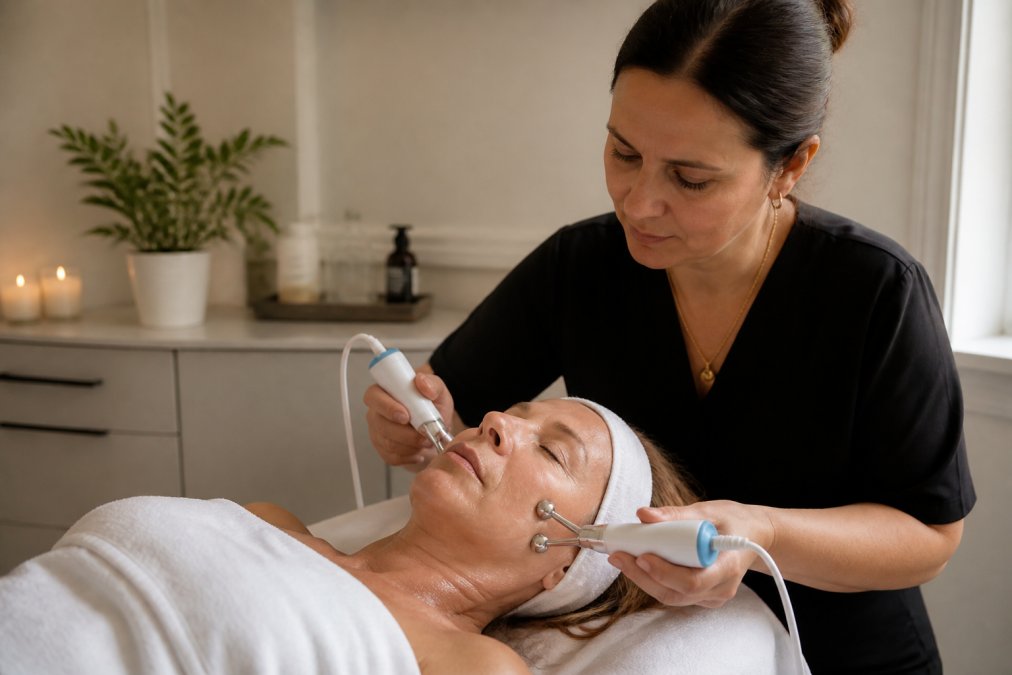
Microcurrent devices deliver low-level electrical currents (typically in the microamp range) that stimulate facial muscles and support circulation. It is the closest thing to a non-surgical facelift available in a treatment room, and it is best for clients with early laxity who want a lift without injectables. Results are subtle and temporary, most practitioners find a visible lift lasts a few days to a couple of weeks, but they compound when sessions are stacked weekly for the first several weeks and then tapered to maintenance.
Chemical Peels, Hydration, and Collagen-Boosting Approaches
Chemical peels use acids, commonly glycolic, lactic, salicylic, or trichloroacetic acid, to dissolve the bonds holding dead surface cells together and speed epidermal renewal. A trained esthetician or dermatologist selects the acid, strength, and pH based on your skin's tolerance and your recovery window. Superficial peels typically involve little to no downtime and a few days of light flaking; medium-depth peels can mean several days of visible peeling and a week or more of sun sensitivity.
LED Light Therapy for Fine Lines
LED light therapy uses non-invasive wavelengths to support cellular energy and reduce inflammation. Red light (roughly 630-660 nm) is the wavelength most studied for collagen support and fine lines; blue light targets acne-causing bacteria. LED is painless, has no downtime, and is often used as a finishing step to calm skin after peels or microneedling. Results are gradual and cumulative, most practitioners recommend a series of sessions rather than expecting a single-treatment change.
How Often to Get Facials for Aging Skin
A practical answer to how often to get facials for aging skin: every four to six weeks for most people, which matches the skin's natural renewal cycle. That frequency maintains hydration and lets collagen-stimulating treatments build on each other. If you are addressing a specific concern like hyperpigmentation or laxity, a series of closer-spaced sessions to start, often every two to three weeks for the first six to eight weeks, followed by a maintenance schedule, tends to work better than spacing sessions evenly from the start.
Building a Maintenance Roadmap That Fits Your Schedule
Most guides stop at "book every four to six weeks." The more useful framework is a year-round roadmap that changes with the seasons and with what your skin is doing. Below is a structure many practitioners use as a starting point; your esthetician should adjust it based on your skin's response.
| Phase | Frequency | Focus |
|---|---|---|
| Reset (first 6-8 weeks) | Every 2-3 weeks | Address the primary concern; build tolerance |
| Maintenance | Every 4-6 weeks | Hold results; adjust to seasons and stress |
| Seasonal boost | 2-3 times a year | Deeper peel or collagen treatment |
| Pre-event tune-up | 1-2 weeks before | Hydration and LED; avoid aggressive treatments |
A few practical notes that make the roadmap work:
- Fall and winter are the best windows for deeper peels and microneedling, because sun exposure is lower and post-treatment pigmentation risk drops.
- Spring and summer favor hydration, LED, and gentle exfoliation; aggressive peels in peak sun raise the risk of post-inflammatory hyperpigmentation, especially on mature skin that has accumulated sun damage.
- Pre-event timing matters. Book hydrating or LED sessions one to two weeks before a big event. Never schedule a first-time peel or microneedling session in the week before, you cannot predict how your skin will flake or heal.
- Medication and life changes reset the calendar. Starting a prescription retinoid, hormonal shifts, illness, or a stressful season can all change how much your skin can tolerate. Tell your esthetician and let them re-time the plan.
Contraindications and Who Should Avoid Certain Treatments
Certain treatments aren't safe for everyone, and this is where honesty matters more than sales. Chemical peels and microneedling should be avoided during active breakouts, on compromised or sunburned skin, and by anyone taking isotretinoin or using prescription retinoids without a pause. Microcurrent is generally avoided by people with pacemakers, epilepsy, or metal implants in the treatment area. LED light therapy is not recommended during pregnancy without clearance.
Choosing the Right Professional for Your Skin
The right professional asks about your skin history, medications, and goals before recommending a treatment, and adjusts the plan when your skin responds differently than expected. Look for someone who explains what a treatment will and won't do, shows you examples of their work on skin similar to yours, and doesn't push a package before understanding your concerns. Credentials matter, but so does whether the person listens.
Frequently Asked Questions
What type of facial is best for mature skin?
The best facial for mature skin depends on your specific concerns. For loss of firmness, microcurrent and radiofrequency treatments stimulate collagen production. For dryness and dullness, hydrating facials with hyaluronic acid and serum infusion work well. For hyperpigmentation and age spots, chemical peels or LED light therapy may help. A licensed esthetician can assess your skin and recommend the right approach.
How often should you get a professional facial for mature skin?
Most people with mature skin benefit from a professional facial every four to six weeks. This aligns with the skin's natural cellular turnover cycle, which slows with age. If you are addressing specific concerns like skin laxity or hyperpigmentation, your esthetician may suggest a series of treatments spaced closer together initially, then transition to a maintenance schedule.
Do professional facials actually help with fine lines and wrinkles?
Professional facials can improve the appearance of fine lines and wrinkles by supporting collagen production, deep hydration, and skin barrier function. Treatments like microcurrent, radiofrequency, and LED light therapy have shown results in clinical settings. However, results build over time with consistent sessions. No facial erases wrinkles permanently, but regular professional care can visibly improve skin texture and firmness.
Can I get a facial if I have sensitive skin or a medical condition?
Many facials can be adapted for sensitive skin, but certain treatments are not appropriate for everyone. Active infections, open wounds, recent cosmetic procedures, and some medical conditions like certain autoimmune disorders may require you to avoid specific treatments. Always disclose your full health history and medications to your esthetician before booking. They can adjust the approach or refer you to a dermatologist if needed.
Aging skin needs a plan, not a one-off appointment. Liz Almanzar Esthetics offers personalized facials, precise waxing, and expert lash extensions in a professional, welcoming environment, with every treatment tailored to your specific skin concerns and goals. If you're ready to build a routine that actually supports your skin, get started with Liz Almanzar Esthetics and book a consultation to find the right treatment for you.