 how-to
Safe Lash Extensions for Sensitive Eyes: 2026 Guide
Table of Contents
- Why Sensitive Eyes React to Lash Extensions
- Signs of Allergic Reaction to Lash Extensions vs. Irritation
- The Lash Extension Patch Test: A Step-by-Step Guide
- Hypoallergenic Lash Glue for Sensitive Eyes: What to Look For
- Lash Extension Aftercare for Sensitive Eyes
- Alternative Lash Options for Hypersensitive Individuals
- Frequently Asked Questions
Last Updated: September 11, 2026
Why Sensitive Eyes React to Lash Extensions
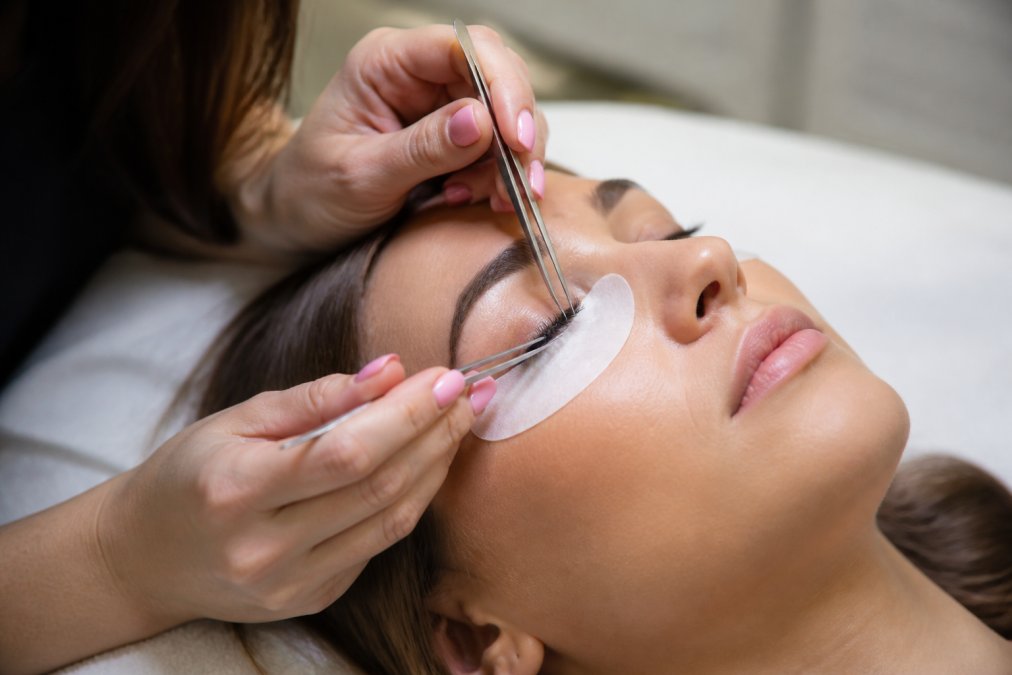
Safe lash extensions for sensitive eyes start with understanding why reactions happen. Clients often arrive frustrated after a bad experience elsewhere, convinced their eyes can't handle extensions. Most of the time, that's not true.
The problem is rarely extensions themselves, it's the adhesive, technique, or aftercare.
Understanding Eye Sensitivity and Lash Extensions
Eye sensitivity is a heightened response of the eye area to adhesives, fumes, or mechanical friction. Some people are born with it; others develop it after years of makeup use, allergies, or aging.
Eyelid skin is the thinnest on the body, so it absorbs chemicals readily and shows irritation fast (peer-reviewed research). When adhesive fumes linger near the lash line, sensitive eyes react quickly.
Common Causes of Lash Adhesive Reactions
Most reactions trace back to one of four culprits:
- Cyanoacrylate sensitivity. This is the primary bonding agent in nearly all lash adhesives. Some people react to it directly.
- Formaldehyde exposure. Cheap adhesives may release trace formaldehyde as they cure. This is a known irritant.
- Fume accumulation. Poor ventilation during application traps adhesive vapors near the eye.
- Mechanical irritation. Incorrect isolation or weight distribution pulls on natural lashes, causing redness and discomfort.
The American Academy of Ophthalmology overview of eyelid dermatitis notes that contact dermatitis around the eyes often results from repeated exposure to cosmetic products, including adhesives. If you've reacted before, identifying which cause applies to you changes everything about how you proceed.
Signs of Allergic Reaction to Lash Extensions vs. Irritation
Knowing the difference between an allergic reaction and simple irritation prevents both panic and ignoring something serious.
Irritation appears within hours: redness, mild burning, or watery eyes, usually fading within 24-48 hours as the adhesive cures.
Allergic reaction can surface 12-72 hours after application. Signs include:
- Persistent swelling of the eyelid
- Intense itching that worsens over time
- Redness that spreads beyond the lash line
- Crusting or discharge along the eyelid margin
- A bumpy, rash-like texture on the skin
If you experience swelling or discharge, remove the extensions and contact a healthcare provider, don't wait to see if it resolves.
The Lash Extension Patch Test: A Step-by-Step Guide
A patch test is the most reliable way to predict whether your eyes will tolerate lash adhesive. Many providers skip it, don't let them.
But a skin patch test doesn't fully replicate what happens at your lash line. It tests for contact sensitization, whether your immune system recognizes cyanoacrylate as an allergen, not fume reactivity, a separate mechanism involving volatile compounds released as the adhesive cures. You can pass a wrist test and still react during a full application.
How to Perform a DIY Patch Test at Home
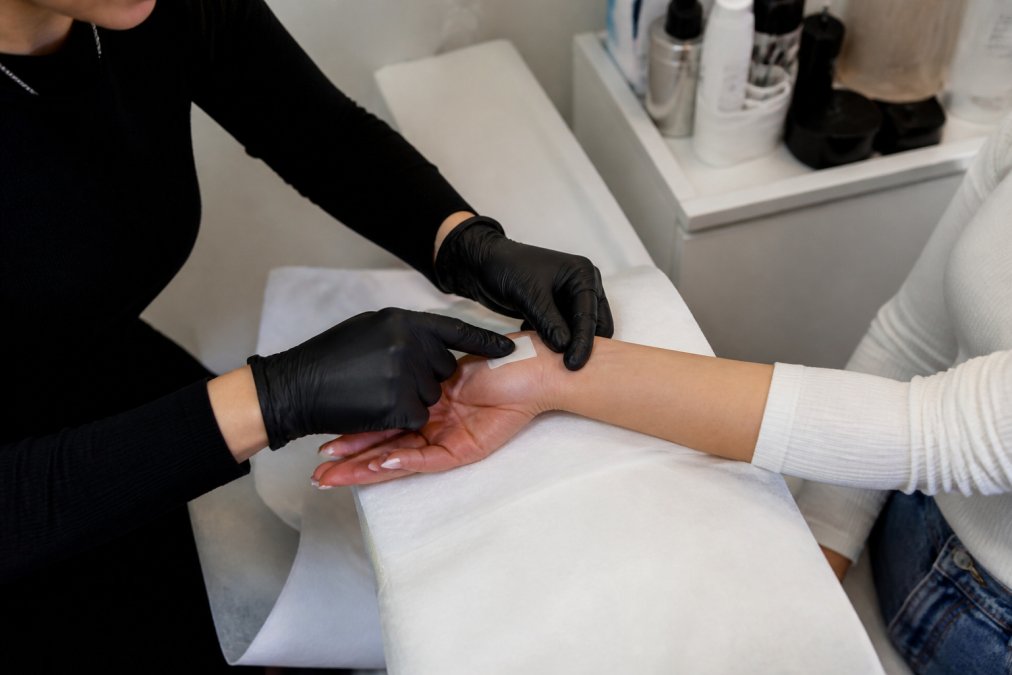
If your technician doesn't offer a patch test before your first full set, ask for one. A proper test involves:
- Request a small sample of the adhesive your technician plans to use. Don't accept a generic "sensitive formula" without confirming the exact product name and batch.
- Clean a small area behind your ear or on your inner wrist with an oil-free cleanser. The inner wrist is more reactive, making it a better early-warning site.
- Apply a tiny drop of adhesive to the cleaned area. Let it cure fully, usually 24 to 48 hours depending on humidity.
- Wait 24-48 hours. Don't wash the area aggressively. Log any sensation, even mild tingling.
- Check for redness, itching, swelling, or bumps. Any of these signals sensitivity. Photograph the site at 24 and 48 hours for an objective record.
- Repeat with a second adhesive if the first reacts. A different cyanoacrylate base or lower-concentration formula may pass where another failed.
This test doesn't guarantee zero reaction during a full application, since fume exposure differs from skin contact, but it eliminates the most obvious sensitivities before you commit.
The Fume Test: What Skin Patch Tests Miss
Because fume reactivity is a separate pathway, a skin patch test alone is incomplete. Supplement it with a controlled fume exposure test:
- Have your technician apply a single extension to one natural lash on the outer corner of one eye, far from the tear duct and central lid tissue.
- Sit with your eyes closed for the normal curing window (typically 2-5 minutes) in the same room conditions as a full appointment.
- Note any burning, watering, or urge to rub within the first 30 minutes.
- Leave the single extension in place for 24 hours and monitor for delayed swelling or lid redness.
This two-part protocol, skin patch plus single-lash fume test, is more thorough than most salons offer. If a provider resists either step, treat that as a signal about their safety standards.
Specific Medical Conditions vs. General Sensitivity
General sensitivity means your eyes react to strong fumes or certain ingredients, but a well-formulated adhesive still works. Diagnosed medical conditions change the patch test calculus entirely.
Blepharitis, inflammation of the eyelid margin, leaves the eye area chronically irritated. Extensions may worsen symptoms unless it's managed first, a wrist patch test tells you nothing about how a compromised lid margin responds to adhesive.
Ocular rosacea causes redness and sensitivity that fumes can aggravate; even low-fume adhesives can trigger flushing and discomfort.
Dry eye syndrome doesn't directly cause adhesive reactions, but extended closure during application leaves eyes gritty, and reduced tear production means less natural flushing of airborne irritants.
Contact dermatitis, whether irritant or allergic, is the most common diagnosis when someone reacts to lash adhesive. Irritant contact dermatitis is a direct toxic response to a substance and can happen on first exposure. Allergic contact dermatitis requires prior sensitization and typically appears after repeated use. This distinction matters because irritant reactions often resolve with a different formula, while allergic reactions tend to worsen with continued exposure.
If you have any diagnosed eye condition, get clearance from your eye doctor before booking. This isn't a formality. It's the difference between a comfortable experience and a flare-up.
Hypoallergenic Lash Glue for Sensitive Eyes: What to Look For
No adhesive is truly hypoallergenic, because the term itself has no regulated definition. What matters is the formulation.
Look for these characteristics in a low-fume formula:
- Formaldehyde-free labeling with ingredient transparency
- Low fume emission, which reduces vapor irritation during and after application
- Shorter cure time, which limits how long you're exposed to uncured adhesive
- Reduced cyanoacrylate concentration where possible, though some amount is necessary for bonding
A reputable technician will tell you exactly which adhesive they use and why. If they can't answer basic questions about the formula, that's a red flag.
Humidity and Temperature: The Curing Factor Competitors Miss
Here's what most guides skip entirely: adhesive curing depends heavily on room humidity and temperature.
Cyanoacrylate adhesives cure through a process called polymerization, which requires moisture in the air. Too little humidity, and the adhesive cures slowly, extending fume exposure. Too much humidity, and it cures too fast, creating brittle bonds that cause premature shedding and pulling.
Most lash adhesives perform best between 45-55% relative humidity and 68-72°F. A technician who doesn't monitor these conditions is guessing. Ask your technician how they control the room environment during application. Their answer can provide insight into their standards.
Lash Extension Aftercare for Sensitive Eyes
Aftercare determines whether your extensions last and whether your eyes stay comfortable. For sensitive eyes, the margin for error is smaller.
- Cleanse daily with an oil-free cleanser. Oil breaks down adhesive bonds and traps debris against the lash line.
- Use a pH-balanced lash bath designed specifically for extensions. Harsh soaps strip natural oils and irritate the eyelid.
- Pat dry gently. Rubbing creates friction that loosens bonds and irritates skin.
- Avoid waterproof mascara. Removing it requires solvents that damage adhesive and stress natural lashes.
- Brush lashes with a clean spoolie each morning to prevent tangling.
The FDA guidance on cosmetic safety and eye area products emphasizes that products applied near the eyes should be used according to manufacturer instructions and discontinued at the first sign of irritation.
Natural lash health matters too. Your lashes go through a lash shedding cycle every 60-90 days. Extensions attached to lashes nearing the end of their cycle will shed sooner. This is normal, not a sign of damage.
Alternative Lash Options for Hypersensitive Individuals
If adhesive-based extensions consistently cause problems, you still have options. But "hypersensitive" is not a single category. The right alternative depends on whether your sensitivity is to adhesive chemicals, to mechanical tension, to prolonged eye closure, or to a diagnosed medical condition. This section maps each option to the sensitivity type it best serves, a framework most guides skip.
| Option | Adhesive Used | Typical Wear | Best For | Key Trade-Off |
|---|---|---|---|---|
| Classic extensions | Yes | 2-3 weeks | Mild sensitivity, first-timers | Adhesive contact at lash line |
| Volume extensions | Yes | 2-3 weeks | Those wanting fullness | More adhesive surface area, higher fume load |
| Lash clusters | Minimal | 3-7 days | Testing tolerance | Adhesive still touches skin |
| Strip lashes | None on skin | 1 day | Special occasions | Daily adhesive removal stresses lid |
| Lash lifts | None | 4-6 weeks | Natural lash enhancement | Chemical perming solution near eye |
| Magnetic lashes | None | 1 day | Adhesive-free trial | Weight on natural lashes, magnet safety |
Matching the Option to Your Sensitivity Type
If you react to adhesive fumes: Lash lifts and strip lashes with a sensitive-skin adhesive are your best starting points. A lash lift uses a gentle perming solution to curl your natural lashes upward, no adhesive touches the skin. The trade-off is that the perming solution itself is a chemical exposure, so patch test that separately. Strip lashes with a latex-free, formaldehyde-free adhesive give you a temporary option without commitment, but daily removal can stress the lid over time.
If you react to mechanical tension: Volume extensions are the wrong direction, more lashes per natural lash means more weight. A sparse classic set, or a lash lift, distributes less tension. Ask your technician to use thinner, lighter lash diameters (0.05-0.07 mm range) rather than standard 0.15 mm.
If you react to prolonged eye closure: Any extension service requires 1-2 hours of closed eyes. Shorter sessions with breaks help, but if your eyes water heavily or you have dry eye syndrome, a lash lift (typically 45-60 minutes) or strip lashes may be more comfortable.
If you have a diagnosed condition (blepharitis, ocular rosacea, dry eye): Get clearance from your eye doctor before any option. A lash lift may be safer than extensions because no adhesive sits at the lash line, but the perming solution can still irritate a compromised lid margin. Magnetic lashes avoid chemicals entirely but add weight and require careful hygiene to avoid introducing bacteria near the eye.
The Trial Progression for Hypersensitive Clients
Rather than jumping straight to a full set, a staged approach reduces risk:
- Start with a patch test (see previous section) to rule out contact sensitization.
- Try a single-lash fume test to assess ocular reactivity.
- Book a sparse classic set with a low-fume adhesive if both tests pass.
- Escalate to volume only if the classic set causes zero irritation after two full wear cycles.
- Fall back to a lash lift or strip lashes if any step triggers a reaction.
This progression is slower than a single appointment, but it prevents the cycle of reaction-removal-reaction that permanently sensitizes some clients.
If you're in the Mystic area and unsure which route suits your eyes, a consultation can clarify your options.
Frequently Asked Questions
What lash extensions are best for sensitive eyes?
For sensitive eyes, choose extensions made from synthetic fibers like silk or faux mink, which are less likely to trap irritants than natural fur. Pair them with a hypoallergenic, formaldehyde-free adhesive that has low fumes. A patch test before your first full set helps confirm compatibility. If you have a known allergy to cyanoacrylate, discuss alternatives with your lash technician or an eye doctor before booking.
Can I get lash extensions if my eyes are sensitive?
Many people with sensitive eyes can wear lash extensions, but it depends on the cause of your sensitivity. If your eyes react to pollen, dust, or makeup, a low-fume adhesive and careful application may work well. If you have a history of blepharitis, chronic dry eye, or contact dermatitis, get clearance from an eye doctor first. A patch test is essential, and your technician should adjust the adhesive and lash weight to reduce strain on natural lashes.
How do I know if I am having an allergic reaction to lash glue?
Signs of an allergic reaction include redness, swelling, itching, or watery eyes that start within 24 to 48 hours of application and may worsen over time. Irritation from fumes or improper application tends to cause immediate stinging or burning that fades once the adhesive cures. If you notice swelling or a rash, remove the extensions and see a doctor. A patch test before a full set can help you avoid a reaction.
What should I avoid after getting lash extensions with sensitive eyes?
Avoid oil-based cleansers, waterproof mascara, and rubbing your eyes. Use an oil-free, pH-balanced lash cleanser and a soft brush to gently clean along the lash line daily. Keep humidity and heat away from your lashes for the first 24 hours to let the adhesive cure fully. If you swim or use a sauna, wait at least 48 hours. Following these steps supports lash retention and reduces the chance of irritation.