 how-to
Waxing for Sensitive Skin Types: A Complete Guide
Table of Contents
- Hard Wax vs Soft Wax for Sensitive Skin
- How to Prepare for Bikini Wax Without Irritation
- How Long Should Hair Be for Waxing?
- Ingredients to Avoid in Waxing Products
- Post-Waxing Skincare Routine for Sensitive Skin
- Medications, Hormones, and Skin Sensitivity
- Common Waxing Mistakes That Cause Irritation
- Conclusion
- Frequently Asked Questions
Last Updated: September 16, 2026
Hard Wax vs Soft Wax for Sensitive Skin
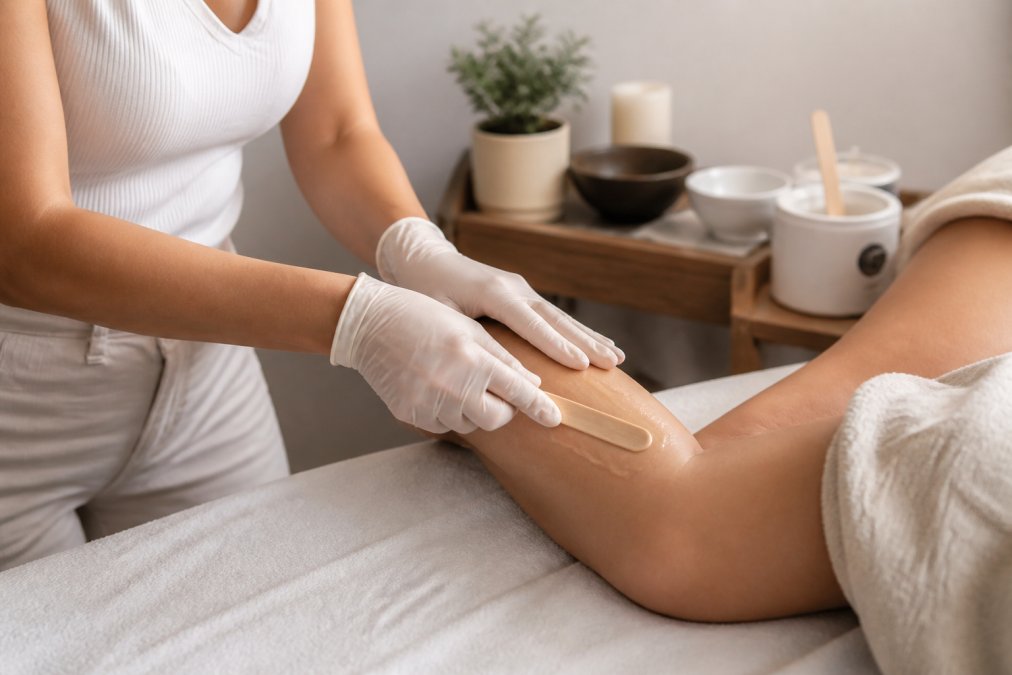
Waxing for sensitive skin types starts with one decision: which wax touches your skin. Hard wax is the better choice for most sensitive areas because it grips hair without adhering to live skin, while soft wax requires a cloth strip and removes a thin layer of surface cells along with the hair. That difference matters when your skin barrier is already reactive.
Why Hard Wax Is Often the Better Choice
Hard wax, also called stripless wax, cools into a flexible film you peel off without a cloth strip. It shrinks around each hair as it sets, pulling from the root with less tugging on surrounding skin, the whole point for reactive skin, bikini areas, and faces.
When Soft Wax Still Works
Soft wax isn't the enemy. On larger, less sensitive areas like legs or arms, it's faster and more economical, and many estheticians prefer it for fine hair that hard wax struggles to grip.
How to Prepare for Bikini Wax Without Irritation
Preparation for a bikini wax is mostly about what you stop doing beforehand. Exfoliation, retinol, and harsh scrubs thin or stress the skin barrier, and a freshly exfoliated bikini line is one of the fastest routes to redness and folliculitis.
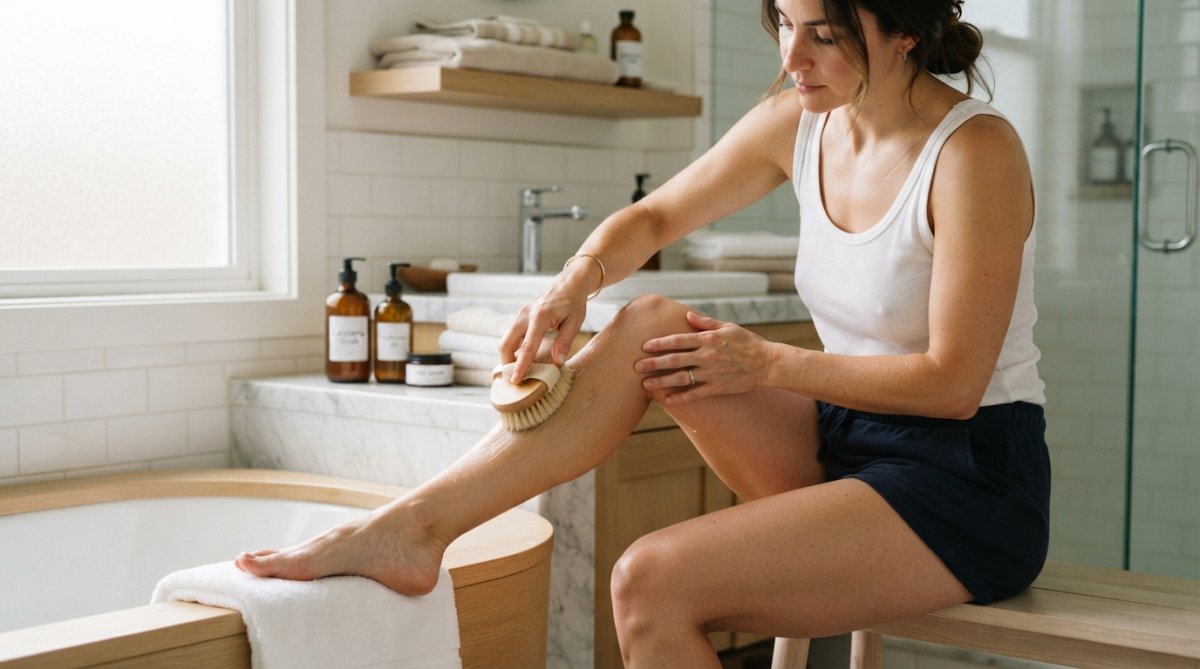
Here's the routine that works for reactive skin:
- 48 hours before: Skip exfoliating scrubs, loofahs, and chemical exfoliants on the area.
- 24 hours before: Avoid retinoids, AHAs, and BHAs. Don't shave or trim too close.
- Day of: Shower with lukewarm water, skip lotions and oils, and wear loose cotton underwear.
- Bring: A list of your current medications and skincare actives so your esthetician can adjust.
The 48-Hour Rule and Why It Matters
The 48-hour rule exists because exfoliation temporarily weakens the skin barrier. Waxing freshly exfoliated skin removes hair and the cells your skin needs to recover, turning minor irritation into a week of bumps.
How Long Should Hair Be for Waxing?
Hair should be about a quarter-inch long, roughly a grain of rice, for wax to grip it. Shorter and the wax slides over the hair; longer than half an inch and hairs snap instead of releasing from the root.
| Hair Length | What Happens | What to Do |
|---|---|---|
| Under 1/4 inch | Wax can't grip; patchy results | Wait 1-2 weeks |
| 1/4 to 1/2 inch | Ideal for most wax types | Book your appointment |
| Over 1/2 inch | Wax can't set; hair snaps | Trim to 1/4 inch first |
Ingredients to Avoid in Waxing Products
Fragrance is the biggest offender in waxing products for reactive skin. "Natural" fragrance, essential oils, and perfumes are common triggers for contact dermatitis, and they appear in wax, pre-wax cleansers, and post-wax lotions alike.
Read labels for these:
- Fragrance and parfum (including "natural" fragrance)
- Essential oils like lavender, tea tree, and citrus, which are common sensitizers
- Mineral oil and petroleum-based formulas that can clog pores after waxing
- Alcohol and witch hazel in high concentrations, which sting compromised skin
- Retinoids, AHAs, and BHAs in post-wax products
Post-Waxing Skincare Routine for Sensitive Skin
Post-waxing care is where most irritation is prevented or created. The first 24 hours are about leaving skin alone; the following week is about gentle exfoliation and hydration to prevent ingrown hairs and keep the barrier intact.
First 24 Hours: What to Do and Skip
Skip heat, friction, and actives: no hot showers, saunas, gym sessions, tight clothing, retinoids, exfoliants, or fragranced lotions. A cool compress and a fragrance-free soothing oil are all your skin needs.
Days 2-7: Gentle Exfoliation and Hydration
Once initial sensitivity fades, exfoliate gently two to three times a week to prevent ingrown hairs, and pair it with a fragrance-free moisturizer or soothing oil.
Medications, Hormones, and Skin Sensitivity
Two things change how your skin handles wax more than any product: what you're taking and where you are in your hormonal cycle. Both can turn a routine wax into a reactive one.
Medications That Make Waxing Risky
Waxing pulls hair from the follicle, which also removes a thin layer of the stratum corneum, the outermost skin barrier. Anything that thins that barrier or slows wound healing turns a routine wax into a burn or tear risk.
Flag these before your appointment:
- Retinoids (topical and oral). Tretinoin, adapalene, tazarotene, and oral isotretinoin (Accutane) thin the epidermis and impair barrier recovery. Most dermatologists advise pausing topical retinoids for 5-7 days before waxing; oral isotretinoin typically requires waiting 6 months after the last dose. Confirm your specific timeline with your prescriber.
- Blood thinners and antiplatelets. Warfarin, apixaban, rivaroxaban, clopidogrel, and daily aspirin increase bruising and bleeding at the follicle. Expect longer redness and possible pinpoint bruising.
- Certain antibiotics. Tetracyclines (doxycycline, minocycline) and fluoroquinolones increase photosensitivity and skin fragility. Avoid waxing on sun-exposed areas while taking them.
- Acne and rosacea treatments. Prescription-strength salicylic acid, benzoyl peroxide, and azelaic acid all increase reactivity.
- Hormone therapies. Birth control, HRT, and fertility medications shift estrogen and progesterone levels, which changes skin sensitivity (more on that below).
- Biologics and immunosuppressants. These slow healing and raise infection risk at open follicles.
Hormonal Influence on Skin Reactivity
Estrogen supports skin barrier function, collagen production, and wound healing; progesterone and androgens increase sebum and inflammation. When those hormones shift, so does how your skin tolerates waxing.
When sensitivity tends to spike:
- The luteal phase (roughly the 7-10 days before your period). Estrogen drops, progesterone rises, and many clients report their usual wax feels noticeably sharper. If you track your cycle, book in the week after your period ends, the follicular phase, when estrogen is rising and skin is calmest.
- Pregnancy. Elevated estrogen and progesterone, plus increased blood flow, make skin more reactive and more prone to pigmentation changes (melasma) after waxing. Many practitioners recommend avoiding facial waxing during pregnancy for this reason.
- Perimenopause and menopause. Declining estrogen thins the skin and slows barrier recovery, so waxing that was easy at 30 can sting at 50. Longer intervals between appointments and lower-temperature wax help.
- PCOS and other androgen-dominant conditions. Higher androgens mean coarser, denser hair and more sebum, which raises the risk of folliculitis and ingrown hairs. Gentle exfoliation between waxes matters more here, not less.
The Patch Test Protocol
A patch test is the single most reliable way to predict how your skin will respond to a wax, pre-wax cleanser, or post-wax product. Here's how to do one at home:
- Pick the test site. Use a small area near the treatment zone, the inner thigh for a bikini wax, the jawline for a facial wax. Avoid the face itself for the first test if you can.
- Cleanse and dry. No lotions, oils, or actives on the site for 24 hours beforehand.
- Apply a dime-sized amount of wax. Follow the same temperature and technique your esthetician would use. Remove it in the direction of hair growth.
- Wait 24 hours. Do not apply anything to the site. No moisturizer, no sunscreen, no makeup.
- Wait 48 hours for a full read. Most contact reactions show within 24 hours, but delayed reactions to fragrance or essential oils can take up to 48.
- Check for these signs: spreading redness beyond the waxed area, raised welts, itching that intensifies rather than fades, blistering, or pus-filled bumps. Any of these means stop and consult a healthcare provider before waxing again.
- Test each new product separately. If you switch wax brands or add a post-wax oil, patch test that product on its own so you know exactly what caused a reaction.
Common Waxing Mistakes That Cause Irritation
The worst reactions are almost always timing mistakes, not technique mistakes: waxing too soon after exfoliating, over a fresh breakout, or without a patch test.
The Mistakes That Matter Most
- Skipping the patch test. A 24-hour patch test on a small area reveals reactions before they cover a larger surface. This is the single highest-value habit for reactive skin.
- Waxing over actives. Retinoids and AHAs/BHAs thin the skin and make waxing riskier for days afterward. Pause topical retinoids 5-7 days before a wax; pause chemical exfoliants 48 hours before.
- Double-dipping or rushing. Re-waxing the same spot repeatedly irritates skin that was already stressed. A skilled esthetician presses once, removes once, and moves on.
- Waxing over a flare. If your skin is already reactive, eczema flare, active breakout, sunburn, or a fresh chemical peel, wait until it settles. Waxing compromised skin is how minor irritation becomes an infection.
- Ignoring aftercare. No soothing oil, no sun protection, no patience adds up to longer recovery. The first 24 hours after a wax are not the time for a hot yoga class.
- Booking around your period instead of after it. Hormonal shifts in the luteal phase make skin more reactive. Book in the week after your period when you can.
- Using the wrong wax on the wrong area. Soft wax on the face or bikini line strips more surface skin than hard wax and is a common cause of post-wax folliculitis.
Normal Redness vs. a Reaction: A Troubleshooting Checklist
Post-wax skin almost always looks angry for a little while. The skill is knowing which angry is fine and which needs a doctor.
Normal post-wax response:
- Redness confined to the waxed area
- Small red bumps at the follicle openings (follicular erythema)
- Mild warmth and sensitivity to touch
- Fades noticeably within 2-4 hours, mostly gone by the next morning
- No spreading, no itching that worsens, no fluid
Signs of an allergic reaction or contact dermatitis:
- Redness that spreads beyond the waxed area or keeps expanding
- Raised, itchy welts (hives) that appear within minutes to hours
- Intense itching that intensifies instead of fading
- Swelling of the surrounding skin
- Onset 24-72 hours after waxing (delayed reactions to fragrance or essential oils)
Signs of a burn or skin lifting:
- Shiny, tight, or blistered skin
- Skin that peels or lifts away from the surface
- Pain that increases rather than decreases over the first few hours
- A wet or weeping surface
Signs of infection (folliculitis or worse):
- Pus-filled bumps that appear 2-5 days after waxing
- Spreading warmth, swelling, or red streaks
- Fever or feeling unwell
- Pain that worsens after the first 48 hours
What to Do in the First Hour After a Bad Reaction
If something goes wrong, the response is the same regardless of cause: cool the skin, stop the irritant, and add nothing new.
- Apply a cool compress (not ice directly) for 10 minutes at a time.
- Rinse with lukewarm water only, no soap, no witch hazel, no alcohol.
- Apply a fragrance-free, occlusive balm or plain petrolatum if the skin is intact.
- Skip actives, exfoliants, and fragranced products for at least a week.
- Photograph the area each day so you can show your esthetician or provider whether it's improving.
Conclusion
Waxing for sensitive skin types isn't about a magic product. It's about matching the wax to the area, prepping the skin for two quiet days, and giving it a week of gentle care afterward.
Frequently Asked Questions
What type of waxing is best for sensitive skin?
Hard wax is often the better choice for sensitive skin types because it adheres only to the hair, not the skin, and is removed without a strip. This means less pulling on the skin barrier. Soft wax can work for some, but it's more likely to cause redness because it's removed with a cloth strip.
What is the 48-hour rule for waxing?
The 48-hour rule refers to avoiding certain activities and products for two days before and after a wax. In the 48 hours before, skip retinoids, exfoliating acids, and intense sun exposure. After waxing, wait 48 hours before swimming, saunas, or vigorous exercise that causes sweating. This gives your skin time to recover and reduces the risk of folliculitis or irritation. If you're unsure, ask your esthetician for specific timing based on your skin.
How should I prepare my skin before a bikini wax?
To prepare for a bikini wax, grow your hair to about a quarter-inch (roughly the length of a grain of rice) for best adhesion.
Can I wax if I'm on medication like Accutane?
No. If you're taking isotretinoin (Accutane) or have taken it within the past six months, waxing is not safe because the medication makes skin extremely thin and prone to tearing. Other medications like blood thinners, certain antibiotics, and high-dose retinoids also increase risk. Always disclose all medications and skincare products to your esthetician before waxing. They can advise whether to reschedule or use an alternative hair removal method.