 Listicle
7 Best Facial Treatments for Sensitive Skin in Groton
Table of Contents
- How to Choose the Best Facial Treatments for Sensitive Skin in Groton
- Quick Comparison: 7 Facial Treatments for Sensitive Skin
- 1. Hydrating Facial for Sensitive Skin
- 2. Gentle Enzyme Facial for Sensitive Skin
- 3. Calming Redness-Reducing Facial for Sensitive Skin
- 4. Facial Consultation for Sensitive Skin: What to Expect
- 5. Sensitive Skin Facial Aftercare: Products and Practices
- 6. How Often Should You Get a Facial for Sensitive Skin?
- Frequently Asked Questions
Last Updated: October 14, 2026
How to Choose the Best Facial Treatments for Sensitive Skin in Groton
Finding the best facial treatments for sensitive skin in Groton starts with one rule: gentle wins. Sensitive skin reacts to heat, harsh acids, fragrance, and rough exfoliation, so the right treatment calms the barrier instead of stripping it. At Liz Almanzar Esthetics in nearby Mystic, CT, we build every facial around that principle. Below, we break down each option, who it suits, and how to space them out. The treatments we cover range from hydrating facials to calming redness care, plus the consultation and aftercare that hold results together.
Sensitive skin is skin that reacts more easily than average to products, temperature, or friction, showing up as redness, stinging, tightness, or flaking. That reactivity is why a standard facial can leave you worse off, not better.
One thing most guides get wrong: they treat "sensitive" as a single skin type. In practice, it is a symptom. Dryness, rosacea-prone flushing, and post-acne irritation each need a different approach. So before you book anything, you need to know which pattern you are dealing with. A American Academy of Dermatology guidance on sensitive skin notes that identifying triggers matters more than chasing a single "miracle" product.
Here is the short version of what follows.
| Treatment | Best For | Typical Frequency |
|---|---|---|
| Hydrating facial | Dry, tight, reactive skin | Every 4-6 weeks |
| Gentle enzyme facial | Dull, congested skin | Every 4-6 weeks |
| Redness-reducing facial | Flushing, rosacea-prone skin | Every 3-4 weeks |
| Facial consultation | First-timers, unclear triggers | Once, then as needed |
| Aftercare routine | Maintaining results at home | Daily |
| Spacing and frequency | Planning a safe schedule | Ongoing |
Quick Comparison: 7 Facial Treatments for Sensitive Skin
The treatments break into three groups: hydration, gentle exfoliation, and calming care. Most sensitive-skin clients do best by starting with hydration and calming work, then adding exfoliation only once the barrier is stable. Rushing to acids is a common mistake.
How We Evaluated These Treatments
We evaluate each option on factors such as how gentle it is on a reactive barrier, how quickly it delivers visible calm, how well it pairs with at-home care, and how often it can be repeated safely. Treatments that demand heavy downtime or strong actives may not be suitable for sensitive skin, even when they deliver dramatic results on other skin types.
1. Hydrating Facial for Sensitive Skin
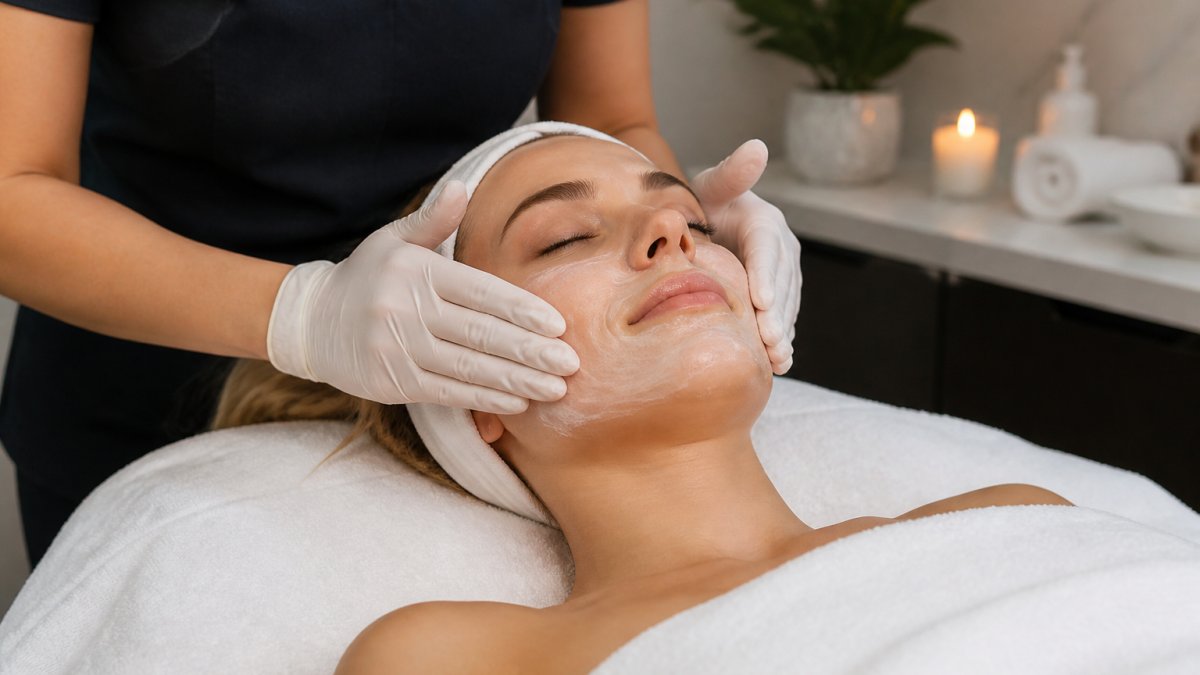
A hydrating facial for sensitive skin is a treatment focused on replenishing moisture and calming reactivity, using gentle cleansers, soothing masks, and barrier-supporting moisturizers rather than strong exfoliants. It suits dry, tight, or easily flushed skin. Clients may notice softer, calmer skin.
At home, the routine matters as much as the treatment. We recommend a fragrance-conscious, non-stripping cleanser such as our Gentle Cleansing Gel, which is oil-free and sulfate-free, followed by a hydrating layer. Our Skin Hydration Cream uses hyaluronic acid to help skin retain moisture, and our Snail Mucin Face Serum pairs snail secretion filtrate with Centella Asiatica to calm and condition. Used consistently, these support the results of an in-studio hydrating facial between visits.

2. Gentle Enzyme Facial for Sensitive Skin
A gentle enzyme facial uses fruit-derived enzymes instead of scrubs or strong acids to loosen dead surface cells. Unlike a rough mechanical scrub, enzymes dissolve debris without friction, which matters when your skin flushes at the slightest touch. It is best for dull or mildly congested skin that still reacts easily.
For most sensitive clients, an enzyme facial every four to six weeks is enough to keep skin looking fresh without triggering a reaction.
3. Calming Redness-Reducing Facial for Sensitive Skin
A redness-reducing facial targets flushing and heat by using cool compresses, soothing botanicals, and anti-inflammatory ingredients. It is the go-to option for rosacea-prone or reactive skin that flushes with temperature changes or stress. This treatment aims to reduce visible redness and promote a calmer feel, with results often building over several sessions.
It's advisable to avoid booking this facial right after sun exposure or a hot shower. Arriving with skin at a normal temperature can help the esthetician assess your skin's baseline. Our Gentle Balancing Toner, with green tea and chamomile, is a good at-home follow-up because it calms and preps skin without harsh ingredients.
ANTI-AGING MOISTURIZER - SENSITIVE SKIN →

4. Facial Consultation for Sensitive Skin: What to Expect
A facial consultation for sensitive skin is a short assessment where an esthetician reviews your history, triggers, current products, and goals before recommending treatment. It typically includes a skin analysis and a patch test. Skipping this step can lead to less effective facial treatments.
During the consultation, expect questions about what makes your skin sting, how it reacts to heat and fragrance, and what you have tried. Bring your current products or photos of their labels. This is also the moment to flag any diagnosed condition so the esthetician can work within safe limits.
5. Sensitive Skin Facial Aftercare: Products and Practices
Sensitive skin facial aftercare is what protects your results in the days that follow. The skin's barrier can be more receptive right after a treatment, making the 48 hours afterward important for maintaining results. Keep it simple: cleanse gently, hydrate, and skip anything new.
- Use a mild cleanser morning and night, no scrubs
- Apply a hydrating moisturizer while skin is still damp
- Skip retinoids, acids, and strong actives for 48 hours
- Avoid hot showers, saunas, and direct sun on day one
- Wear broad-spectrum sunscreen daily
- Introduce one new product at a time, never several at once
A bar soap can also work well for reactive skin. Our Oat Milk Honey Soap combines soothing oats, goat milk, and honey, and our Coconut Beach Soap is made for sensitive skin with organic shea butter and coconut oil.
6. How Often Should You Get a Facial for Sensitive Skin?
Most people with sensitive skin should get a facial every four to six weeks, which matches the skin's natural renewal cycle. Calming treatments can be spaced closer together at first, then stretched out once the barrier stabilizes. More frequent treatments are not necessarily better; over-treating can contribute to flare-ups.
If you are searching for facial treatments near me in Groton, plan your first few visits around your skin's response, not the calendar. Start with one treatment, watch how your skin behaves for a week, then adjust. A Cleveland Clinic overview of sensitive skin care reinforces that consistency with gentle products beats aggressive, occasional treatments.
Sensitive skin does not have to mean skipping facials, but it does mean choosing carefully and spacing treatments with patience. Liz Almanzar Esthetics offers rejuvenating facials, precise waxing, and lash extensions in a professional, inviting setting in Mystic, CT, serving clients across Groton and Southeastern Connecticut. We are dedicated to enhancing your natural beauty and delivering an enhanced aesthetic appearance through expert services tailored to your specific needs. Book a service with Liz Almanzar Esthetics and start with a consultation that puts your skin's comfort first.
Frequently Asked Questions
What facial is best for sensitive skin?
Hydrating and calming facials are generally best for sensitive skin. Look for treatments that use gentle, fragrance-free products and avoid harsh exfoliants. A hydrating facial for sensitive skin focuses on restoring moisture and reducing redness without triggering irritation. Always start with a consultation to identify your specific sensitivities.
How do I know if a facial is safe for sensitive skin?
Ask about the products and techniques used. A safe facial for sensitive skin avoids strong acids, scrubs, and synthetic fragrances. Your esthetician should perform a patch test and review your skin history. If you have rosacea or eczema, consult a dermatologist first. A facial consultation for sensitive skin helps determine the right approach.
How should I care for sensitive skin after a facial?
Sensitive skin facial aftercare includes using a gentle cleanser, a soothing toner, and a hydrating moisturizer. Avoid exfoliants, retinoids, and direct sun exposure for at least 48 hours. Apply sunscreen daily. If you experience persistent redness or irritation, contact your esthetician or a doctor.
How often should someone with sensitive skin get a facial?
Most people with sensitive skin benefit from a facial every 4 to 6 weeks. This allows your skin to recover between treatments and reduces the risk of over-exfoliation. Your esthetician can adjust the frequency based on your skin's condition and how well it tolerates each session.