 How-to
Can Estheticians Help With Cystic Acne
Last Updated: October 23, 2026
Quick Summary
Can estheticians help with cystic acne by providing targeted skincare treatments, professional facials, and prevention guidance, though severe cystic acne should be assessed by a dermatologist who offers medical treatments to reduce scarring. Estheticians cannot extract deep cystic lesions, as forcing extraction causes infection risk and permanent scarring.
- Estheticians can safely extract blackheads, whiteheads, and surface pustules but should never extract cystic acne lesions.
- Professional acne facials last 45 minutes to an hour and include cleansing, exfoliation, extractions, serums, and masks.
- Schedule facials every 4 to 6 weeks for best results in managing acne-prone skin.
- See a dermatologist if acne doesn't improve after 8 to 12 weeks of esthetician care or if you have severe cystic acne.
- Dermatologists can prescribe isotretinoin, oral antibiotics, and hormonal medications that estheticians cannot offer.
Table of Contents
- What Is Cystic Acne and Why It Needs Professional Care
- How Estheticians Can Help With Cystic Acne
- Professional Facial for Acne-Prone Skin: What to Expect
- Cystic Acne Extractions: What Estheticians Can and Cannot Do
- Esthetician vs Dermatologist for Acne: Know the Difference
- When to See a Dermatologist for Cystic Acne
- Getting Started With Esthetician Care for Your Skin
- Frequently Asked Questions
What Is Cystic Acne and Why It Needs Professional Care
Cystic acne is a severe form of acne that develops deep beneath the skin's surface. Unlike regular pimples, cystic acne forms as large, painful nodules filled with fluid or pus. These bumps often don't have a visible head and can persist for weeks or months. We understand why the question of whether estheticians can help with cystic acne requires a thoughtful approach.
Cystic acne develops when bacteria, oil, and dead skin cells become trapped deep in hair follicles. The inflammation spreads below the skin's surface, creating those characteristic large, tender bumps. This type of acne is most common on the face, chest, back, and shoulders.
What makes cystic acne different from other acne types:
- Forms deep beneath the skin, not on the surface
- Causes significant pain and tenderness
- Leaves scars more easily than surface acne
- Responds slowly to typical acne treatments
- Often linked to hormonal changes, genetics, or stress
The key insight here: cystic acne isn't something to treat at home with over-the-counter products. It needs professional assessment and care. This is where understanding the difference between esthetician support and dermatological treatment becomes important.
How Estheticians Can Help With Cystic Acne
Estheticians can help with cystic acne by providing targeted skincare treatments, professional extractions for appropriate lesions, and guidance on preventing future breakouts. However, severe or cystic acne should be assessed by a dermatologist, as research on cystic acne treatment shows that dermatologists offer medical treatments to reduce the appearance of scars resulting from cystic acne.
Here's what estheticians can realistically offer:
Skincare Education An esthetician teaches you how to care for acne-prone skin at home. This includes choosing the right cleansers, treating products, and moisturizers. Many clients don't realize their current routine is making breakouts worse. A professional can identify these mistakes and build a plan that works.
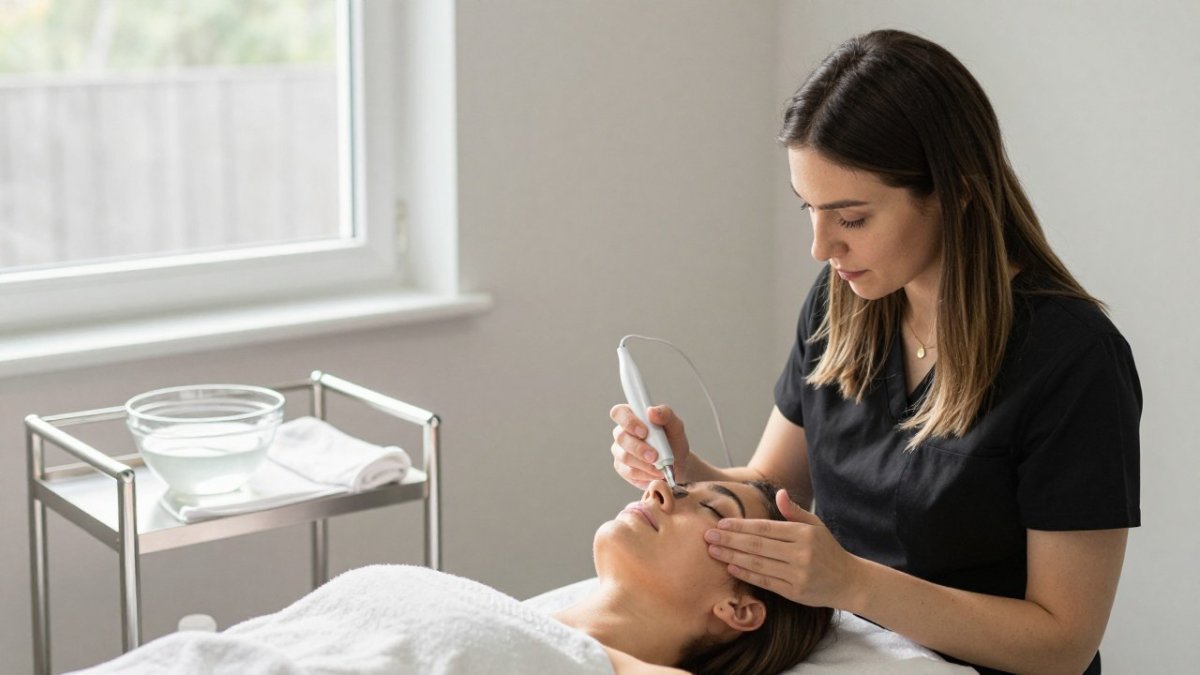
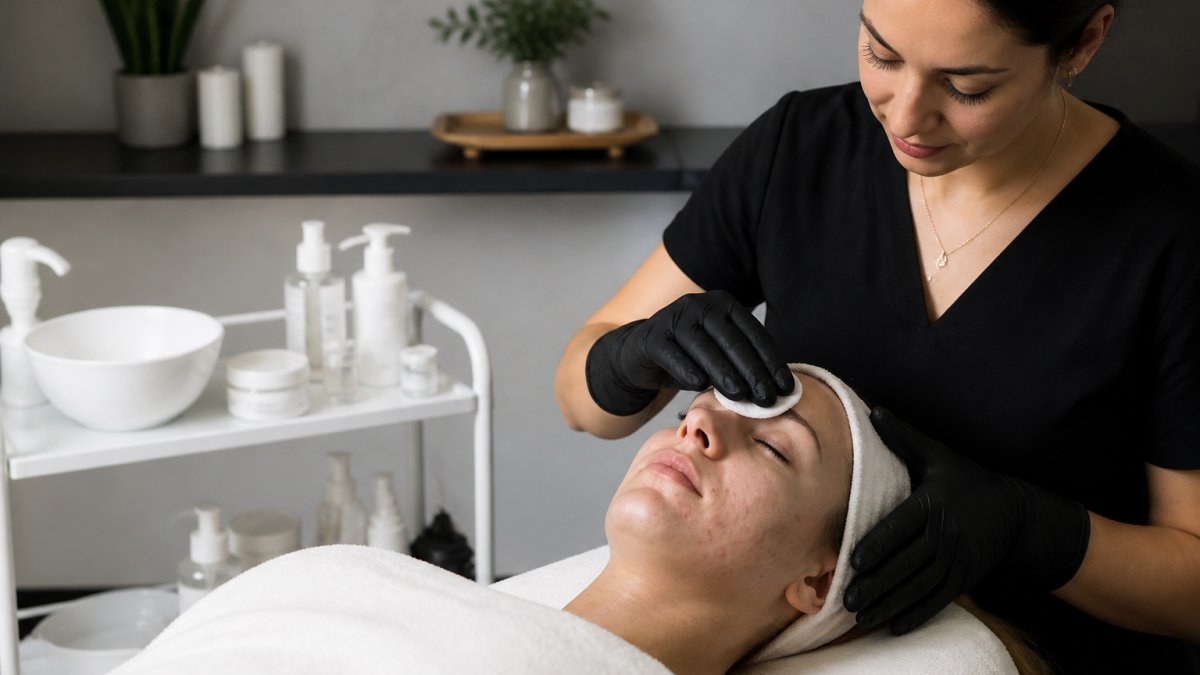
Professional Facials Estheticians perform facials designed specifically for acne-prone skin. These facials cleanse pores deeply, remove dead skin cells, and reduce inflammation. The treatment is gentler than what you can do at home and uses professional-grade products.
Mild-to-Moderate Acne Extractions Estheticians can safely extract whiteheads and blackheads during a facial. These surface-level lesions respond well to professional extraction. The process is done with proper sanitation and technique to avoid infection or scarring.
Product Recommendations An esthetician recommends products formulated for your specific skin type and acne severity. The Clear Skin Blueprint program teaches you how to build an effective routine with targeted serums and masks that support clearer skin.
Professional Facial for Acne-Prone Skin: What to Expect
A professional facial for acne-prone skin typically lasts 45 minutes to an hour.
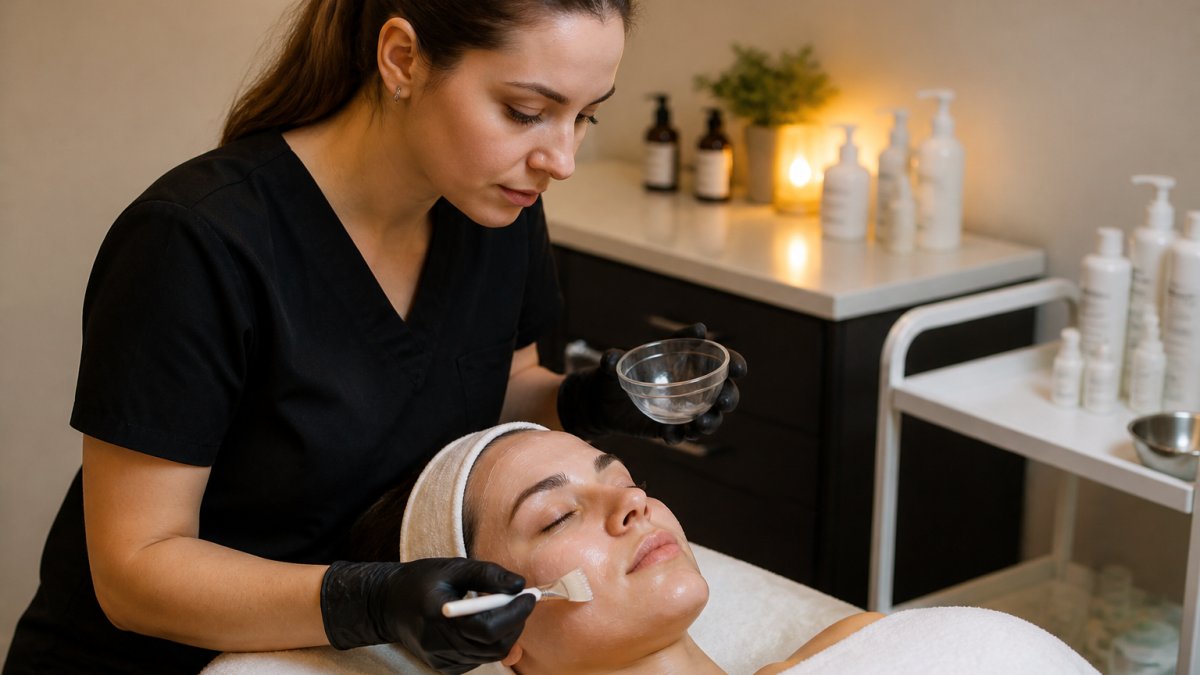
The Facial Process
Your esthetician starts by analyzing your skin and asking about your current routine, breakout triggers, and skin sensitivity.
The cleansing step removes oil, dirt, and bacteria from the skin's surface.
Exfoliation removes dead skin cells that clog pores. Estheticians use gentle chemical exfoliants or manual exfoliation appropriate for acne-prone skin.
Extractions happen next, but only for lesions that are ready. Your esthetician will not force extraction on cystic acne or deep nodules.
The treatment phase applies serums and masks formulated for acne. Many estheticians recommend benzoyl peroxide and plant-based treatments that balance effectiveness with skin comfort.
Moisturizing finishes the facial. Acne-prone skin still needs hydration. A lightweight, non-comedogenic moisturizer prevents dryness and irritation that can trigger more breakouts.
What to Expect After Your Facial
Your skin may feel tender for a few hours after extraction. This is normal.
Most people see improvements in skin texture and reduced inflammation within a few days.
Cystic Acne Extractions: What Estheticians Can and Cannot Do
Not all acne should be extracted. Estheticians know the difference between lesions that respond to extraction and those that will only worsen with it.
What Estheticians CAN Extract
Estheticians safely extract blackheads and whiteheads. These lesions have a visible opening or head. The material inside is accessible without forcing or causing trauma.
Surface-level pustules with a clear head can also be extracted carefully. The esthetician uses proper technique, sanitation, and tools to minimize damage.
What Estheticians CANNOT and SHOULD NOT Extract
Cystic acne does not extract easily. Cystic lesions are deep, often have no visible head, and contain fluid that won't express during extraction. Forcing extraction causes:
- Deeper inflammation
- Infection risk
- Permanent scarring
- Increased pain and swelling
An esthetician trained in acne care will refuse to extract cystic acne. This is the professional standard.
Inflamed or infected acne should also not be extracted. Extraction spreads bacteria and worsens infection. These lesions need medical treatment from a dermatologist.
Why the Limitation Matters
This isn't a weakness in esthetician training. It's a boundary that protects your skin. Dermatologists have medical tools and prescriptions to treat deep cystic acne.
For clients in Mystic and Ledyard seeking acne treatment, Circadia Spot Stop Serum provides targeted treatment for acute breakouts between professional visits.
Esthetician vs Dermatologist for Acne: Know the Difference
Understanding when to see an esthetician versus a dermatologist prevents wasted time and money. Both professionals help with acne, but their training, tools, and scope are different.
Esthetician Training and Scope
THE CLEAR SKIN BLUEPRINT VIP EXPERIENCE | E-BOOK + 3 FULL SIZE ACNE PRODUCTS →
Estheticians complete a state-licensed program in skincare. The training focuses on skin health, facial treatments, product knowledge, and client care. Estheticians cannot prescribe medications or perform medical procedures.
Estheticians excel at:
- Skincare routines and product selection
- Professional facials and extractions for surface acne
- Skin education and prevention
- Treating mild-to-moderate acne with skincare
Dermatologist Training and Scope
Dermatologists are medical doctors with additional training in skin conditions. They can diagnose skin diseases, prescribe medications, and perform medical procedures.
Dermatologists offer:
- Prescription medications like isotretinoin for severe cystic acne
- Oral antibiotics or birth control for hormonal acne
- Chemical peels and laser treatments for acne scars
- Medical assessment of acne causes
- Treatment of acne that doesn't respond to skincare
When to See an Esthetician
Start with an esthetician if you have mild-to-moderate acne or want to improve your skincare routine, though understanding can estheticians help with cystic acne specifically will help you set realistic expectations.
When to See a Dermatologist
See a dermatologist if:
- Your acne is severe or cystic
- Esthetician care hasn't improved your skin after 8-12 weeks
- Your acne causes significant scarring
- You suspect a hormonal or medical cause
- You need prescription treatment
Many people benefit from both. An esthetician maintains your skin with facials and products. A dermatologist treats the medical aspects of severe acne. This team approach works well for complex acne.
Estheticians and dermatologists both treat acne, but their training and capabilities differ significantly.
| Provider | Training | Can Prescribe Medications | Best For |
|---|---|---|---|
| Esthetician | State-licensed skincare program | No | Mild-to-moderate acne, skincare routines |
| Dermatologist | Medical doctor with skin specialty | Yes | Severe cystic acne, scarring, hormonal acne |
When to See a Dermatologist for Cystic Acne
Cystic acne often requires dermatological care. Knowing when to make that appointment prevents months of frustration with skincare alone.
Red Flags That Warrant Dermatologist Care
See a dermatologist immediately if your acne is cystic. These deep lesions rarely resolve with skincare alone. A dermatologist can prescribe medications that target the root cause.
You should also see a dermatologist if:
- Acne covers large areas of your face, chest, or back
- Acne causes significant pain or swelling
- Your skin shows signs of scarring
- Acne appears suddenly or worsens rapidly
- Home treatments and esthetician care haven't helped after 2-3 months
- Acne is linked to hormonal changes (like your menstrual cycle)
- You have a family history of severe acne
What a Dermatologist Can Do
A dermatologist diagnoses the type and cause of your acne. This might reveal that hormones, genetics, or an underlying condition are driving breakouts.
Treatment options include:
- Oral antibiotics to reduce bacteria
- Hormonal medications like birth control
- Isotretinoin for severe cystic acne (highly effective but requires monitoring)
- Prescription topical treatments
- Laser or chemical peel treatments for scars
- Referral to other specialists if needed
The Timeline for Results
Dermatology treatments take time. Oral medications typically show improvement within 6-8 weeks. Some treatments require 3-6 months to see full results. Your dermatologist will monitor your progress and adjust as needed.
Getting Started With Esthetician Care for Your Skin
Ready to take action? Start with a consultation at an esthetician's office in Mystic. A professional assessment tells you whether esthetician care alone will help or if you need dermatology support too.
Your First Step
Book a consultation or facial. During this visit, your esthetician reviews your skin, asks about your breakout history, and discusses your goals. Be honest about what you've tried and what didn't work.
Building Your Routine
Your esthetician recommends a skincare routine tailored to your skin. This typically includes a cleanser, treatment serum, and moisturizer. Consistency matters more than complexity.
For comprehensive guidance, the Clear Skin Blueprint VIP Experience includes an e-book, targeted products, and three coaching sessions with a licensed esthetician. This program helps you understand your skin and build lasting habits.
Scheduling Regular Facials
Plan facials every 4-6 weeks. This frequency allows your esthetician to monitor progress and adjust treatments. Regular facials prevent breakouts, reduce inflammation, and improve skin texture over time.
When to Escalate Care
If your acne doesn't improve after 8-12 weeks of esthetician care, ask for a dermatology referral. Your esthetician can recommend a dermatologist in your area.
Frequently Asked Questions
Can estheticians actually treat cystic acne, or should I only see a dermatologist?
Estheticians can support your skin care routine and help with mild-to-moderate acne through facials, product guidance, and extractions of surface blemishes. However, cystic acne, which forms deep under the skin, is typically outside an esthetician's scope. A dermatologist can prescribe medications and perform treatments designed specifically for severe cystic acne. Many people benefit from both: a dermatologist for medical treatment and an esthetician for ongoing skin maintenance and support.
What can estheticians do to help with cystic acne that I can't do at home?
Professional estheticians provide personalized facial treatments tailored to acne-prone skin, including deep cleansing, gentle extractions of surface impurities, and application of targeted serums and masks. They can also assess your skin, identify triggers, and recommend a consistent home routine. The Clear Skin Blueprint program ($39-$249) pairs professional education with targeted acne products and coaching to help you understand your skin and build effective habits.
Should I get a facial if I have active cystic acne right now?
It depends on severity and what type of facial. A gentle, acne-safe facial can calm inflammation and support healing, but aggressive treatments or extractions on active cystic lesions can make them worse. Before booking, discuss your current breakouts with the esthetician. They can recommend whether a facial is appropriate now or whether you should wait and see a dermatologist first for severe cystic acne.
Can estheticians extract cystic acne like they do with regular pimples?
No. Cystic acne sits deep beneath the skin and typically won't express during extraction attempts. Trying to force extraction can cause scarring, infection, and increased inflammation. Estheticians are trained to recognize cystic lesions and avoid extracting them. Surface blemishes and whiteheads can be safely extracted by a trained professional, but cystic acne requires dermatological treatment such as injections or prescription medications.
Cystic acne is frustrating, but professional help works. Start by understanding what an esthetician can realistically do for your skin. If you're in Mystic or surrounding areas, book a service at Liz Almanzar Esthetics to assess your acne and build a treatment plan tailored to your needs. Our professional and inviting environment ensures you receive expert care and move toward the clearer skin you deserve.