 How-to
How to Prevent Ingrown Hairs After Waxing: 2026 Guide
Table of Contents
- Why Ingrown Hairs Form After Waxing (and Who's Most at Risk)
- When to Exfoliate After Waxing: The Timeline That Works
- How to Exfoliate After Waxing Without Irritating Your Skin
- What to Avoid After Waxing: Common Mistakes That Cause Ingrowns
- Ingrown Hair Treatment After Waxing: What to Do When One Appears
- Your Daily Routine to Prevent Ingrown Hairs After Waxing
- When to See a Professional About Ingrown Hairs
- Conclusion
- Frequently Asked Questions
Last Updated: October 7, 2026
Why Ingrown Hairs Form After Waxing (and Who's Most at Risk)
An ingrown hair forms when a new hair curls back or grows sideways into the skin instead of rising to the surface. After waxing, the hair is pulled out from the root, and the fresh hair that grows back is thinner and weaker. That weak tip can easily get trapped under a layer of dead skin. The result is a small red bump, sometimes with a dark spot in the center.
This is why how to prevent ingrown hairs after waxing matters so much. The window right after your appointment is when the problem starts. We see this most often on the legs, bikini line, underarms, and face.
Some people are more prone to ingrowns than others:
- People with coarse or curly hair
- Anyone with dry, flaky skin that traps hairs
- Those who wear tight clothing over freshly waxed areas
- People who shave between wax appointments
If you have sensitive skin, you are not doomed to bumps. You just need a gentler routine. We will show you exactly how to build one.
When to Exfoliate After Waxing: The Timeline That Works
You should start gentle exfoliation on day 3 after waxing, not before. Many people rush this step, and that is a mistake. Your skin is still healing in the first 48 hours. Scrubbing too soon causes irritation, and irritated skin traps hairs more easily.
Here is the timeline we recommend.
| Timeframe | What to Do | Why It Matters |
|---|---|---|
| Days 1-2 | No exfoliation, no scrubbing | Skin is healing and pores are open |
| Days 3-7 | Gentle exfoliation every other day | Lifts dead skin before hairs get trapped |
| Week 2 onward | Exfoliate 2-3 times per week | Keeps the follicle clear as hair grows in |
Days 1-2: Hands Off
Leave the area completely alone for the first two days. No scrubbing, no loofahs, no harsh products. Wash with lukewarm water and a mild soap. Pat dry, do not rub.
This is the hardest part for most people. But this short pause protects the skin while it calms down.
Days 3-7: Gentle Exfoliation Begins
On day 3, you can start to exfoliate. Use light pressure and a soft tool. The goal is to lift dead skin cells, not to scrub your skin raw. If the area still feels tender, wait one more day.
Warm water helps here. It softens the skin so the exfoliation does less damage.
How to Exfoliate After Waxing Without Irritating Your Skin
The right way to exfoliate is slow and gentle. You are not trying to remove a layer of skin. You are clearing a path so hairs can grow out freely. Two to three times a week is enough for most people.
Here is what works:
- Use a soft washcloth, a gentle scrub, or a mild exfoliating bar
- Move in small circles with light pressure
- Keep it to under one minute per area
- Rinse with lukewarm water and pat dry
- Follow with a fragrance-free moisturizer
For a body exfoliant, we like the EXFOLIATING LUFFA BAR. It combines natural luffa with tea tree and shea butter, so it lifts dead skin while it cleans. It is gentle enough for legs and arms.
If your skin is sensitive, the OAT MILK HONEY SOAP is a softer option. Oats and goat milk calm the skin while they cleanse.
A common mistake is over-exfoliating. More scrubbing does not mean fewer ingrowns. It usually means more irritation.
What to Avoid After Waxing: Common Mistakes That Cause Ingrowns
Certain habits undo all your good work. The biggest one is tight clothing on the first day. Tight leggings or jeans rub the freshly waxed skin and push hairs back in. Wear loose, breathable fabrics instead.
Other things to avoid:
- Hot baths, saunas, and steam rooms for 24 to 48 hours
- Heavy workouts that cause sweating on the treated area
- Touching or picking at the skin with unwashed hands
- Shaving between wax appointments
- Scented lotions, perfumes, or harsh acids right after waxing
- Sun exposure on freshly waxed skin
Picking is the worst offender. When you squeeze a bump, you push bacteria deeper and can cause infection or scarring. Let the skin do its job.
Ingrown Hair Treatment After Waxing: What to Do When One Appears
If a bump does show up, do not panic. Most ingrown hairs clear up on their own in a week or two. Your job is to help the hair surface without making things worse.
Start with a warm compress. Hold it on the bump for a few minutes to soften the skin. Then apply a gentle product that calms redness. The ALOE AND TEA TREE RADIANCE GEL blends aloe, tea tree, and cucumber to soothe irritation and reduce redness. It is a good fit for oily or combination skin.
For dry or sensitive skin, the RECOVERY CREAM hydrates with aloe and shea butter. It calms the area without clogging pores.
Do not dig at the hair with tweezers or needles. If the bump gets painful, hot, or filled with pus, that is a sign of infection. Stop treating it at home and see a doctor.
Your Daily Routine to Prevent Ingrown Hairs After Waxing
A simple daily routine beats a complicated one you will not keep up. The key is consistency, not intensity. Build these steps into your normal shower and skincare habits.
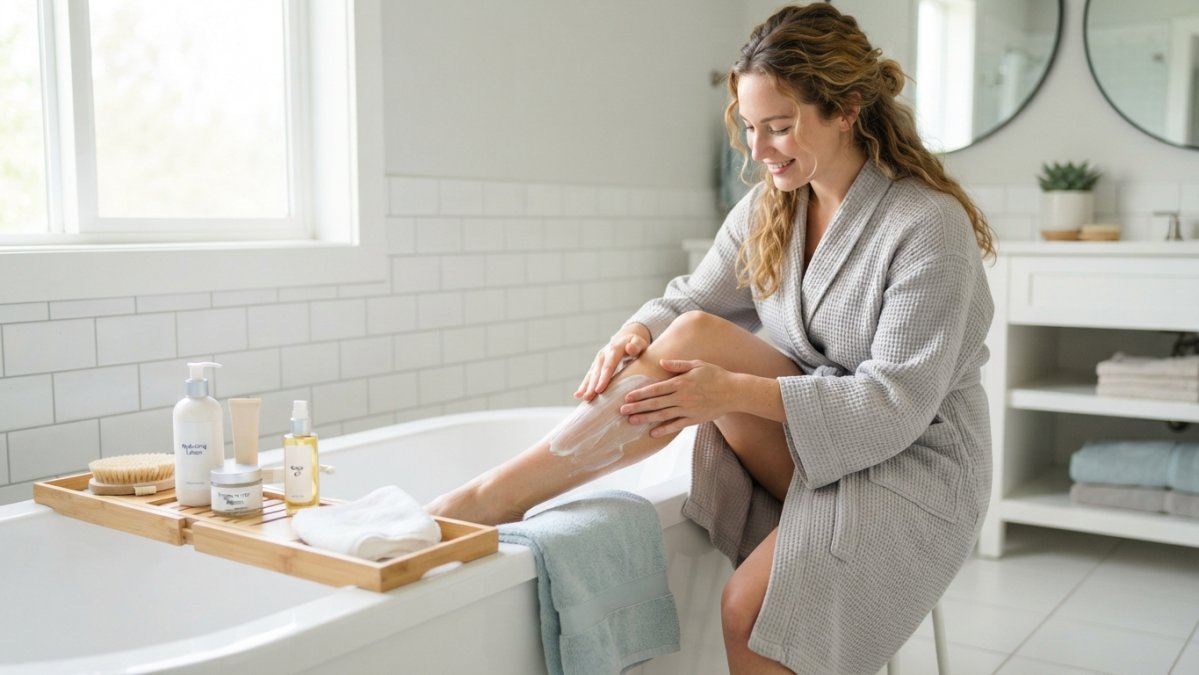
Here is the routine we suggest:
- Morning: Rinse the area with lukewarm water and pat dry
- Every other day: Gentle exfoliation with light pressure
- Daily: Moisturize with a fragrance-free cream
- Always: Wear loose clothing on wax day
- Weekly: Check for early bumps and treat them fast
If you want professional help keeping your skin smooth, our waxing services are built around sensitive skin. We adjust our technique to your hair type and skin so you leave with fewer bumps, not more.
When to See a Professional About Ingrown Hairs
Most ingrown hairs are a nuisance, not a health problem. But some need a closer look. See a doctor or dermatologist if you notice any of these:
- Bumps that are painful, hot, or swollen
- Pus or fluid draining from the area
- Spreading redness or streaks
- Bumps that keep coming back in the same spot
- Dark spots or scars that do not fade
A doctor can treat stubborn or infected ingrowns safely. Do not try to remove a deep ingrown hair yourself. That is how small problems turn into big ones.
For ongoing skin care, a professional esthetician can help you build a routine that fits your skin. If you are searching for waxing or facials near me, we are happy to take a look and give you honest guidance.
Conclusion
Ingrown hairs after waxing are common, but they are not unavoidable. The fix comes down to timing: leave the skin alone for two days, then exfoliate gently and moisturize daily. Skip the tight clothes and the picking, and most bumps never form.
At Liz Almanzar Esthetics, we help clients keep their skin smooth with precise waxing, calming facials, and lash extensions in a welcoming space. We tailor every treatment to your skin, so you get results without the irritation.
Ready for smoother skin? Book a service with us and let our team build a routine that works for you.
Frequently Asked Questions
How do you prevent ingrown hairs after waxing?
Prevention starts with gentle exfoliation beginning 3 to 7 days after your wax, using a soft washcloth or a mild exfoliating product. Moisturize daily to keep skin supple so hairs can grow through the surface. Avoid tight clothing, heavy sweating, and picking at the area for at least 48 hours. If you're prone to ingrowns, a professional waxing provider can recommend a routine tailored to your skin type.
When should you exfoliate after waxing?
Wait at least 48 to 72 hours after waxing before exfoliating. Your skin needs time to calm down because pores are open and the area is sensitive. Start with a gentle exfoliation 3 to 7 days post-wax, then continue 2 to 3 times per week. If you exfoliate too soon, you risk irritation and micro-tears that can lead to more ingrown hairs, not fewer.
What should you avoid after waxing?
For the first 24 to 48 hours, avoid hot baths, saunas, intense workouts, tight clothing, and direct sun exposure. Skip scented lotions, retinoids, and harsh scrubs. Don't shave or pick at the waxed area. Also avoid applying makeup or deodorant to freshly waxed skin. These steps reduce irritation and lower the chance of ingrown hairs forming as the hair regrows.
How do you treat an ingrown hair after waxing?
Apply a warm compress to soften the skin and reduce inflammation. Use a gentle exfoliant or a product with aloe and tea tree oil to calm redness. Don't squeeze or dig at the ingrown hair; that can cause infection and scarring. If the bump becomes painful, swollen, or shows signs of infection, see a dermatologist. For persistent ingrowns, a professional esthetician can recommend a safe extraction or targeted treatment.