 How-to
How to Maintain Smooth Skin Between Waxes
Last Updated: November 16, 2026
Quick Summary
Smooth skin between waxes depends on gentle at-home care: keep the skin moisturized with a fragrance-free product, avoid friction and heat, and protect it from the sun. Wait until redness settles before exfoliating, and exfoliate only two to three times per week. Skip shaving between appointments so the waxing cycle stays on track.
- Apply a fragrance-free moisturizer daily to keep skin hydrated and hairs growing out freely.
- Avoid hot showers, saunas and heavy sweating for the first 24 hours after waxing.
- Wait until redness has settled before you start exfoliating.
- Exfoliate gently two to three times per week, not daily.
- Do not shave between appointments, as it disrupts the waxing cycle.
Table of Contents
- Why Skin Care Between Waxes Matters
- Your Aftercare Timeline: The First 48 Hours
- How to Prevent Ingrown Hairs After Waxing
- Exfoliating Between Waxes Without Irritating Your Skin
- How Long to Wait Between Waxing Appointments
- What to Avoid After Waxing
- Book Your Next Waxing Appointment in Groton
- Frequently Asked Questions
Why Skin Care Between Waxes Matters
Smooth skin between waxes depends on what you do at home, not only on the appointment itself. Between waxing sessions, the skin around the treated area needs gentle care to stay calm and comfortable. Skipping that care can lead to dryness, redness and ingrown hairs. (Source: U.S. Food and Drug Administration)
Simple, consistent habits make the biggest difference.
Good in-between care usually focuses on three things:
- Keeping skin moisturized
- Avoiding irritation from heat, friction and harsh products
- Protecting skin from the sun
Many people in Groton and across the region are on busy schedules, so a short, steady routine works better than a complicated one.
Your Aftercare Timeline: The First 48 Hours
The first two days after waxing are the most sensitive period, and the choices you make in that window shape how the rest of your waxing cycle goes. Treat the skin gently, and adjust the timeline to the body area you had waxed, a bikini line and a pair of legs do not recover at the same pace.
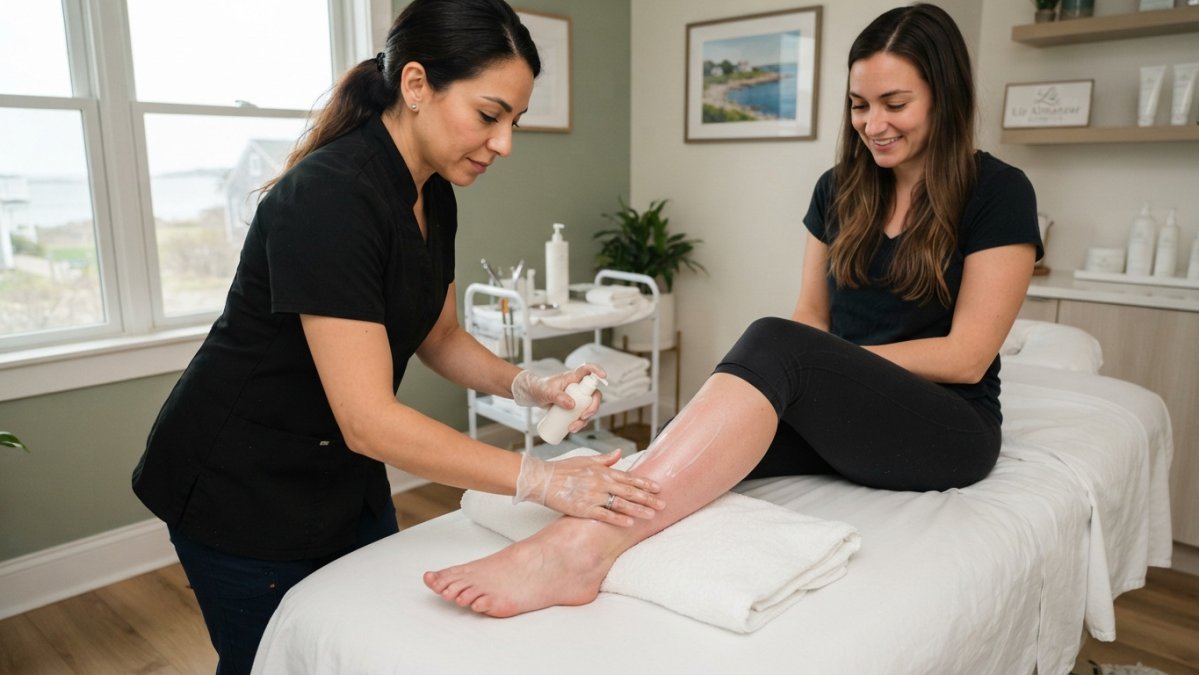
Hour 0 to 2: right after your appointment
- Expect some redness and mild sensitivity; this is normal and usually fades within a few hours.
- Apply a soothing, fragrance-free product such as pure aloe vera gel to calm the area.
- Skip makeup on a freshly waxed face and avoid touching the area with unwashed hands.
- Wear loose, breathable clothing home so fabric does not rub the treated skin.
Hour 2 to 24: the first day
- Avoid hot showers, saunas, steam rooms, and intense workouts that cause heavy sweating. Warm, not hot, water is fine.
- Cleanse gently with a mild, fragrance-free cleanser; pat dry instead of rubbing.
- Apply a lightweight, fragrance-free moisturizer while the skin is still slightly damp.
- Keep the area out of direct, prolonged sun exposure; if you must be outside, use protective clothing and a broad-spectrum sunscreen on surrounding skin.
Hour 24 to 48: the second day
- Redness should be fading. If it is worsening instead, that is a signal to pause your routine and check in with your esthetician.
- Continue gentle cleansing and moisturizing twice daily.
- Avoid tight clothing, friction from straps or waistbands, and heavily fragranced lotions or perfumes on the treated area.
- Do not exfoliate yet. The skin is still settling, and scrubbing now can irritate follicles.
Day 3 to day 7: restarting gentle care
- Once redness and sensitivity are gone, you can begin gentle exfoliation two to three times per week to keep hairs from getting trapped.
- Keep moisturizing daily; hydrated skin lets hairs grow out freely instead of curling back under the surface.
- Continue to avoid shaving between appointments so the waxing cycle stays on track.
The rest of your waxing cycle
- Maintain daily moisturizing and gentle exfoliation until your next appointment.
- Note any bumps, ingrown hairs, or irritation so you can point them out to your esthetician at your next visit.
Watch out: if you develop spreading redness, warmth, swelling, or pus-filled bumps in the days after waxing, stop your at-home routine and contact a healthcare provider, those are signs of infection, not ordinary post-wax sensitivity.
The first two days after waxing call for gentle care, and the timeline below shows what to do at each stage.
| Stage | What to do | Key caution |
|---|---|---|
| Hour 0 to 2 | Apply fragrance-free aloe vera gel | Skip makeup and avoid touching the area |
| Hour 2 to 24 | Cleanse gently and moisturize | Avoid hot showers and heavy sweating |
| Hour 24 to 48 | Continue cleansing and moisturizing twice daily | Do not exfoliate yet |
| Day 3 to 7 | Begin gentle exfoliation two to three times per week | Stop once redness is gone and skin settles |
How to Prevent Ingrown Hairs After Waxing
Ingrown hairs are one of the most common concerns after waxing. They happen when a hair grows back under the skin instead of out of it, and the follicle becomes inflamed. The result is a small red or dark bump, sometimes with a visible hair looped beneath the surface.
Prevention comes down to three levers: keeping the follicle clear, keeping the skin hydrated so hairs can push through, and avoiding friction that pushes hairs back under the surface.
Keep the follicle clear with gentle exfoliation
- Wait until redness and sensitivity have fully settled before you exfoliate.
- Use a soft washcloth or a gentle exfoliant suited to your skin type.
- Exfoliate two to three times per week, not daily. Over-exfoliating damages the skin barrier and can make ingrown hairs more likely, not less.
- Stop immediately if the skin becomes red, raw, or painful.
Keep skin moisturized so hairs can grow out freely
- Apply a fragrance-free moisturizer daily to keep the skin hydrated.
- Avoid heavy, occlusive products on areas prone to ingrown hairs, especially the bikini line and underarms, where clogged follicles are more likely.
Reduce friction and irritation
- Wear loose, breathable clothing, especially in the first few days after waxing.
- Avoid tight underwear, waistbands, and straps directly over the waxed area.
- Do not shave between appointments. Shaving cuts hairs at an angle and can blunt the tip, making it more likely to grow back under the skin and disrupting the waxing cycle.
Adjust for body area and skin type
- Bikini line and underarms: These areas have curved skin and more friction, so ingrown hairs are more common. Exfoliate gently and consider a chemical exfoliant over a physical scrub.
- Legs: Physical exfoliation with a soft cloth or gentle scrub usually works well; legs tolerate more friction than the bikini line.
- Face: Use the gentlest approach, a mild chemical exfoliant rather than a scrub, and avoid exfoliating over active breakouts.
- Sensitive or acne-prone skin: Patch-test any new exfoliant, start with once per week, and avoid combining multiple acids in the same routine.
What not to do
- Do not pick, squeeze, or dig at ingrown hairs (the NHS). Picking can cause infection, scarring, and dark spots, especially on deeper skin tones.
- Do not use harsh scrubs with irregular particles, which can tear the skin.
- Do not layer strong acids with retinoids on the same area without guidance from your esthetician.
If a bump becomes increasingly painful, hot to the touch, or filled with pus, or if you notice spreading redness, contact a healthcare provider.
Exfoliating Between Waxes Without Irritating Your Skin
Exfoliation removes dead skin cells that can trap hairs. It helps, but only when done gently.
Gentle exfoliation tips:
- Wait a few days after waxing before you exfoliate
- Use a soft cloth or a mild exfoliant
- Exfoliate no more than a few times per week
- Stop if the skin becomes red, raw or painful
If you have sensitive skin, consult a qualified professional before starting a new routine.
How Long to Wait Between Waxing Appointments
Most people wait until the hair has grown back enough to grab with wax again. Hair length matters more than the calendar.
- Typical interval: about 4 to 6 weeks for many areas, though this varies by person
- Too soon: waxing before the hair is long enough can be less effective and more irritating
- Too late: very long hair can make each session more uncomfortable
Keeping a simple note of your appointment dates can help you find the rhythm that works best for your skin and hair growth.
What to Avoid After Waxing
Some habits slow healing and increase irritation. Avoid these for the first couple of days:
- Hot showers, saunas and steam rooms
- Strenuous exercise that causes heavy sweating
- Direct, prolonged sun exposure on the treated area
- Heavily fragranced or harsh products
- Tight clothing that rubs the skin
- Shaving between sessions
If redness, swelling or pain gets worse instead of better, contact a healthcare provider.
Book Your Next Waxing Appointment in Groton
Keeping skin smooth between waxes is easier with the right routine and a skilled professional. At Liz Almanzar Esthetics in Groton, CT, we can help you plan your waxing schedule and aftercare. Book a waxing appointment to get started, or browse our Brazilian wax packages if you want a discounted option. For broader skin concerns, you can also read how stubborn breakouts are handled professionally.
Frequently Asked Questions
How do you keep your skin smooth between waxes?
Keep skin smooth between waxes by moisturizing daily with a lightweight, fragrance-free lotion, exfoliating gently two to three times a week once the skin has settled, and avoiding shaving in the treated area. Protect the skin from direct sun and hot showers, which can irritate it. Consistent gentle care helps hair grow in finer and skin stay soft. If redness, bumps or irritation persist beyond a few days, check in with a licensed esthetician before your next appointment.
How long should you wait between waxing appointments?
Most people wait about 4 to 6 weeks between waxing appointments, which is when the hair has grown long enough to grip the wax effectively. Waiting too long can make the hair coarser to remove, while booking too soon can irritate the skin. Hair growth varies by person, body area and hormones, so your esthetician can help you find the schedule that fits your skin and hair. Use the time in between for gentle care rather than shaving.
When can you exfoliate after a wax?
Wait until the skin is no longer red or tender, usually at least 24 to 48 hours after waxing, before using any exfoliating product. Start with a gentle exfoliant once or twice a week and watch how your skin responds. Physical scrubs and strong chemical exfoliants can irritate freshly waxed skin, so choose a mild option. If you have sensitive skin, ask your esthetician which exfoliation method suits you best.
Should you shave between waxing appointments?
It is generally best to avoid shaving between waxing appointments. Shaving cuts the hair at the surface, which can make regrowth feel stubbly and may not match the smoothness you get from waxing. Shaving can also increase the chance of irritation and bumps in the same area. If you prefer to stay smooth in between, talk to your esthetician about a schedule and aftercare plan that fits your routine.