 How-to
8 Things to Look for in a Professional Lash Technician
Last Updated: November 18, 2026
Quick Summary
A good lash technician is licensed, trained specifically in extensions, hygienic, patient, and honest about what your natural lashes can handle. Ask to see their state license and certification, inspect the workstation for fresh disposables and disinfected tools, and read reviews for patterns rather than perfection. Vague answers or pressure to book on the spot are signals to keep looking.
- Ask for the technician's license number and check it against Connecticut's official licensing records.
- Look for tweezers wiped with hospital-grade disinfectant and fresh under-eye pads for each appointment.
- Request photos of healed or grown-out sets, not just fresh day-one results.
- Expect a consultation covering allergies, contact lens use, and past eye infections before your first appointment.
- Walk away if glue touches the skin or lashes are stuck together at the base.
Table of Contents
- Why the Right Lash Technician Changes Everything
- Lash Technician Certification: What Credentials Actually Mean
- Lash Extension Hygiene and Safety: What to Inspect
- Portfolio and Reviews: How to Read Them Critically
- Lash Extension Consultation Questions to Ask Before Booking
- Lash Technician Red Flags That Should Stop You
- Aftercare, Fills, and What Results Really Look Like
- Booking Your Lash Consultation in Groton, CT
- Frequently Asked Questions
Why the Right Lash Technician Changes Everything
Knowing what to look for in a professional lash technician protects both your eyes and your natural lashes.
Here is the short answer: a good lash technician is licensed, trained specifically in extensions, hygienic, patient, and honest about what your natural lashes can handle. Everything else is detail.
The stakes are real.
If you are new to extensions entirely, our complete guide to professional eyelash extensions covers the basics before you start comparing technicians.
Lash Technician Certification: What Credentials Actually Mean
A lash technician certification is proof that someone completed formal training in extension application. It is not the same as a state license, and it is not a guarantee of skill, but it tells you the person invested in learning the craft properly.
Connecticut Licensing and Local Requirements
Before you book with any technician, ask whether they hold a current state license and check it against the state's official licensing records. A technician who hesitates or deflects that question is telling you something.
Licensing sets a floor. It confirms basic training and sanitation standards, but it does not measure artistry or patience. That is why the next layer matters.
Training, Experience, and Steady Hands
Certification programs vary widely. Some run a single weekend. Others involve weeks of supervised practice on live models. Ask how long the training was and whether the technician has continued with advanced courses in volume, mega volume, or classic sets.
Then ask how many clients they see in a typical week. Repetition builds the precision, patience, and steady hands that separate a clean set from a clumpy one. A technician who has applied thousands of lashes has learned to isolate single natural lashes without rushing. That skill is not optional.
Lash Extension Hygiene and Safety: What to Inspect
Lash extension hygiene and safety come down to what you can verify with your own eyes at the workstation and what you can confirm about the technician's credentials before you ever lie down. Sanitation is not behind-the-scenes magic.
Connecticut Licensing and Credential Verification
Before you book with any technician, ask for their license number and check it against the state's official licensing records. A technician who hesitates or deflects that question is telling you something.
A certificate of training is not the same as a state license. Many lash courses issue certificates after a weekend or a few days of instruction, and those certificates can be a useful signal of specialized training, but they do not replace a legally required license.
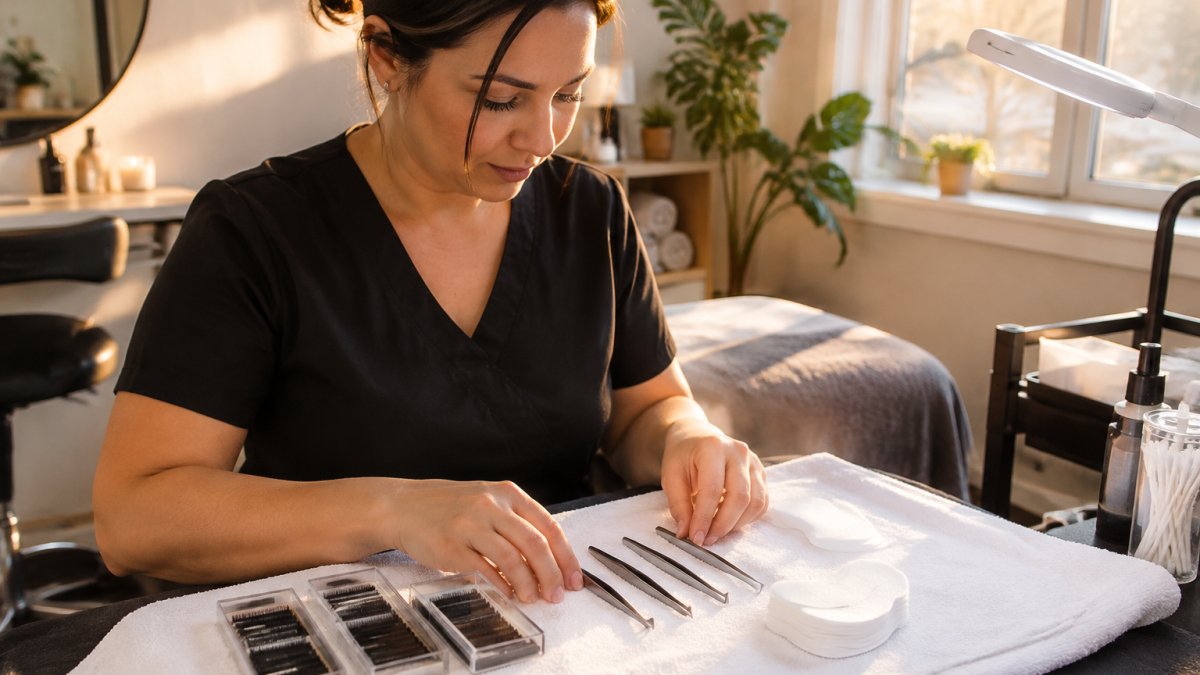
Workstation Sanitation Checklist
Look for these basics:
- Tweezers wiped with hospital-grade disinfectant between clients
- Fresh disposable under-eye pads and lash brushes for each appointment
- Sealed or cleanly stored lash trays
- A technician who washes hands and wears gloves or a mask
- A clean lash bed with a fresh cover or sheet
- Adhesive used within its working window and stored properly
- A covered or lidded trash bin for used disposables
A cluttered, dusty station is a warning. So is a technician who works without washing hands or reuses disposables. Watch out: a station that looks clean but has no visible disinfectant or fresh disposables within reach may be cleaned only between clients, not between every client.
Allergy, Sensitivity, and Eye-Safety Screening
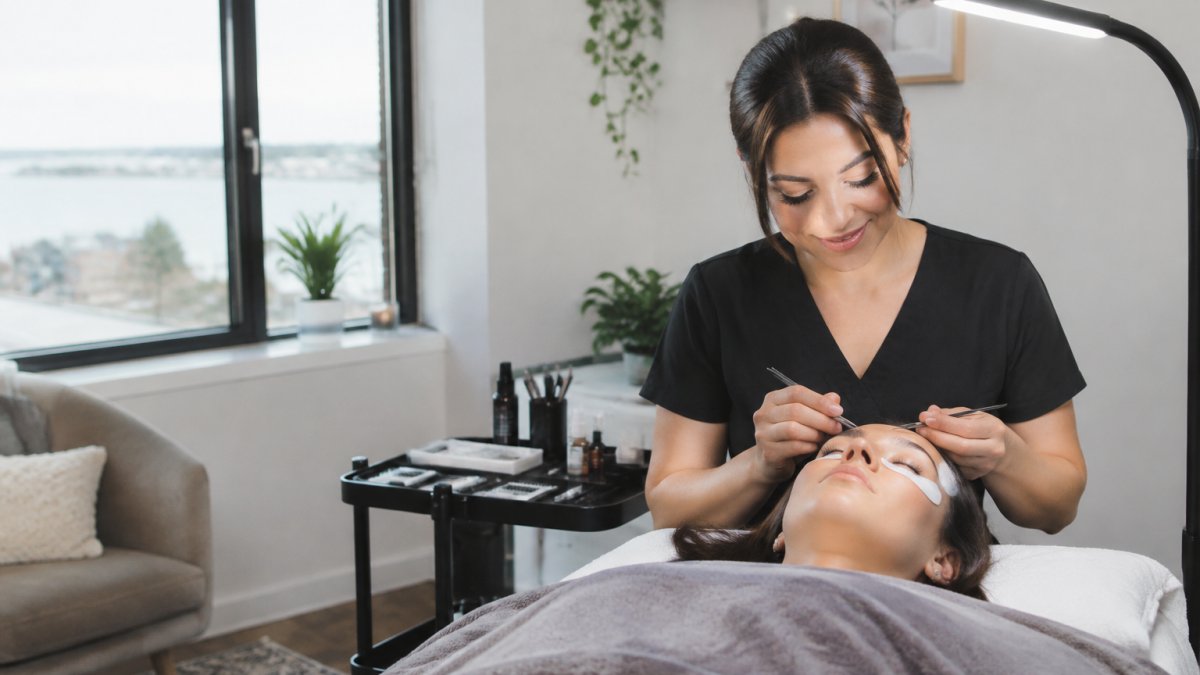
A responsible technician screens you before the first lash goes on. Expect questions about allergies, contact lens use, recent eye infections, and any history of reactions to adhesives or cosmetics. A patch test is a reasonable request if you are unsure.
Tell your technician about any eye conditions or medications that affect healing. They can adjust their approach or advise you to check with your eye doctor first. A common pattern is for technicians to keep a written screening form on file, and a professional will not rush through it.
Portfolio and Reviews: How to Read Them Critically
Before-and-after photos and client reviews tell you a lot, but only if you read them the right way. A portfolio shows the technician's actual work. A review shows how clients felt about the experience. The problem is that both can be curated, edited, or cherry-picked. Here is how to look at each without being fooled.
Reading Portfolio Photos Like an Inspector
Start with consistency across many photos, not one perfect set. A technician who posts ten sets that all look clean and well-isolated is a safer bet than one who posts a single dramatic transformation. Look at the lash line in close-ups for gaps, clumps, or glue on the skin.
Ask to see healed or grown-out work, not just fresh sets. Fresh extensions always look full. A photo taken two or three weeks after application shows how the set wears, whether the technician's isolation held up, and whether natural lashes stayed healthy.
Reading Reviews for Patterns, Not Perfection
A wall of five-star reviews with no detail is less useful than ten honest reviews that mention specific results. Look for mentions of comfort, cleanliness, and how fills held up. Note whether negative reviews got a calm, professional response. A common pattern is for unhappy clients to mention irritation, lashes falling out faster than expected, or rushed appointments, so search the reviews for those words specifically.
Check whether reviews are recent and spread over time. A burst of identical five-star reviews in one week can be a sign of solicited or fake reviews. Look for reviewers who describe their natural lash type, the style they requested, and how long the set lasted. Those details are harder to fake and more useful to you.
For a local comparison, our guide to the best lash extension salons in Groton CT breaks down what to check before you commit.
Lash Extension Consultation Questions to Ask Before Booking
The consultation is your interview, and you should arrive with questions ready. A professional lash technician welcomes them. The right answers are specific, honest, and free of pressure.
Ask these before you book:
- Are you licensed in Connecticut, and can I see your certification?
- How long have you been applying extensions, and how many clients do you see weekly?
- Which lash styles and curls do you recommend for my natural lashes?
- How do you isolate lashes, and what adhesive do you use?
- What is your policy on fills, late arrivals, and cancellations?
- How do you handle a reaction or sensitivity?
- Can I see recent before-and-after photos of clients with lashes like mine?
The answers tell you as much as the questions. Vague replies, rushed answers, or pressure to book on the spot are all signals to keep looking.
Before your consultation, review our full lash extension pricing breakdown so you can ask informed questions about cost and scheduling.
Lash Technician Red Flags That Should Stop You
Some warning signs are worth walking away from, even if the price looks tempting. Trust your instincts when you see them.
Watch out for these red flags:
- No visible license or refusal to show credentials
- A dirty station, unwashed hands, or reused disposables
- Promises that sound too good, like extensions that never need fills
- Rushing through application or skipping isolation
- Glue touching the skin or lashes stuck together at the base
- No consultation before the first appointment
- Pressure to book a large package upfront
- Dismissive answers about allergies or sensitivity
- No aftercare instructions at all
One red flag might be a bad day. Two or three is a pattern. Walk away and find someone who takes the work seriously.
Keep these warning signs in mind so you know when to walk away.
| Red flag | What it signals |
|---|---|
| No visible license or refusal to show credentials | Unverified training and sanitation |
| Dirty station, unwashed hands, reused disposables | Poor hygiene and infection risk |
| Promises like extensions that never need fills | Unrealistic claims |
| Rushing through application or skipping isolation | Risk of clumps and lash damage |
| Glue touching the skin or lashes stuck at base | Poor technique and irritation |
| No consultation before the first appointment | No screening for allergies |
| Pressure to book a large package upfront | High-pressure sales tactics |
| No aftercare instructions at all | Unsupported results and healing |
Aftercare, Fills, and What Results Really Look Like
Realistic expectations make the whole experience better. Extensions do not last forever, and they should not. Natural lashes shed on their own cycle, and each extension goes with the lash it was bonded to.
Fill timing varies by client, so ask your technician how often you should return. Between appointments, gentle care protects your investment:
- Clean lashes daily with a lash-safe cleanser
- Avoid oil-based products near the lash line
- Do not rub, pick, or pull at extensions
- Sleep on your back or use a silk pillowcase
- Skip waterproof mascara and harsh makeup removers
- Brush lashes gently with a clean spoolie
Our guide to how to clean lash extensions step by step walks through the daily routine in detail.
What should you see after a month? Our article on lash extension results after one month shows what healthy retention actually looks like.
Booking Your Lash Consultation in Groton, CT
Finding the right lash technician near you in Groton comes down to doing a little homework before you book.
At Liz Almanzar Esthetics, we offer lash extensions, customized facials, and precise waxing for clients in Groton and Southeastern Connecticut.
If you are ready to start with a technician who takes lash health seriously, book a service with Liz Almanzar Esthetics.
Choosing a lash technician is a decision about your eyes, your comfort, and your natural lashes. Do not leave it to a walk-in or a low price.
Frequently Asked Questions
How do I know if a lash technician is qualified?
Ask directly about certification and training, and expect a clear answer. A lash technician should hold a current state license and a certificate from a recognized lash training program. Look for a portfolio of before-and-after photos, a willingness to walk you through their isolation and mapping technique, and a consultation before any adhesive touches your lashes. A qualified technician will also screen you for allergies and eye conditions rather than booking you on the spot.
What are the biggest lash technician red flags?
The clearest lash technician red flags are skipping the consultation, refusing to show certification, working from an unclean station, and using adhesive without offering a patch test. Others include rushing the application, promising results that ignore your natural lash health, quoting vague pricing with hidden fees, and having no clear aftercare or fill policy. If a technician cannot explain how they isolate lashes or what happens if you have a reaction, treat that as a reason to walk away.
Should a lash technician offer a consultation or patch test?
Yes. A proper lash extension consultation covers your natural lash health, eye history, allergies, daily routine, and the lash style and curl you want. It is also where you ask your lash extension consultation questions, from adhesive ingredients to fill timing. A patch test for adhesive sensitivity is a reasonable request, especially if you have reacted to cosmetics before. A technician who dismisses these steps is skipping the screening that protects your eyes and your natural lashes.
How can I tell if a lash salon is clean and safe?
Look at the workstation before you lie down. Tweezers should be sanitized, lash trays sealed, under-eye pads disposable, and the bed linens fresh. Your technician should wash or sanitize their hands in front of you and keep adhesive closed between uses. Ask how tools are cleaned between clients and whether they screen for eye infections or allergies. Lash extension hygiene and safety are not extras, they are the baseline of a professional setup.