 How-to
Are Professional Acne Facials Worth It in Groton?
Last Updated: November 7, 2026
Quick Summary
A professional acne facial is a treatment, not a quick fix, that can help clear surface congestion and calm inflammation. It cannot replace medical care for persistent or deep acne, so a clinician should be involved for painful or scarring breakouts.
- Appointments typically include skin analysis, cleansing, gentle exfoliation, extractions when appropriate, calming treatment and home care guidance.
- Basic facials focus on relaxation and glow, while acne facials target oil, pore congestion and inflammation.
- Isotretinoin users should ask their prescriber and esthetician before booking any facial.
- Expect pinkness for a few hours after treatment, and pores look cleaner rather than permanently smaller.
- Most people with acne-prone skin benefit from a visit every four to six weeks.
Table of Contents
- What a Professional Acne Facial Actually Does
- How an Acne Facial Differs From a Basic Facial
- Deep Cleansing, Extractions and Calming Inflammation
- Who Should Avoid or Postpone an Acne Facial
- Facial for Acne-Prone Skin: Setting Realistic Expectations
- How Often to Book and What Aftercare Looks Like
- Acne Facial Aftercare and When to See a Doctor
- Booking Your First Acne Facial in Groton
- Frequently Asked Questions
What a Professional Acne Facial Actually Does
A professional acne facial is a treatment, not a quick fix. It is a series of steps performed by a licensed esthetician who works on active breakouts, clogged pores and irritated skin. Done well, it can help clear the surface of the skin and calm inflammation. It cannot replace medical care for persistent acne.
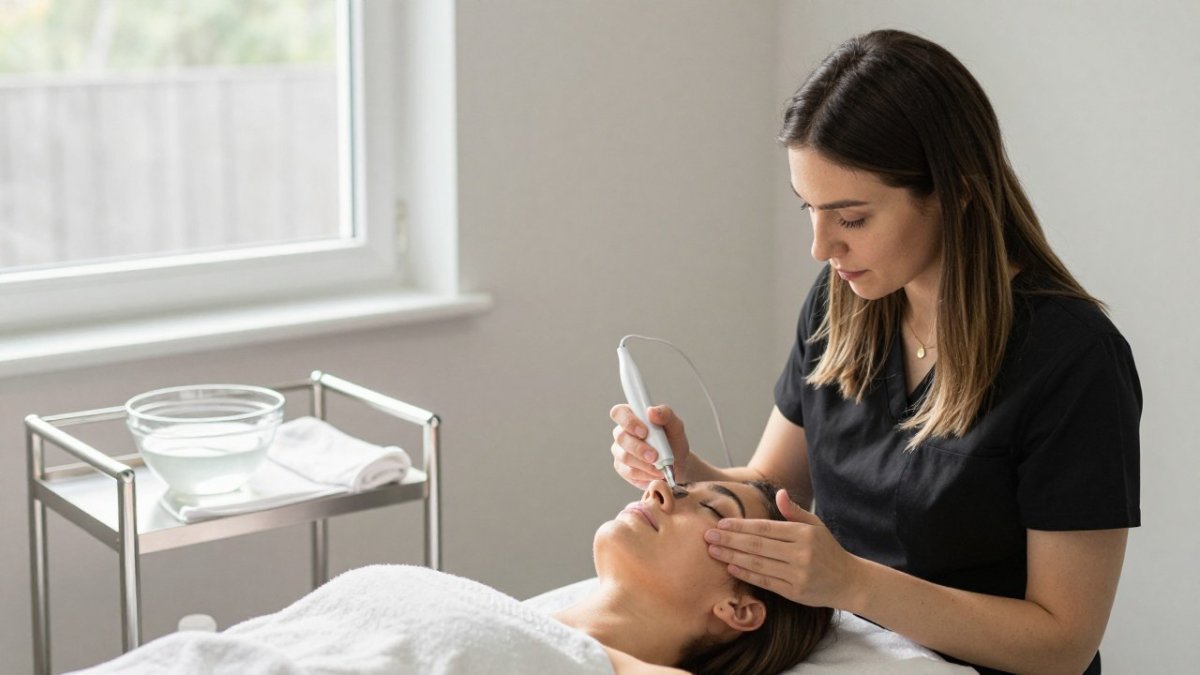
A thoughtful acne facial typically begins by looking at your skin, your breakout pattern and your current routine. For a structured, intensive program, see the Acne Boot Camp skin transformation program and what it includes. That assessment shapes everything that follows.
The typical appointment includes:
- Skin analysis: Checking the type and location of breakouts, comedones and redness
- Cleansing: Removing oil, makeup and surface debris
- Gentle exfoliation: Loosening dead skin cells that can trap oil
- Extractions: Carefully clearing congested pores when appropriate
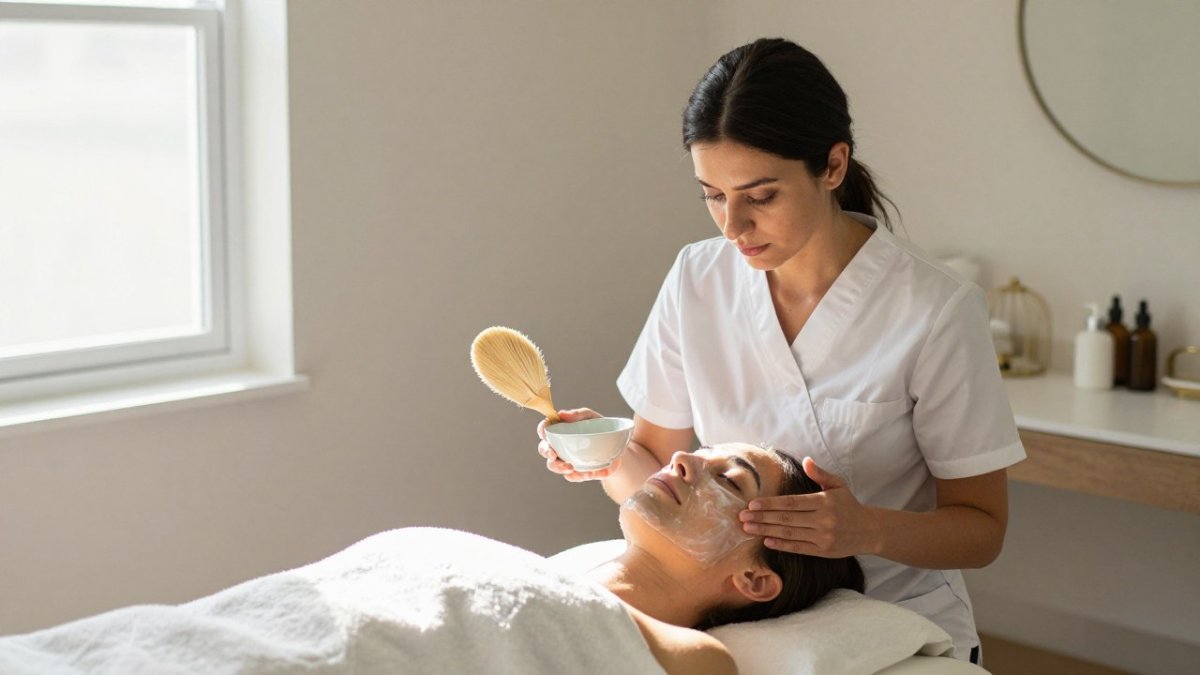
- Calming treatment: Soothing products to reduce irritation
- Home care guidance: Simple steps to follow between visits
Research supports a structured approach. The 2024 guidelines of care for the management of acne vulgaris recommend evidence-based treatment rather than relying on facials alone.
How an Acne Facial Differs From a Basic Facial
A basic facial focuses mostly on relaxation, hydration and a healthy glow. An acne facial targets the specific problems that cause breakouts. The steps are more focused on oil, pore congestion and inflammation.
The main differences include:
- Cleansing depth: Acne facials often use a more thorough double cleanse
- Ingredients: Products are chosen to address oil and blemishes
- Extractions: Basic facials rarely include them, while acne facials may
- Calming care: Acne facials often finish with products that reduce redness
If your skin is mostly dry or aging, a basic facial may suit you better. An acne facial works best when breakouts and clogged pores are the main concern.
Deep Cleansing, Extractions and Calming Inflammation
Deep cleansing removes the oil and debris that feed breakouts. Extractions clear blackheads and whiteheads that have built up inside pores. Calming care then helps the skin recover.
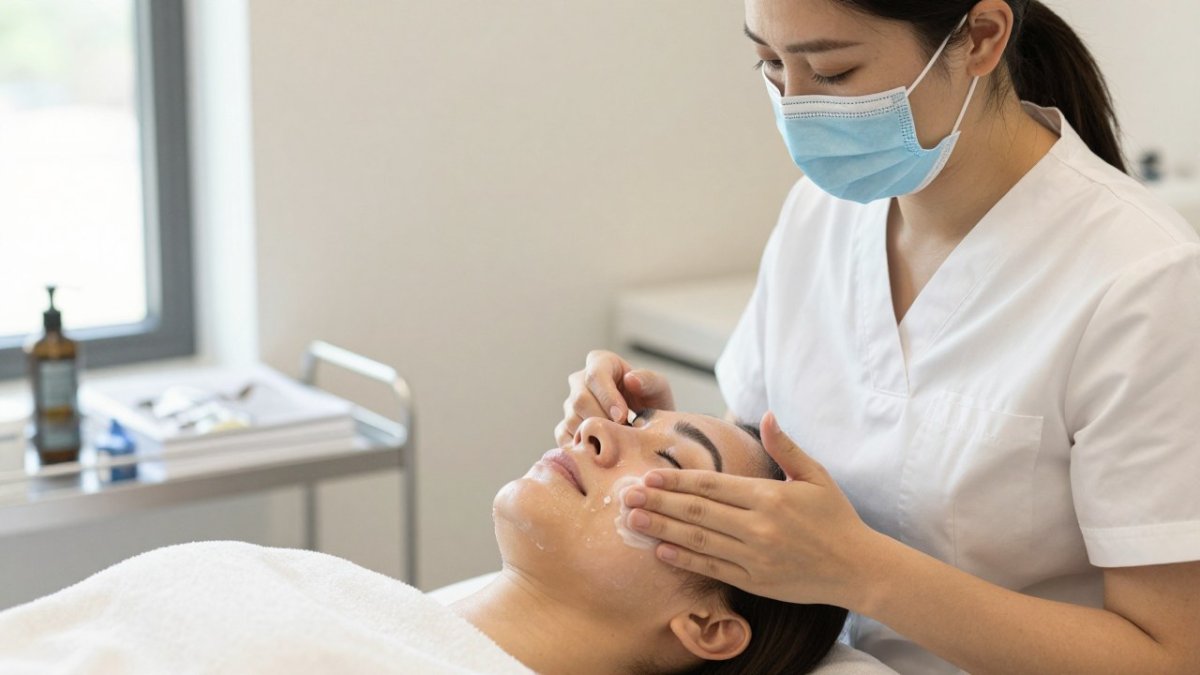
Extractions must be done carefully. The Oily/Acne Prone Package pairs oil-balancing products with extraction-based treatment. Pressing too hard can cause bruising, scarring or more inflammation.
Watch out: Squeezing blemishes at home between appointments can push bacteria deeper and leave marks. Leave extractions to a trained professional.
Calming ingredients such as soothing masks and light serums help reduce redness after treatment. Expect some pinkness for a few hours, which is normal.
Who Should Avoid or Postpone an Acne Facial
An acne facial is supportive care, not a substitute for medical treatment. The single most useful question before booking is: what type of acne do I have? Mild comedonal congestion (blackheads and whiteheads with little inflammation) and mild papular acne usually respond well to professional cleansing, extractions and calming care. Painful, deep nodular or cystic breakouts, and acne that is already leaving scars or dark marks, are a different category. In those cases a facial can still help with surface congestion and calming, but it should sit alongside care from a dermatologist or primary care clinician rather than replace it.
A common pattern is that people with cystic acne book a facial hoping to avoid a doctor's visit. A good esthetician will say plainly when a medical referral is the right next step, and that honesty is a sign of a trustworthy provider, not a sales failure. Read whether estheticians can help with cystic acne to see when a doctor should come first.
Reasons to postpone or get medical clearance first:
- Isotretinoin (Accutane): This medication thins and dries the skin and makes it fragile. Waxing, aggressive exfoliation and forceful extractions are typically avoided during and for a period after treatment. Ask your prescriber and your esthetician before booking.
- Topical retinoids (tretinoin, adapalene, tazarotene): These increase cell turnover and can leave skin more sensitive. The right timing for pausing a retinoid before a facial depends on your skin and your prescription. Never stop a prescribed medication without asking your clinician.
- Exfoliating acids at home (AHA/BHA): Layering a strong at-home acid routine on top of a professional treatment raises irritation risk. Tell your esthetician exactly what you use and how often.
- Recent procedures: Lasers, chemical peels, microneedling, dermaplaning or waxing within the past week or two can leave skin too compromised for extractions.
- Active skin problems: Open sores, cold sores, a bacterial or fungal skin infection, sunburn, windburn or a rash are reasons to reschedule.
- Easy bruising or scarring: Conditions or medications that affect healing or clotting warrant a conversation with your doctor first.
- Pregnancy: Some ingredients are avoided in pregnancy. Tell your esthetician so products can be adjusted, and confirm with your clinician if you are unsure.
Questions to ask before booking:
- What do you do if my skin reacts during the treatment?
- Do you adjust extractions for sensitive or inflamed skin?
- Which products will you use, and can you avoid ingredients I react to?
- When should I pause my retinoid or acid before my appointment?
- At what point would you refer me to a dermatologist?
A provider who answers these clearly, and who is willing to turn down a treatment that is not appropriate, is protecting your skin barrier and your long-term results.
Facial for Acne-Prone Skin: Setting Realistic Expectations
A facial for acne-prone skin works best as part of a longer plan, and the most honest thing a provider can tell you is what a single session will and will not do. One appointment can leave skin cleaner, calmer and less congested. It cannot reset the oil production, cell turnover and inflammation patterns that drive recurring breakouts. Those change over weeks and months with consistent home care and, when needed, medical treatment.
What to expect right after a facial:
- Skin may look flushed or pink for a few hours, especially after extractions.
- Extractions can leave small temporary marks that fade.
- Pores may look smaller because they are cleaner, not because they have permanently shrunk. Pore size is largely genetic.
- Some people experience a brief purge of congestion in the days after deep cleansing, particularly if they are new to professional treatments.
A realistic timeline:
- Immediately: Smoother texture, fewer visible clogged pores and a calmer look.
- Over the next several weeks: Fewer new breakouts if your home routine stays consistent and you avoid picking.
- Over months: Better oil control and fewer recurring blemishes, with the biggest gains coming from a steady plan rather than a single visit.
Why results vary:
- Acne type: Mild comedonal acne often responds faster than inflammatory or hormonal acne.
- Home routine: A simple, consistent routine supports the work done in the treatment room. A harsh or inconsistent routine can undo it.
- Hormones and medications: These can drive breakouts independently of anything a facial does.
- Skin barrier health: Over-exfoliated or irritated skin needs calming and repair before it can tolerate deeper cleansing.
- Frequency: Spacing visits too far apart, or booking only before events, limits cumulative benefit.
Red flags in provider promises:
- Guarantees of clear skin or a cure.
- Pressure to buy a large product package at the first visit.
- Claims that facials replace prescribed acne medication.
- No discussion of your medications, routine or medical history.
A provider who explains what a facial can and cannot do, and who refers you to a clinician when breakouts are deep, painful or scarring, is giving you the most valuable thing in skincare: an honest plan.
How Often to Book and What Aftercare Looks Like
Most people with acne-prone skin benefit from a visit every four to six weeks. Our practical schedule for acne facials lays out how often to book at each stage. Your schedule depends on your skin's response and your goals. Your esthetician can adjust it as your skin improves.
Aftercare matters just as much as the appointment. Follow these basics:
- Use a gentle, non-irritating cleanser twice a day, such as the Circadia Cleansing Gel with Mandelic Acid for most skin types (not suitable for sensitive skin or rosacea).
- Apply a light moisturizer to support your skin barrier
- Wear sunscreen daily, since treated skin can be more sensitive
- Avoid picking, popping or scrubbing breakouts
- Skip harsh exfoliants until your skin settles
Acne Facial Aftercare and When to See a Doctor
Mild redness and tenderness usually fade within a day or two. Contact a doctor if you notice signs of infection, such as spreading redness, warmth, swelling, pus or fever. Also seek care if breakouts are deep, painful or leaving scars.
Dermatologists can prescribe treatments that a facial cannot provide. Combining medical care with professional facials may be a helpful approach, and a good esthetician will tell you when a doctor's visit is the right next step.
Booking Your First Acne Facial in Groton
Start by sharing your full skin history during your consultation. Tell your esthetician about any medications, past reactions and current treatments. This helps keep your facial safe and effective.
Book a consultation to talk through your concerns and find out whether an acne facial fits your skin.
Struggling with breakouts and want a plan that fits your routine? Book a consultation with Liz Almanzar Esthetics in Groton, CT, to discuss an acne facial and a home care plan built for your skin.
Frequently Asked Questions
What are the benefits of getting an acne facial?
A professional acne facial focuses on deep cleansing to clear excess oil and debris from pores, gentle extractions of blackheads and whiteheads, and calming treatments that can reduce redness and irritation. Many clients also find their skin feels smoother and looks more even between breakouts. Results vary with acne type and severity, and a facial works best as part of a broader routine. For persistent or cystic acne, a consultation with a dermatologist is the right next step, since facials do not replace medical treatment.
How does a professional acne facial differ from a basic facial?
A basic facial is designed mainly for relaxation and general maintenance. An acne facial adds targeted steps for active breakouts, such as a more thorough cleanse, careful extractions of congested pores, and products chosen to calm inflammation. Ask during your consultation which steps are included.
How often should you get a professional acne facial?
Many estheticians recommend spacing acne facials several weeks apart so the skin has time to recover between sessions. Frequency depends on your skin's response, how sensitive it is, and whether you are using other treatments at home. Avoid booking extra sessions to speed up results, since over-treating can worsen irritation.