 Listicle
What Are the Best Ingredients for Deep Skin Hydration?
Last Updated: November 12, 2026
Quick Summary
The best ingredients for deep skin hydration pair humectants that pull water in with emollients and occlusives that seal it against moisture loss. Hyaluronic acid, glycerin, and panthenol draw moisture in, while ceramides, shea butter, and petrolatum keep it there. Miss either half and dryness returns by afternoon.
- Apply hyaluronic acid to slightly damp skin, then cover it with a cream.
- Glycerin is the most reliable humectant and appears in most well-formulated moisturizers.
- Ceramides make up part of the skin barrier, so barrier repair and hydration are one project.
- Layer from thinnest to thickest: humectant first, emollient second, occlusive last.
- Denatured alcohol high in an ingredient list is the most common culprit for dry skin.
Table of Contents
- Why Deep Hydration Starts With the Right Ingredients
- Hyaluronic Acid and Sodium Hyaluronate: The Water Magnets
- Glycerin, Panthenol, and Other Hydrating Ingredients for Face
- Ceramides, Shea Butter, and Barrier Repair
- The Best Ingredients for Dry Skin on Face: A Skin-Type Guide
- Worst Ingredients for Dry Skin: What to Avoid
- How to Layer Hydrating Skincare Ingredients
- Book a Hydration-Focused Facial at Liz Almanzar Esthetics
- Frequently Asked Questions
Why Deep Hydration Starts With the Right Ingredients
The best ingredients for deep skin hydration are the ones that do two jobs at once: pull water into the skin and keep it there. Humectants like hyaluronic acid and glycerin draw moisture in. Emollients and occlusives like shea butter and ceramides seal it against moisture loss. Miss either half and dryness returns by afternoon.
Many people with dry skin have a bathroom cabinet full of products and skin that still feels tight. Often the problem is not effort but ingredient pairing.
Below, we break down the best ingredients for deep skin hydration, which ones to avoid, and the order to apply them in. But first, here is what most routines get wrong: they hydrate without ever repairing the skin barrier, so the water leaves as fast as it arrives.
Hyaluronic Acid and Sodium Hyaluronate: The Water Magnets
Hyaluronic acid is a humectant, meaning it binds water and holds it near the skin's surface (Hyaluronic acid: A key molecule in skin aging). Sodium hyaluronate is its salt form, with a smaller molecule that penetrates more easily. Both belong in any serious hydration routine.
A 2017 study in the Journal of Cosmetic Dermatology examined a moisturizer containing hyaluronic acid and glycerin and measured hydration and barrier function over 24 hours after a single application (study on 24-hour skin hydration and barrier function).
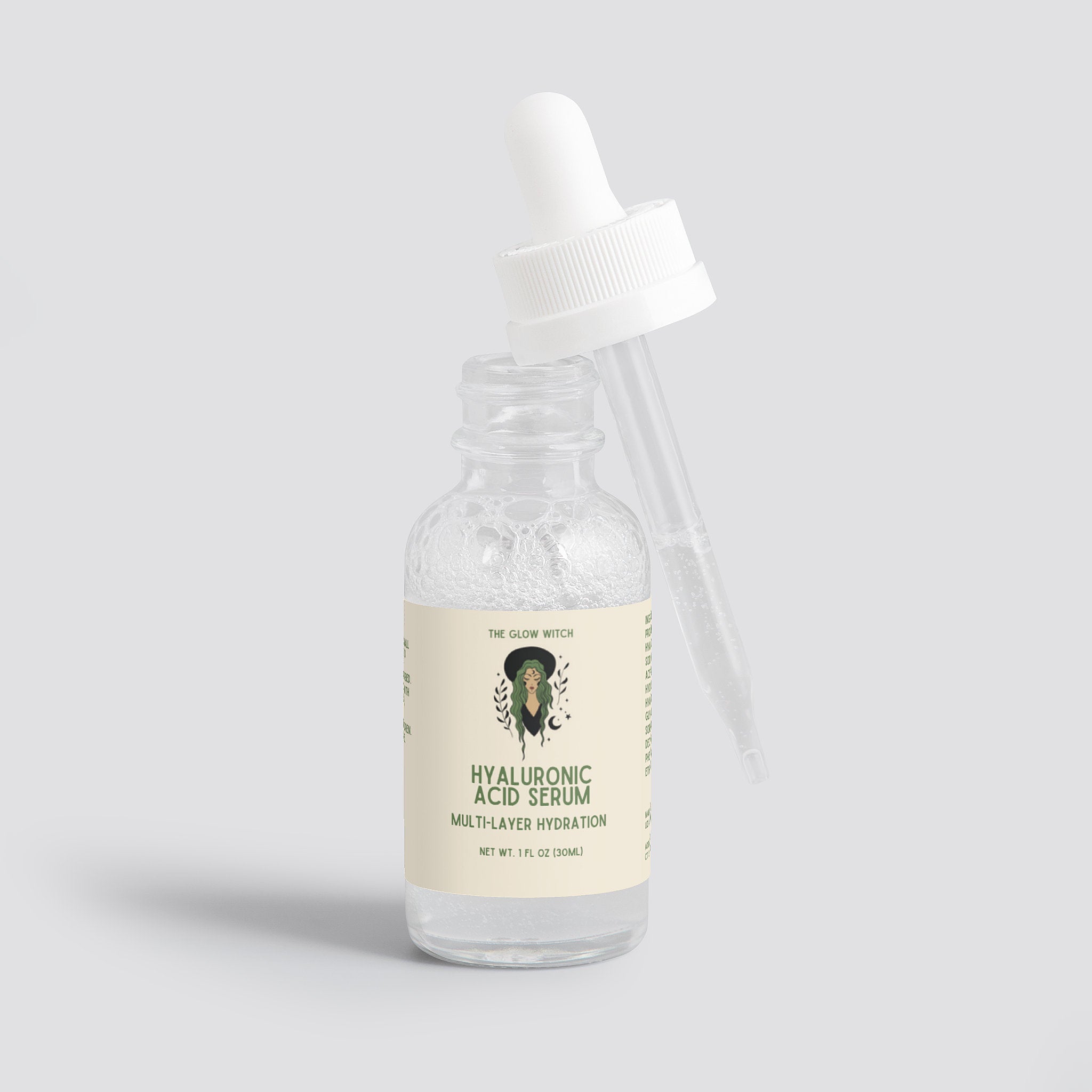
Layering matters here. Apply hyaluronic acid to slightly damp skin, then cover it with a cream. Our hyaluronic acid serum contains multiple forms of hyaluronic acid.
Watch out: hyaluronic acid applied to bone-dry skin in a dry room can pull moisture from the skin rather than the air. Mist or dampen first.
Glycerin, Panthenol, and Other Hydrating Ingredients for Face
Glycerin is the most reliable humectant in skincare, and it shows up in the second or third slot of most well-formulated moisturizers. It is inexpensive, well tolerated, and works. Panthenol, or provitamin B5, is a humectant that also supports skin comfort, which is why it appears in soothing formulas.
Other hydrating ingredients worth knowing:
- Glycerin - draws water into the upper skin layers; a workhorse humectant
- Panthenol (provitamin B5) - hydrates and calms the look of stressed skin
- Aloe vera - soothing hydration, useful after sun or waxing
- Betaine - a humectant derived from sugar beets, gentle on sensitive skin
- Beta-glucan - forms a light film that helps reduce moisture loss
- Urea - hydrates at lower concentrations; at higher levels it also softens rough patches
- Propylene and butylene glycol - humectants that also help other ingredients absorb
A common mistake is chasing exotic ingredients while skipping glycerin. In practice, a simple formula with glycerin, panthenol, and a good cream on top outperforms a complicated routine applied inconsistently.
Ceramides, Shea Butter, and Barrier Repair
Ceramides are lipids that make up part of the skin barrier, the outer layer that keeps water in and irritants out (Clinical significance of the water retention and barrier function‐improving capabilities...). When the barrier is compromised, hydration leaks away no matter how much serum you apply.
Shea butter is a rich emollient. It softens rough, flaky patches and contains fatty acids that help skin feel comfortable. Petrolatum and dimethicone are occlusives: they sit on top and slow moisture loss. None of these add water. They keep the water you already added from escaping.
Our Circadia Aquaporin Hydrating Cream pairs hydrating agents with natural oils to help skin hold moisture. For very dry or mature skin, a formula with ceramides, shea butter, and peptides supports both barrier repair and moisture retention in one step.
Best for: tight, flaky skin that feels dry even after moisturizer. Skip if: you are acne-prone and prefer lightweight gels; a heavy cream may feel occlusive.
The Best Ingredients for Dry Skin on Face: A Skin-Type Guide
The best ingredients for dry skin on face depend on whether your skin is dry, dehydrated, or sensitive, because those are different problems with different fixes.
How to tell which problem you have
A simple at-home check: cleanse, wait 30 minutes without applying anything, and look at your skin. If it feels tight and looks flaky or rough, you are likely dealing with dryness (oil deficiency). If it feels tight but looks shiny or normal, and fine lines appear more pronounced, dehydration (water deficiency) is more likely. If it stings, turns red, or reacts to new products, sensitivity is part of the picture. Most people have a mix, which is why a single "hydrating" product rarely solves everything.
Ingredient selection by skin type and concern
| Skin Type or Concern | What the Skin Lacks | Ingredients to Look For | What to Avoid |
|---|---|---|---|
| Dry, flaky skin | Oil and barrier lipids | Shea butter, ceramides, squalane, natural oils, petrolatum on rough patches | Alcohol-heavy toners, strong foaming cleansers |
| Dehydrated skin (any type) | Water | Hyaluronic acid, glycerin, panthenol, betaine, aloe | Harsh cleansers, hot water, over-exfoliation |
| Sensitive, reactive skin | Barrier resilience | Ceramides, panthenol, aloe, oat, beta-glucan | Fragrance, essential oils, high-concentration acids |
| Acne-prone with dryness | Water, without added oil | Glycerin, niacinamide, lightweight humectants, gel-cream textures | Heavy occlusives on active breakouts, comedogenic oils |
| Oily but dehydrated | Water | Glycerin, hyaluronic acid in a gel base, niacinamide | Rich creams, occlusives that feel suffocating |
| Mature skin | Oil, water, and barrier lipids | Peptides, ceramides, glycerin, shea butter, retinol at night | Over-exfoliation, skipping moisturizer |
| Combination skin | Varies by zone | Humectants all over; richer cream only on dry zones | One heavy product applied everywhere |
The pairing rule that matters most
A humectant without an emollient or occlusive on top is only half a routine. If your skin is dehydrated, glycerin and hyaluronic acid pull water in; a cream or a thin layer of shea butter keeps it there.
For a dry skin type, a ready-made bundle takes the guesswork out. Our Hydrating Package groups Circadia products formulated for dry, flaking skin. If your skin is reactive, start with one new product at a time and patch test on the inner forearm for a few days before applying it to your face.
Watch out: a product marketed as "hydrating" can still be wrong for your skin type. A rich cream labeled hydrating may clog oily, dehydrated skin, while a lightweight gel labeled hydrating may not be enough for dry, flaky skin. Read the first five ingredients and match the texture to your skin, not the front of the bottle.
Worst Ingredients for Dry Skin: What to Avoid
Denatured alcohol high in an ingredient list is the most common culprit. It feels light and dries fast, then leaves skin tighter than before. Fragrance and essential oils are the next offenders for reactive skin, though not everyone reacts.
Watch for these in dry-skin routines:
- Denatured alcohol near the top of the list, especially in toners
- Strong foaming cleansers that strip the barrier with every wash
- Physical scrubs used more than once or twice a week
- High-concentration acids layered without a barrier cream on top
- Hot water and long showers, which remove oils before skincare even starts
What most guides miss is that a product can be labeled "hydrating" and still contain drying alcohol. Read the first five ingredients, not the front of the bottle.
How to Layer Hydrating Skincare Ingredients
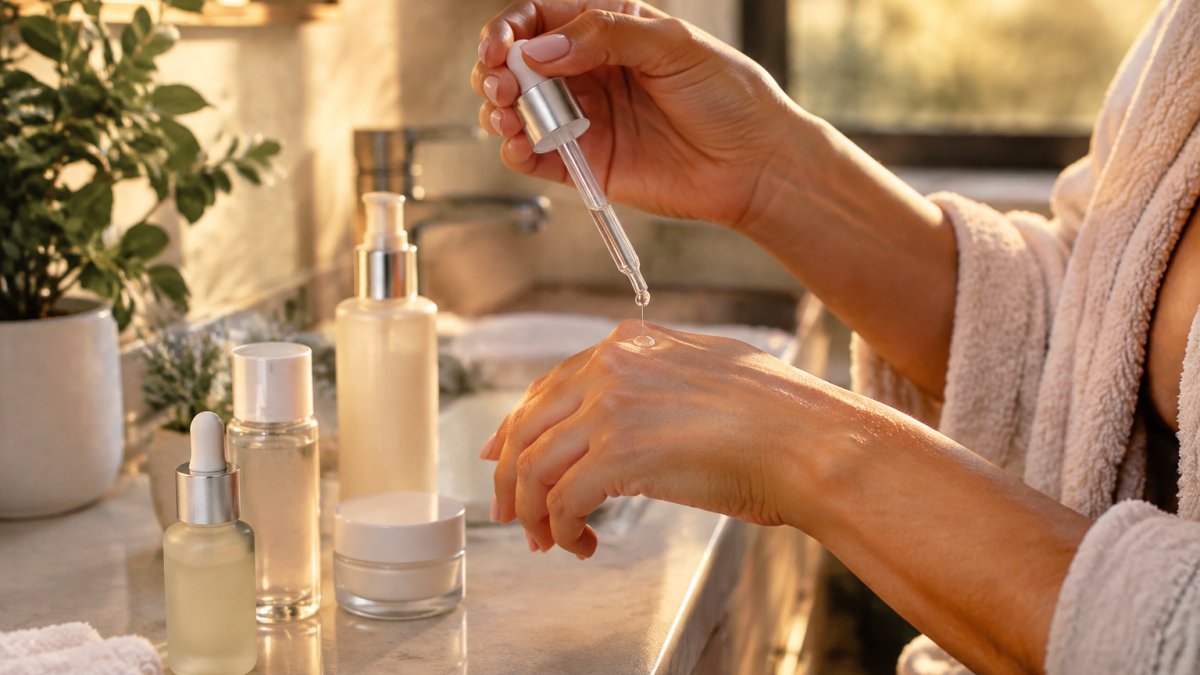
Layer from thinnest to thickest: humectant first, emollient second, occlusive last. That order lets water in before you seal it, which is the whole point of a hydrating routine. The mechanic most routines get wrong is applying a humectant to dry skin in a dry room, where it can pull moisture from the skin rather than the air.
A simple evening sequence
- Cleanse with a gentle, non-foaming cleanser. Pat, do not rub, and leave skin slightly damp.
- Apply hyaluronic acid or a glycerin serum to damp skin within about a minute of cleansing, while the surface still holds water.
- Press in a hydrating cream while skin is still slightly wet. Pressing, rather than rubbing, helps the product settle without dragging on the skin.
- Seal with a richer cream or a thin layer of shea butter or petrolatum on dry patches, especially around the nose, mouth, and cheeks.
- In the morning, repeat steps 1 through 3 and finish with sunscreen as the last step.
Give each layer about a minute to settle before the next. If a product pills or feels sticky, you are likely applying too much or layering two silicone-heavy formulas back to back.
Adjusting the order for the season
The ingredient order stays the same across seasons; the weight of the final layer can change. Richer occlusives may suit dry winter months, while lighter gel-creams may feel more comfortable in humid weather.
Where layering goes wrong
Watch out: mixing too many actives at once, such as retinol, acids, and vitamin C in the same routine, often causes irritation that reads as dryness. Introduce one at a time, and keep hydrating layers underneath the active so the barrier has support while the skin adjusts.
Watch out: applying a humectant and then stopping there. Without an emollient or occlusive on top, the water you pulled in leaves as fast as it arrived, which is why some people find hyaluronic acid serums make their skin feel tighter rather than softer.
Book a Hydration-Focused Facial at Liz Almanzar Esthetics
Persistent dryness that does not improve with a consistent routine is worth discussing with a qualified professional. At Liz Almanzar Esthetics, customized facials are tailored to individual skin concerns.
If you are unsure which facial suits your skin, read our guide on how to choose the right facial for your skin. And if you have already booked, our article on what happens to your skin after a facial explains how to care for it in the days that follow.
Whether you are searching for facials near me in Groton or want help building a home routine that actually holds moisture, we are happy to walk you through it.
Dry skin rarely resolves with one product. It resolves with the right ingredients, in the right order, used consistently. Liz Almanzar Esthetics offers customized facials, targeted treatments for acne and hyperpigmentation, and product guidance built around your skin type.
Frequently Asked Questions
What is the best ingredient for skin hydration?
There is no single best ingredient because hydration works in layers. Hyaluronic acid and glycerin draw water into the skin, while ceramides and shea butter seal it in. For deep hydration, look for a formula that combines a humectant with an emollient or occlusive rather than relying on one ingredient alone.
What are the worst ingredients for dry skin?
Alcohol-heavy toners, strong astringents, and harsh exfoliants can strip moisture and worsen dryness. Fragrance and essential oils bother some sensitive skin types, so patch test first. Also watch for products that list only water and fragrance with no humectant or emollient. If your skin stings after applying a product, stop using it. A gentle, fragrance-free routine with ceramides and glycerin is a safer starting point for dry skin.
Should you apply hyaluronic acid to damp skin?
Yes. Hyaluronic acid works by holding water, so applying it to slightly damp skin gives it moisture to draw in. After cleansing, mist or pat water on your face, then apply your serum, and follow with a moisturizer to lock it in. In dry indoor air, a hyaluronic acid serum without a moisturizer on top can leave skin feeling tight, so always seal it with a cream or butter.
Can a facial help with dry skin?
A professional facial can support hydration through cleansing, gentle exfoliation, and targeted masks or serums. It also gives an esthetician a chance to assess your skin and recommend a home routine. Results vary by skin type and how often you go. For persistent dryness, pair facials with daily use of hydrating ingredients like glycerin, ceramides, and hyaluronic acid, and ask about a plan tailored to your skin.