 Listicle
5 Professional Dark Spot Treatments Compared for 2026
Last Updated: October 30, 2026
Quick Summary
The five professional dark spot treatments compared are chemical peels, laser treatment, professional facials with brightening actives, microdermabrasion, and prescription-strength topical plans. Each differs in intensity and downtime, so a consultation helps match the right dark spot treatments to your skin. Daily sunscreen is recommended with any of them.
- Chemical peels suit surface spots and uneven tone, with about 1 to 7 days of downtime.
- Laser treatment targets deeper or stubborn pigment, with recovery of several days to 2 weeks.
- Professional facials with brightening actives are gentle and require no downtime, suiting maintenance.
- Most professional treatments require patience, with gradual change over weeks rather than overnight.
- Consistent sunscreen use throughout the process is the single factor that most affects whether results last.
Table of Contents
- How Professional Dark Spot Treatments Differ
- Quick Comparison: 5 Professional Dark Spot Treatments
- Chemical Peel for Dark Spots: Pros, Cons and Downtime
- Laser Treatment for Hyperpigmentation: Effectiveness and Side Effects
- Dark Spot Treatment Timeline: How Long Results Take
- Why Professional Facial Treatments Build on Daily Skincare
- Finding an Esthetician for Hyperpigmentation in Groton, CT
- Frequently Asked Questions
How Professional Dark Spot Treatments Differ
Dark spots, also called hyperpigmentation, form when extra melanin collects in the skin after sun exposure, acne, or inflammation (the American Academy of Dermatology). Professional treatments work by exfoliating, stimulating cell turnover, or targeting pigment at a deeper level than daily products can reach. Professional approaches to dark spots generally depend on skin type, depth of pigment, and tolerance for downtime, so an individual consultation is the right starting point.
Daily sunscreen is widely recommended as part of any dark spot plan (the American Academy of Dermatology). That point matters here. A professional procedure works best as part of a routine, not as a standalone fix. Read whether peels are worth it for pigmentation and scarring concerns before deciding.
Treatments differ mainly in intensity. Gentler options take several weeks of repeated sessions. Stronger options can show faster change but carry more redness, peeling, or risk of rebound pigment. Knowing where a treatment sits on that scale helps you set realistic expectations before booking.
Quick Comparison: 5 Professional Dark Spot Treatments
Here is how the five options generally compare. Results depend on skin type and consistency, so treat this as a starting point for a consultation.
| Treatment | Intensity | Typical Downtime | Best For |
|---|---|---|---|
| Chemical peel | Light to medium | 1 to 7 days | Surface spots and uneven tone |
| Laser treatment | Medium to high | Several days to 2 weeks | Deeper or stubborn pigment |
| Professional facial with brightening actives | Gentle | None | Maintenance and mild spots |
| Microdermabrasion | Gentle | None to 1 day | Light discoloration and texture |
| Prescription-strength topical plan | Varies | None | Long-term fading under supervision |
Downtime and suitability vary by individual, so the table is a general guide rather than a promise of outcome.
Chemical Peel for Dark Spots: Pros, Cons and Downtime
A chemical peel removes the outer layers of skin, which can lighten surface discoloration. It is one of the most common professional choices for dark spots.
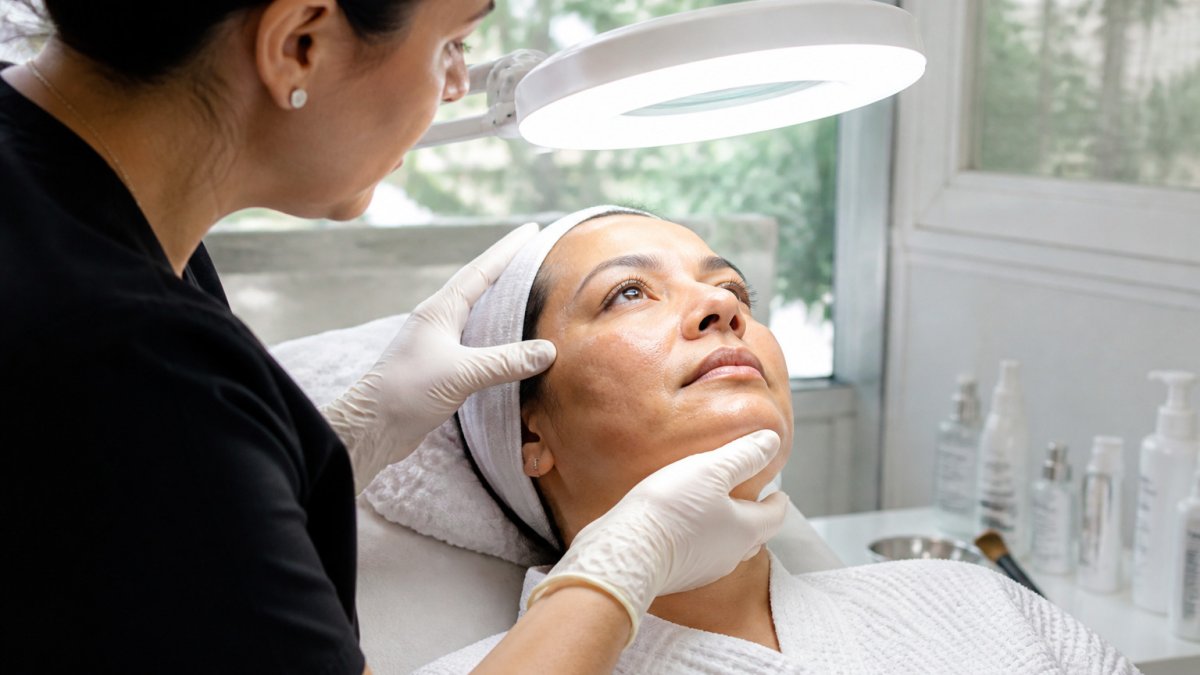
Pros: Peels are relatively quick, and a series of light peels can fade spots gradually with less irritation than stronger options.
Cons: Peels can cause redness, flaking, and sensitivity for several days. Darker skin tones carry a higher risk of post-treatment darkening if the peel is too strong or aftercare is skipped.
Downtime: Most clients need a few days of recovery. Light peels may allow same-day makeup, while medium peels often require a longer break.
Preparing your skin before a peel can help. Ask your esthetician which products to pause beforehand, and use sunscreen every day.
Laser Treatment for Hyperpigmentation: Effectiveness and Side Effects
Laser treatments target pigment at specific depths using focused light energy. They can address stubborn spots that do not respond to peels or topicals. Treatment choice for laser sessions generally depends on skin tone and the type of pigment involved, so a consultation before any laser session is important.
Effectiveness: Lasers can produce noticeable change in some cases, but results vary widely between individuals and between types of pigment.
Side effects: Redness, swelling, temporary darkening, and in some cases lighter or darker patches can occur. Risk is higher for clients with deeper skin tones who are not treated by an experienced provider (Cosmetic Considerations in Dark-Skinned Patients).
THE VANISHING RITUAL - DARK SPOT FADING REGIMEN →
Watch out: Lasers used on the wrong pigment type or at the wrong setting can worsen discoloration. Choose a provider who assesses your skin before recommending a laser.
Dark Spot Treatment Timeline: How Long Results Take
Most professional dark spot treatments require patience. Expect gradual change over weeks rather than overnight results.
Light facials and peels are typically spaced several weeks apart, with visible change building over a series of sessions. Stronger treatments may show earlier results, but healing time and the need for follow-up sessions extend the overall timeline. Consistent sunscreen use throughout the process is the single factor that most affects whether results last.
Keep a simple photo log every few weeks, taken in the same light. Comparing photos is often more accurate than judging spots in the mirror day to day.
Why Professional Facial Treatments Build on Daily Skincare
Professional treatments do their best work when followed by a consistent home routine. Learn why facials help with skin texture and how in-office care improves tone. A facial clears the surface and delivers actives, but daily products maintain the results between visits.
Brightening serums can support results between professional sessions when used consistently. Explore the Circadia Bright White Serum to see how its antioxidants and melanin inhibitors fit into a home routine.
Many people also use home dark spot products such as a dark spot serum or a dark spot regimen alongside professional care. Check ingredient and usage details on each product page against your skin type before starting.
Finding an Esthetician for Hyperpigmentation in Groton, CT
Choosing the right provider matters as much as choosing the treatment. Look for an esthetician who asks detailed questions about your history, sun exposure, and current products, and who discusses realistic outcomes and risks.
If you are searching for an esthetician for hyperpigmentation near Groton, CT, schedule a consultation before committing to a treatment series. A good provider will assess skin type and pigment depth first, then recommend a plan. You can book a consultation to see whether a professional treatment fits your skin. Visit the Groton links page to book facials or explore services.
For questions about specific treatments or what your skin needs, a consultation is the right next step.
Frequently Asked Questions
What professional treatment is best for dark spots?
No single treatment suits every skin type, so the best option depends on your skin tone, the depth of the pigment, and your tolerance for downtime. Chemical peels, laser treatments and prescription-strength topicals each work differently. Because treatment choice carries real risk for darker skin tones, a consultation with a licensed esthetician or dermatologist is the safest way to match a method to your skin.
Are chemical peels effective for hyperpigmentation?
Chemical peels can fade surface-level dark spots and improve overall tone when they are performed by a trained professional and matched to your skin. Results usually build over several sessions rather than appearing after one visit. Peels can also cause temporary redness, peeling or, in some cases, a rebound in pigment, which is why a pre-treatment consultation and a clear aftercare plan matter.
How many professional treatments does it take to fade dark spots?
The number of sessions varies widely with the type and depth of the pigment, your skin tone and the method used. Many people notice gradual change over several weeks to months, and stubborn spots may need a longer series. Your provider should outline an expected timeline during your consultation and reassess progress between sessions.
Can an esthetician treat dark spots, or should I see a dermatologist?
A licensed esthetician can address many surface-level concerns and build a supervised facial routine. Spots that are new, changing, irregular, or that do not respond to care should be evaluated by a dermatologist first to rule out other skin conditions. Many people benefit from both, with the dermatologist confirming the diagnosis and the esthetician supporting maintenance.